Oxfam Brief: Meeting 1

Today I took part in a zoom meeting with my group to discuss ideas for the live brief task which is to promote ‘Second Hand September’ and Oxfam. Having done some initial research I contributed some ideas to the group which encompassed a socially engaged theme using the likes of Jenny Odell and Mandy Barker as examples of innovative approaches. 

At the conclusion of the meeting no real decisions were made although we did devise a strategy for further research with my avenue being to research photographers who have engaged in photography campaigns for charity organisations. 

We will meet again to share our findings on Wed 7th Oct.

Week 2 Reflection

Week 2 Reflection 

This week has been quite strange and varied. In contemplating the copyright case between Prince and Cariou, I always find it difficult to make judgements about such disagreements as I feel that both parties were able to present credible arguments with justified reasoning. Therefore I often feel that I run out of brain cells some way before I am able to make a decision which encompasses the accuracy and understanding of the case. 

When considering the DNA of my photographic practice, I could consider my one work as being positioned in what Scott (2014, p5) describes as a domestic professional. Primerillaly, the practice that I yields the highest rewards is wedding photography, with occasional work in other ares of the commercial sector. I do have some prestigious clients and my work can be seen on the BBC through shooting stills for production companies in addition to clients  looking for web content. However I don’t market myself in these sectors with work often coming from my personal network which is broad and varied. 

I am also employed in an FE college as a lecturer where I teach mainly  media and photography teaching A level and vocational courses. Having been employed in the same establishment for over eight years I do have a degree of security and sustainable employment, whether that could be considered a creative job is a question I often think about and still not sure of the answer. In one respect my job in the college i’m governed by line managers and results but in other avenues, I get to run workshops and help young people curate their work and encourage them to think about their creative concerns and presentation of work. 

In summarising the context of my work, it is varied and extremely busy. I teach twenty four hours a week, shoot between fifteen and twenty weddings a year in addition to taking on other work when I can. Add an MA into the mix and that renders me an extremely busy person. Having said that, weddings have been cancelled since March therefore the wedding business has taken on different challenges which is dealing with rearrangements, maintaining the website and marketing. 

Studying the MA has been like entering into a new world personally. As my creative journey started in the TV industry eventually moving towards photography I initially felt out of my depth on the MA with very little contextual knowledge, I spent my time working hard to learn what I needed to learn before making decisions about the type of professional I would like to be. 

As I continue to acclimate myself I am reevaluating the direction I would like to pursue. In an ideal world I would like to move away from photographing weddings and teaching and going towards photojournalism. As my research continues I actively follow and engage with publications such as the football magazine ‘When Saturday Comes’. Ech edition has a photo feature with a small pool of photographers such as Colin McPherson and Paul Thompson both of whom are photojournalists who have appeared to have had sustained careers working on repeat commissions on a regular basis in addition to featuring in numerous exhibitions around the world. Having spoken to McPherson on a number of occasions it is also interesting that he has diversified his work into writing which currently feels like a difficult task for me as I would suspect that I lack the mental agility to make such a shift although I suspect I will try in the future. 

Looking for inroads into the building a network into the photographic world, I have been following organisations such as the Open Eye Gallery for some time, looking for opportunities and avenues to engage with the gallery, I am in the process of applying for a program entitled ‘Crossing Sectors’ which is an ongoing mentorship with a focus on socially engaged photography. I see this as an opportunity to develop a network and continue to work in the sector beyond the MA. Having only recently identified the opportunity, I am in the early stages of the application and will seek advice from my tutors when I have composed my application. 

Moving onto the weekly webinar, It was good to meet my new tutor and receive feedback from Colin Pantall. From the presentation of my progress in the webinar it was clear that he was aware of the influences I cited and the type of work was engaging with, his advice was to simplify my project and he suspected that i was overcomplicating my approach to the work, this was a contrast to Cemre my tutor for the last module. In making these comments I don’t mean to detract the advice given by my previous tutor as Cemre was excellent in encouraging me to challenge the approach to my project, exploring different perspectives, solving problems relating to the photographic literacy I was pursuing with the result being personal growth and a quiet confidence in the emergence of my voice. 

Having a tutor that may identify with my work in a different sense will, I hope, enable the going back to the original concerns of my project but with a much more informed and confident outlook. Moving onto the major questions about my own approach to making work, the idea of the ground hopping narrative is now open again as football is taking place with spectators in the ground. However this narrative would exclude lots of my previous work surrounding the grass roots game. Therefore the task is identify a unifying theme that pulls the work together. As I have previously, the work of Julian Germain becomes relevant with his book ‘Soccer in Wonderland’ which is a celebration of football culture exploring themes including grassroots, collectors of programs and childhood games such as subbuteo.

Drew Findlay (2017) [Online] Available at: https://drewfindlayphotography.com [Accessed 3rd Oct 2020]

Germain, J (1994) Booth-Clibborn Editions, London.

Grant, Scott (2014)  Professional Photography: The New Global Landscape Explained (2014), CRC Press.

Open Eye Gallery [Online] Available at: https://openeye.org.uk/opportunities/?fbclid=IwAR3OrvCrCBRp8mCtpEuv5uztTFKu2BgYFSt4OHbMcO8e5Y_EUQ92ot9VT6Q [Accessed 3rd Oct 2020]
Week 1 | Independent Reflection

The first week of the Sustainable Prospects module was one of acclimatising to the mindset of academia having had some time off. Over the break I didn’t create much work as I needed time to contemplate my project while considering the potential avenues I could explore further. The last module once again represented significant growth in both the creation of work in addition to the philosophical approach to my project.

As a result, I am currently moving away from the football theme as the patriarchal narrative emerges. The idea of exploring the relationship I had with my father being the initial concern with my work in the last module. I am now exploring methodologies appropriate to opening up my ideas which could have a broader appeal than my personal emotions. Therefore the next stage of my project will be to explore ways of disseminating my concerns and encompassing a universal theme that would be identifiable with multiple audiences. 

Read (2017) cites Clarke who makes some useful comments about developing projects, ‘Looking back at the concerns that form the backbone of the work and the interests which fuel it, with or without input from others, will serve to provide evidence of where they have been and point the direction for the future.’ 

At this stage of my project  I agree with Clarke and take confidence from assertions as from the outset of the MA, the backbone of my thought process usually traces back to something about my father. Whether shared experiences, or advice he gave whilst in my formative years. I am now attempting to understand and identify with my experiences beyond the surface. As opposed to visualising football culture. I am now beginning to consider themes such as loneliness, insecurity and self reliance. All of which I feel are motivated in some capacity from my Fathers difficult experiences of being adopted as a child. 

The sense of being an outsider looking in, is another theme currently relevant and fuelled by an understanding that my Dad left his home in Scotland, joined the army, coming to live his life in Manchester. These ideas may translate into visual ideas which I could represent. Photographs of transit happening, moving objects or stations for busses and trains. Visualisations of what one might see when they leave such a place in addition to portraits of people engaging with travel. Asking why they are leaving or arriving at a place. 

In going with this approach I hope to achieve a sense of journey as Paul Graham did in his book the Great North Road. Interior photographs where possible, documentary images of environments encompassing multiple entries such as doors, windows and openings in roads. I do anticipate being knocked back multiple times in asking people for street portraits however I am hoping that my approach does yield some results. Laurent (2017) in the Time website writes about photographers as ‘the ones who sort all of the chaos of the world into images that bring clarity to the free for all of life.’ And at this stage of my learning I take heart and understanding from such a comment.

At present I feel that my task as an author of a project is to sort through my thoughts and feelings in order to bring clarity to my own voice. I have spent the last three modules pontificating, exploring and building my photographic literacy but now is the time to deliver my voice with a clarity and confidence which represents my development. I further feel that clarity is important in my photographic process. Going back to the idea of sorting through the chaos of the world (Laurent 2017), making photographs that have a clear direction is important in a personal sense for the new work I will create. In ordering the goings on in day to day life I understand that I will be required to make quick decisions when working with strangers in addition to working in a considered fashion when working on shoots with more planning. The objective throughout this module is to produce work which adheres to Szarkowski’s idea that ’The photographer hopes, in brief. To discover a tension so exact that it is peace’. I interpret this opinion to mean producing work that encompasses a visual language that satisfies my considered intention. Using the metropolis to my advantage, deforming  and manipulating it to bring clarity to my voice, and work which adheres to my concerns as a photographer.

Eggleston, W. (2002) William Eggleston’s Guide. New York, The Museum of Modern Art.

Laurent (2017) Why We Do It: Photographers and Photo Editors on the Passion That Drives Their Work [Online] Available at: https://time.com/4839246/photographers-passion/ 

Read and Simmons (2017)  Photographers and Research, The Role of Research in Contemporary Photographic Practice. Taylor and Francis, New York.

Week 1 | Forum – Research Methods

At present, my research is focussing on the development of my voice in terms of producing a personal monograph. To date I feel that I have struggled to produce a WIPP that really reflects my intentions. This has been the case in each module although I do feel that my practice has developed significantly throughout the course. I have begun to research photographers such as Paul Greham (The Great North Road) in addition to the likes of Alec Soth in order to cultivate a powerful voice which encapsulates a type of journey whether visually or philosophically. 

The entry point for my project had a general theme of the people, places and objects surrounding community football. This developed into the examination of how this theme was relatable to the relationship I had with my father who passed in 2015. 

Contextual research will continue to highlight opportunities to create metaphors and cohesion whether that is within the football theme or not. When producing work I will endeavour to continue to utilise observations in much more detail, having the confidence to believe in the quieter work I produce as opposed trying to illustrate my development. 

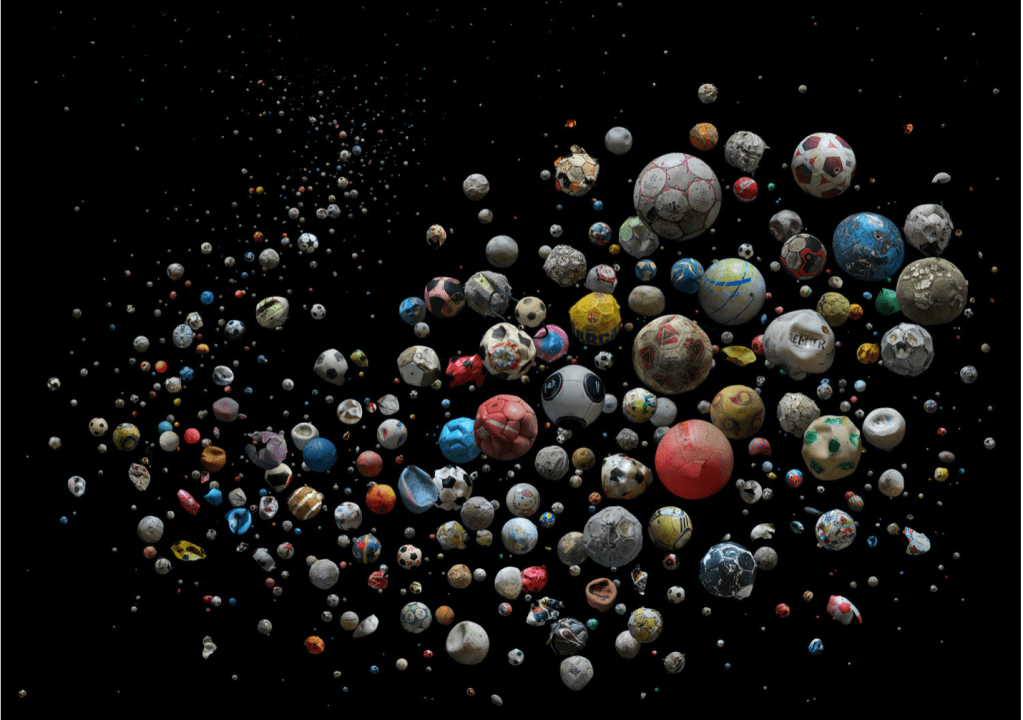
When considering photographers, I find the work of Mandy Barker interesting. Visualising marine plastic debris. Barker collects images from participants from sources across the world, using them to produce aesthetic montages . Baker states of her work 

‘combining a contradiction between initial aesthetic attraction along with the subsequent message of awareness.’ 

The research methodologies of archiving found objects’ provides authenticity whilst enriching the work by making important statements about the environment. The project ‘Penalty’ could be broadly linked to my football themed project in addition to the climate change briefs. Barker used images of footballs to create montages as seen in the example below. 

This work Emphasises the beauty of human creativity in addition to human carelessness. The result is anxious raising.

Mandy Barker | Penalty 2015

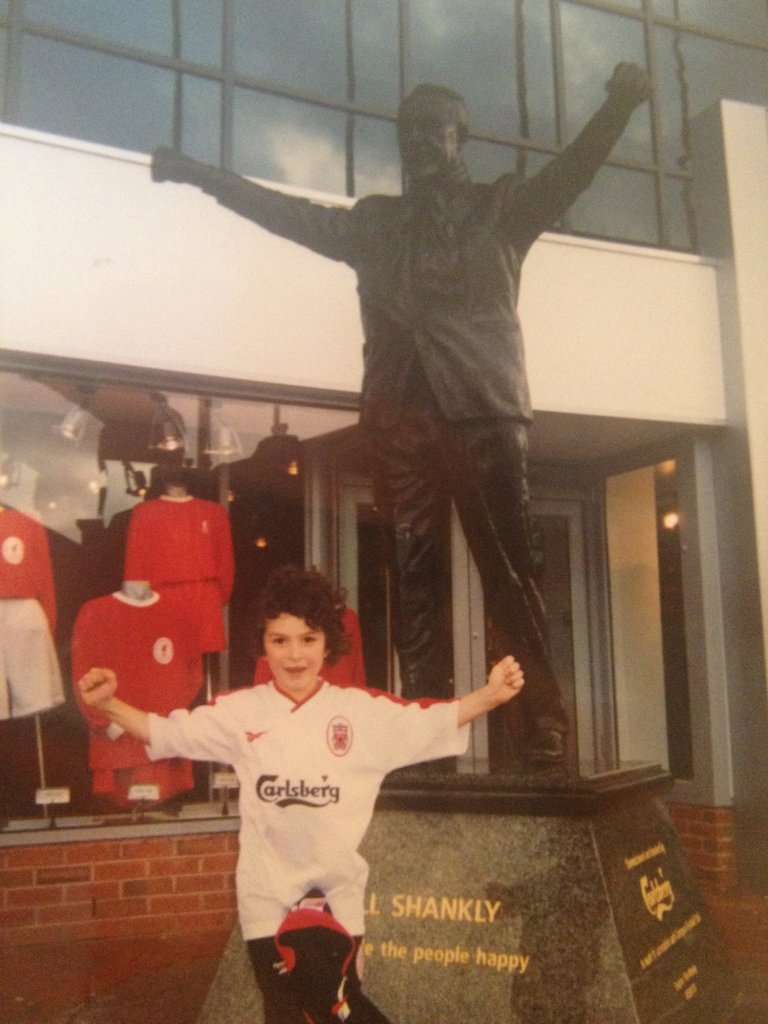
My second example is a socially engaged project based around the fans of Liverpool football club with the intention of archiving fan memories. Case cites a fan on the website “The best way to look at our club is through the eyes of the fans.”  I find this idea particularly interesting because I am able to identify with the culture and assets collected and fear that items such as physical snapshots/photographs are becoming something of the past. Similar to family albums, I still enjoy looking through albums and find photographs with familiarity intriguing, much the same as family photographs taken before I was born. Understanding that this is how ‘something once was.’ 

Fan Image from the project Red

The concept represents an idea I would be interested in pursuing with the team that I follow although probably post MA.

Barker, M (2014) Penalty [Online] Available at: https://www.mandy-barker.com  (Accessed 20th Sept 2020)

Case, E (2018) Red [Online] Available at: https://theredarchive.org/about (Accessed 21st Sept 2020)