In order to further my project of reconnecting with my football past I felt that I needed to move away from a documentary photographic approach at non league football matches and begin to engage with my story at a deeper level. In response I decided to contact former teammates and arrange some interviews with the intention of listening to their experiences of the game.
Having read loads of player autobiographies over the years, my intention isn’t to recite nostalgic stories about famous players as is often portrayed. I want to understand their philosophy and how they coped with life after the professional game. Venturing into the non league realm and understand the challenges this presented in an emotional sense.
Reflecting on my own experience, the overriding emotion was one of fear. In stating this I don’t mean the fear of actually playing in the game. More the constant burden of putting your body on the line twice a week for little reward whilst having to go to work and forge a new career. The consequence of this being a lack of confidence in being able to do anything else. Playing football becomes the norm and continuing to play out of a sense of routine as opposed to enjoyment.
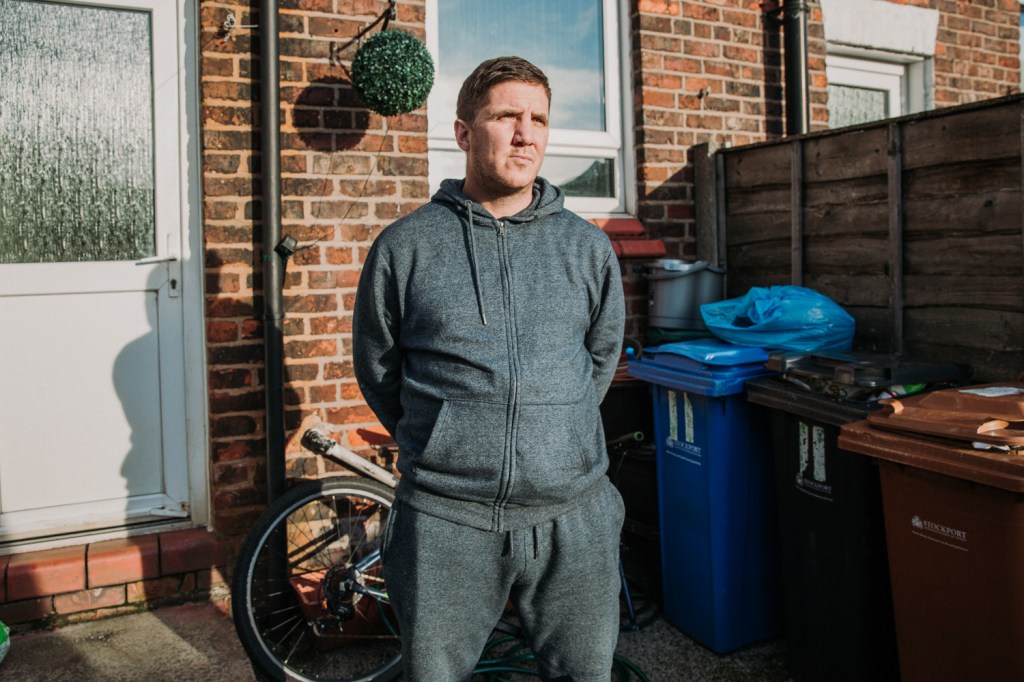
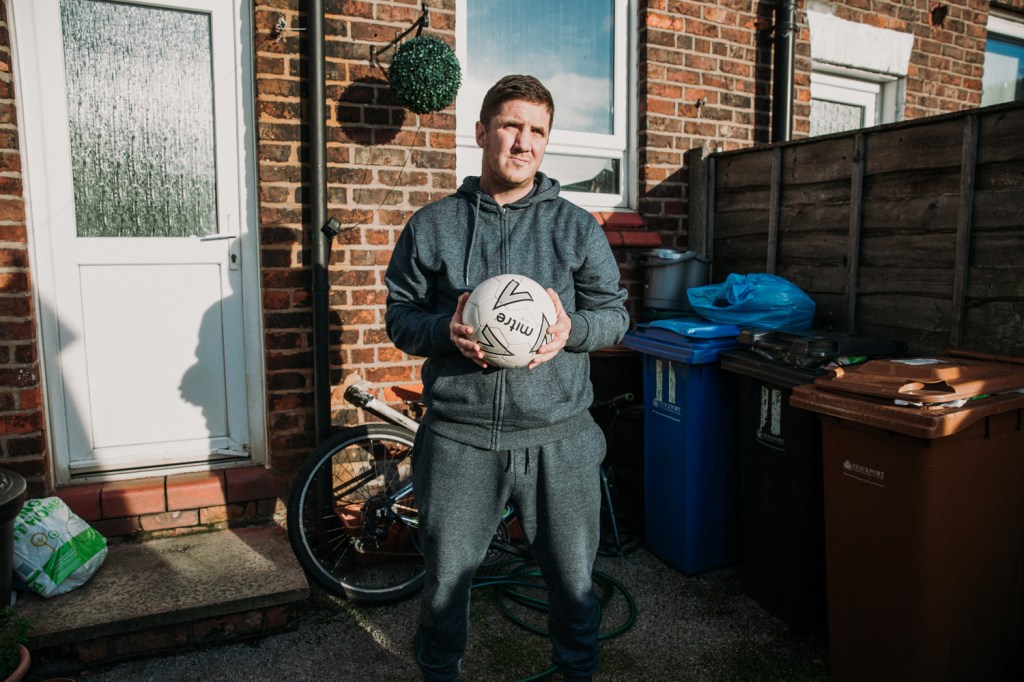
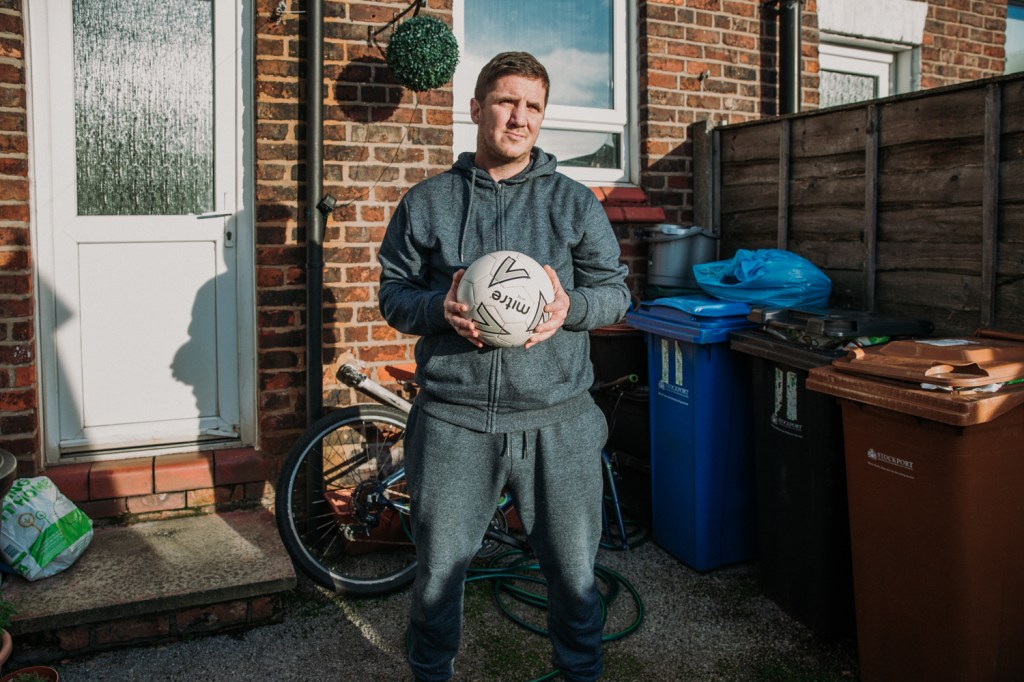
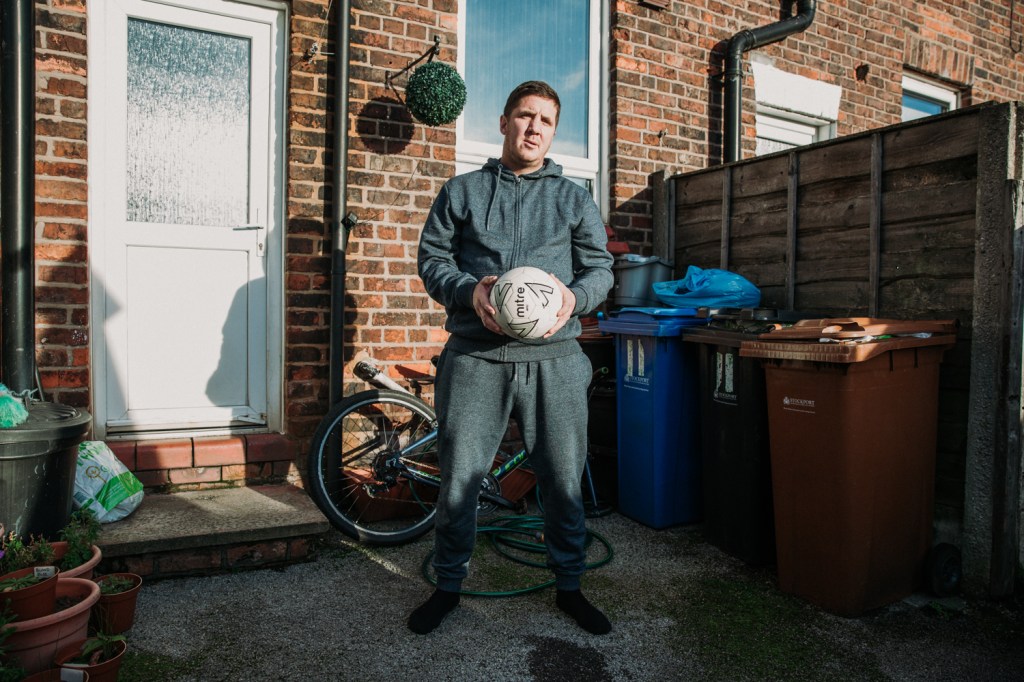
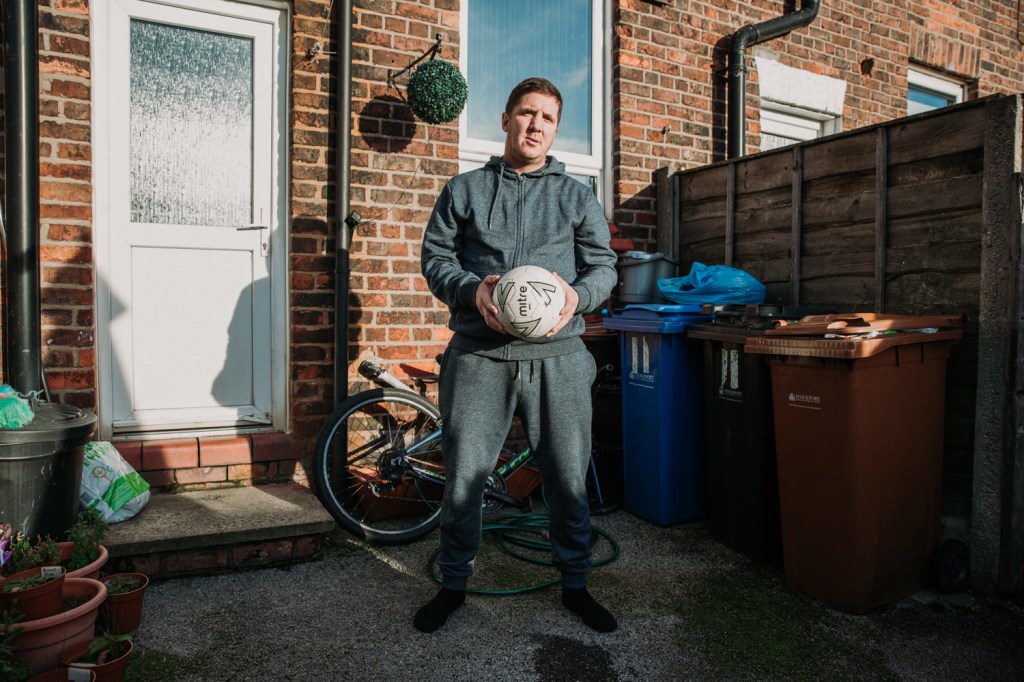
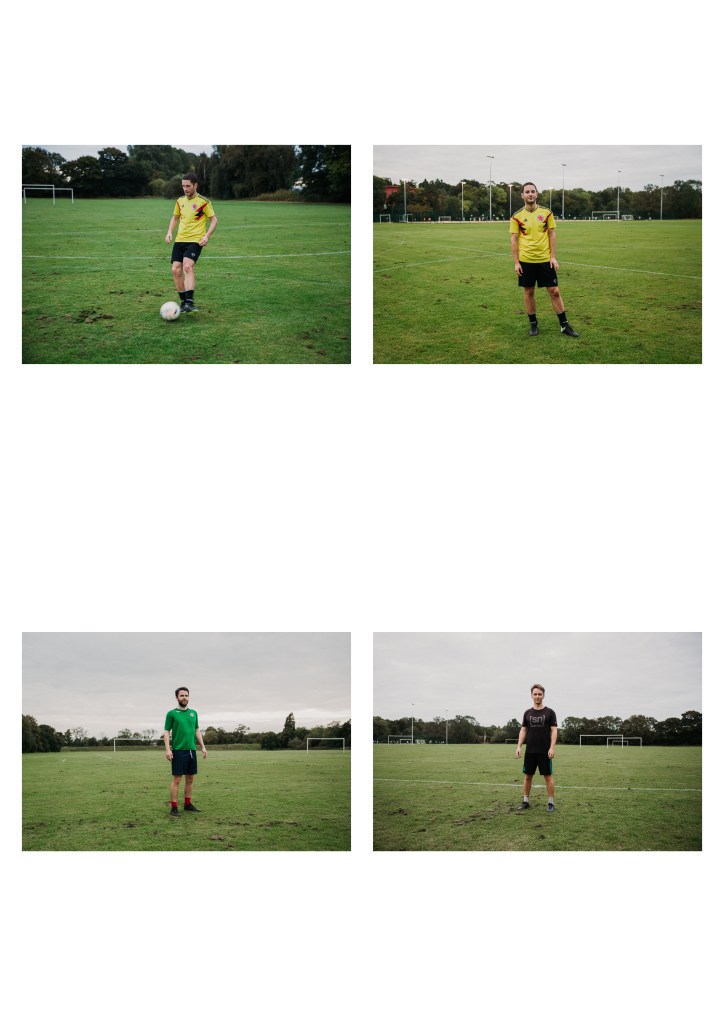
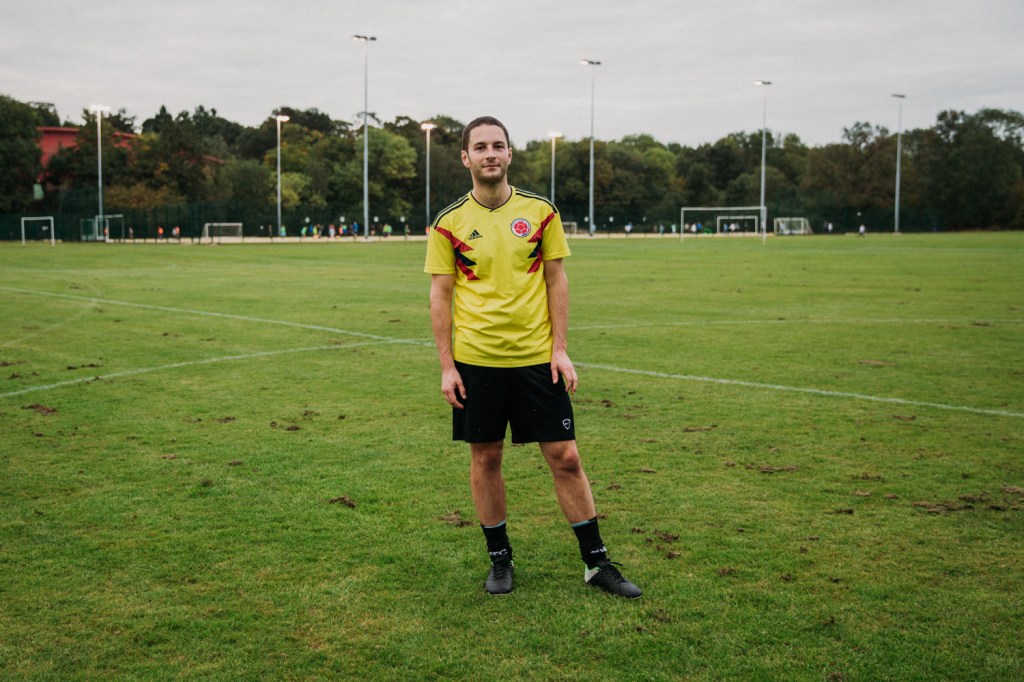
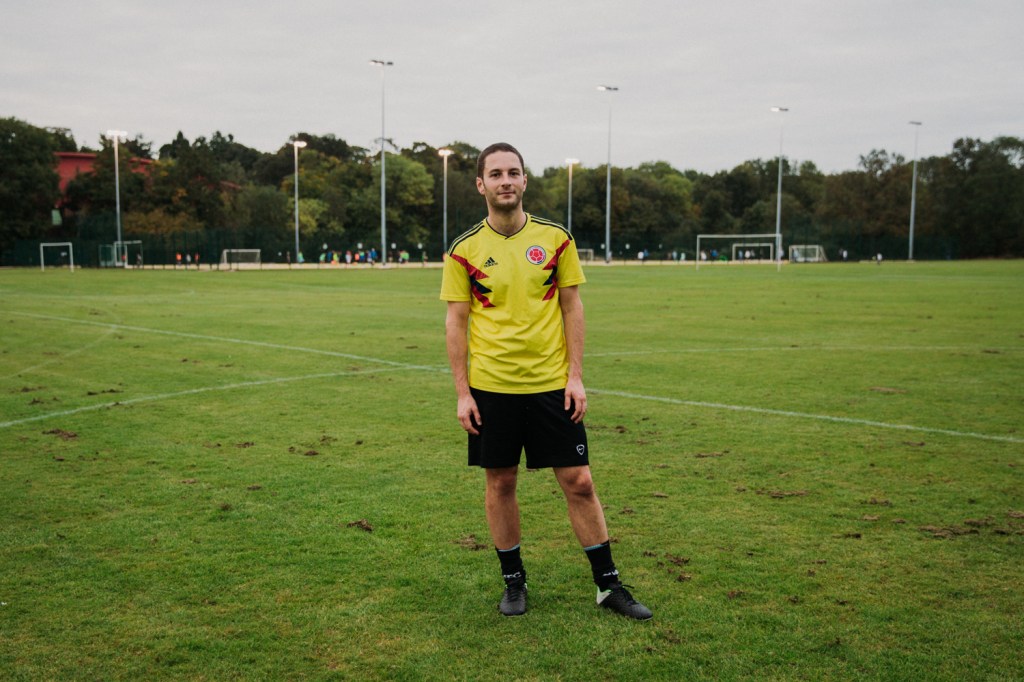
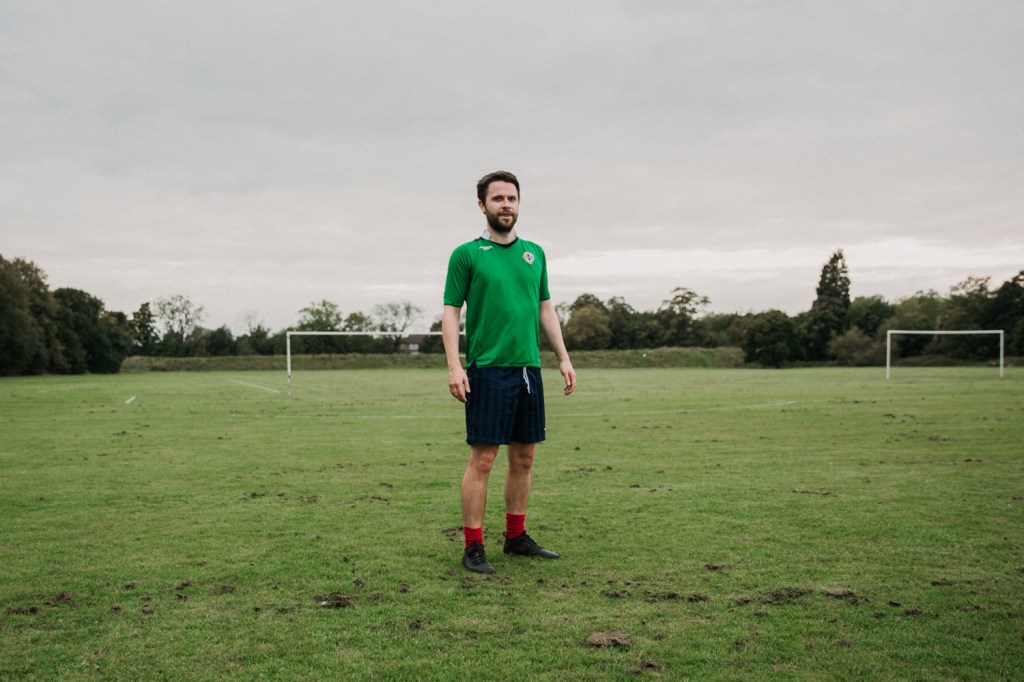
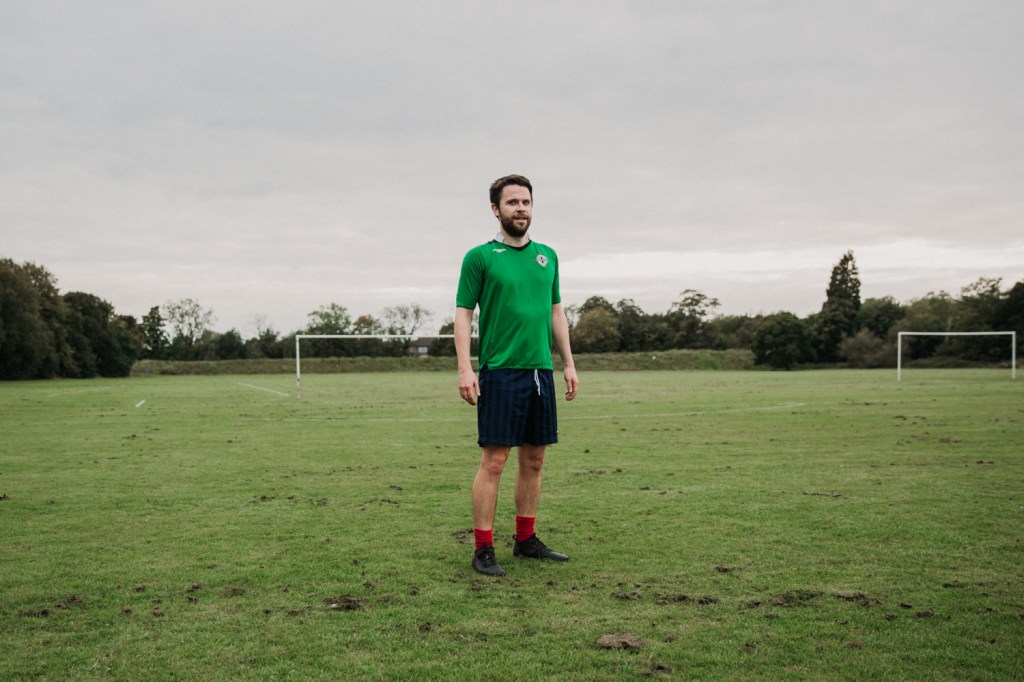
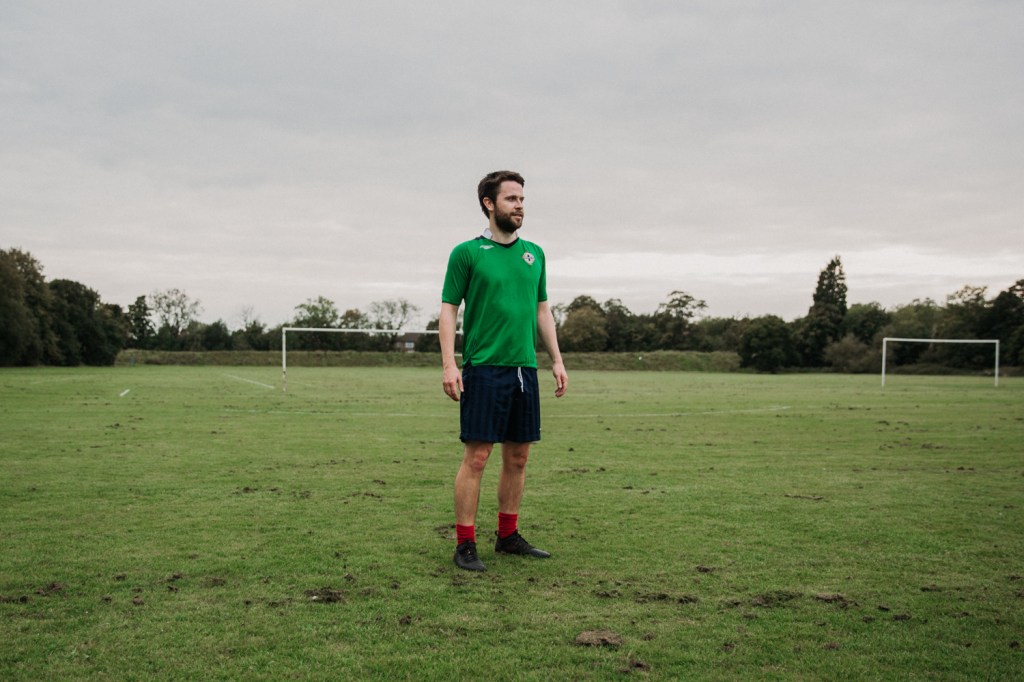
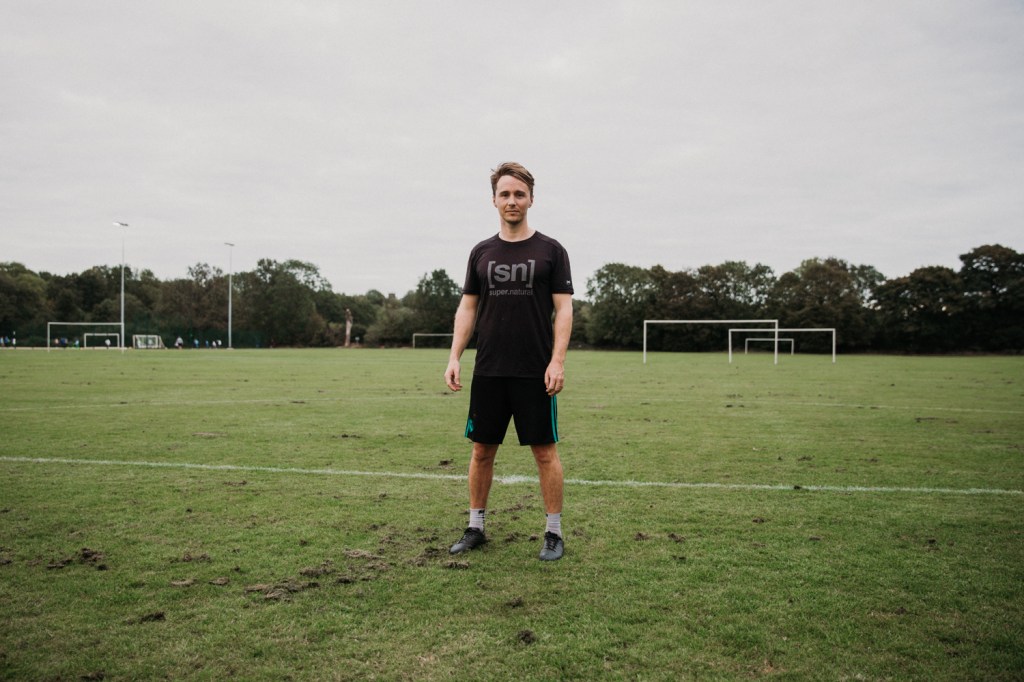
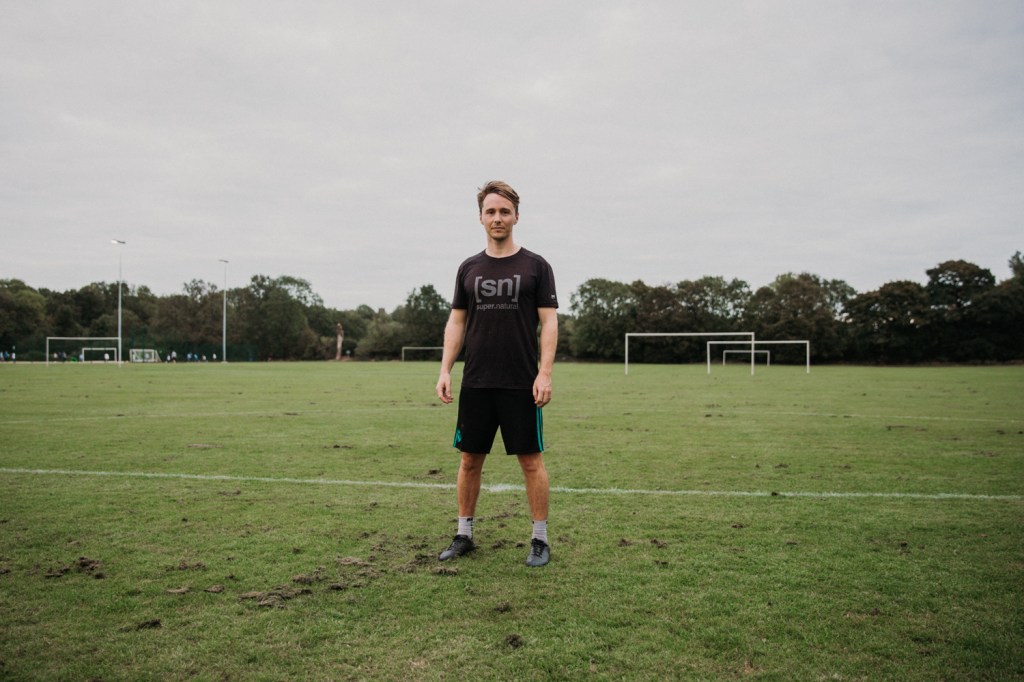
The first subject of my research was a man I have known through football for over twenty years. Playing with and against on a number of occasions. We are part of a small group of players who have a bond, although we don’t spend much time in each others company anymore. We are a close support network and understand the difficulties we went through at that stage of our lives, having to adjust and find a new direction.
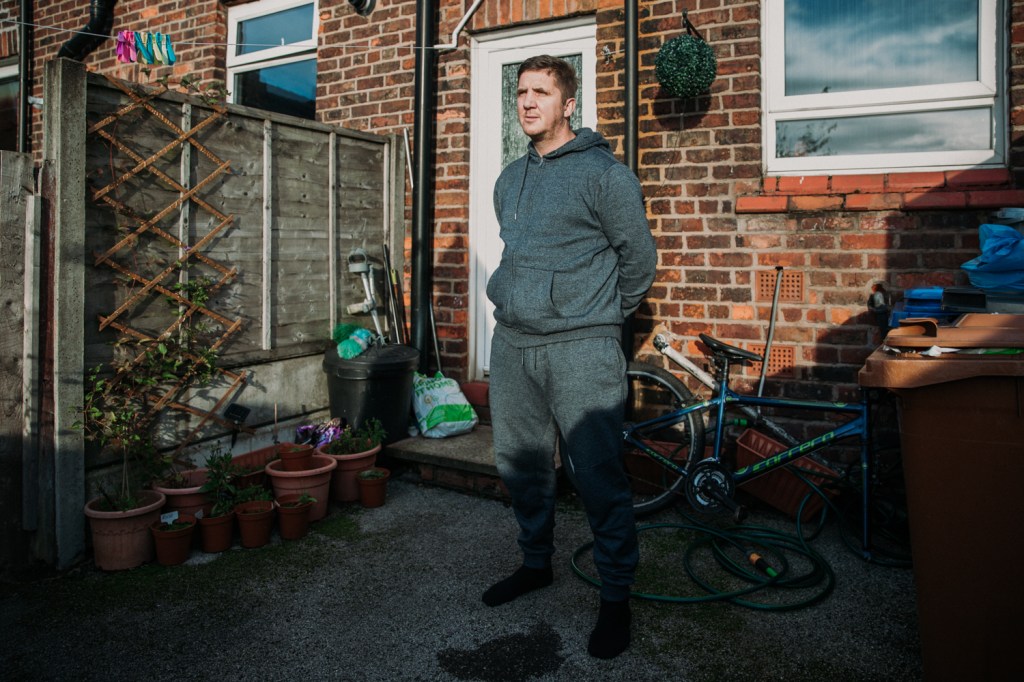
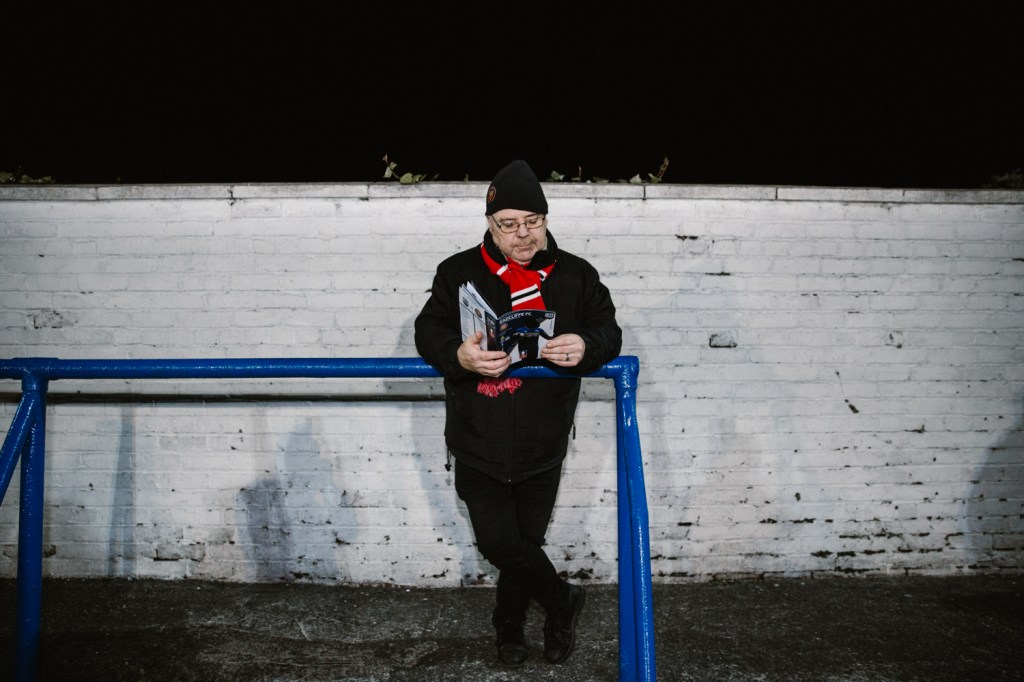
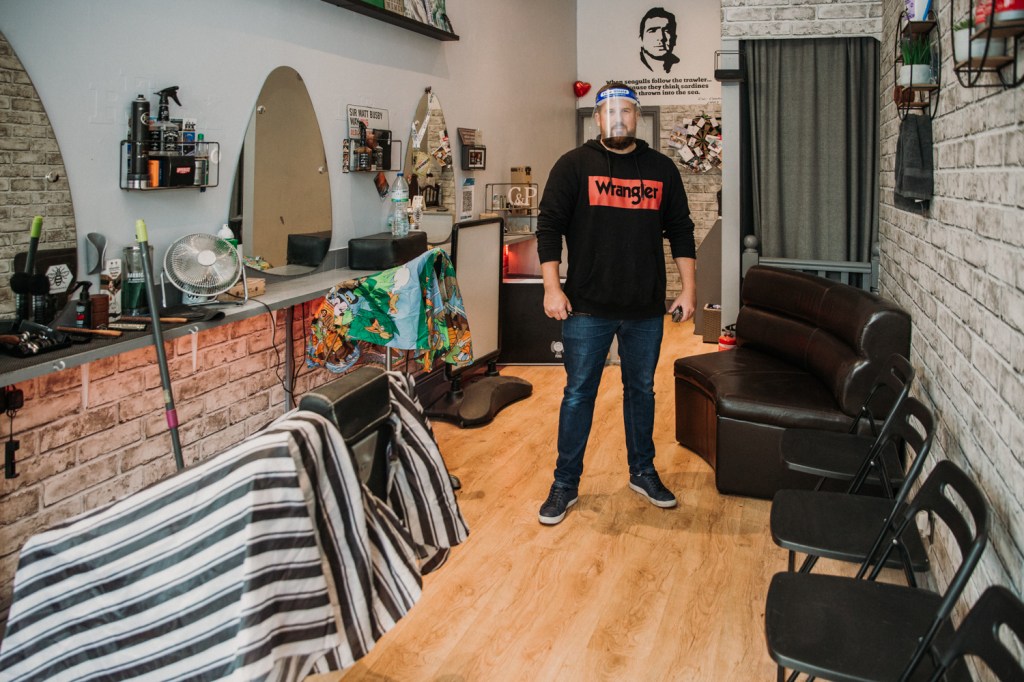
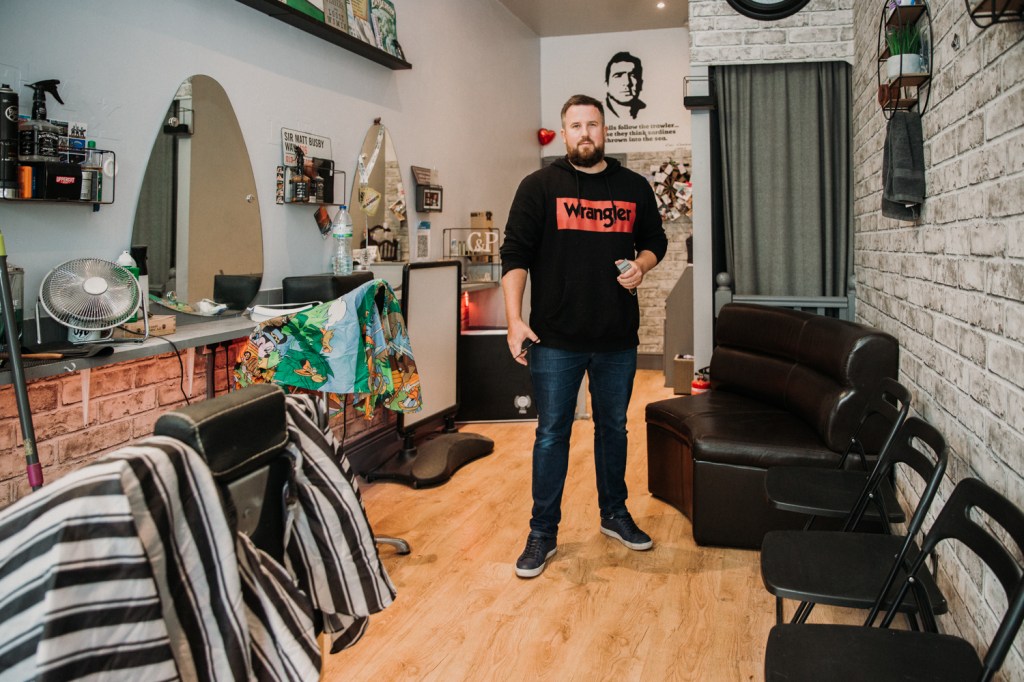
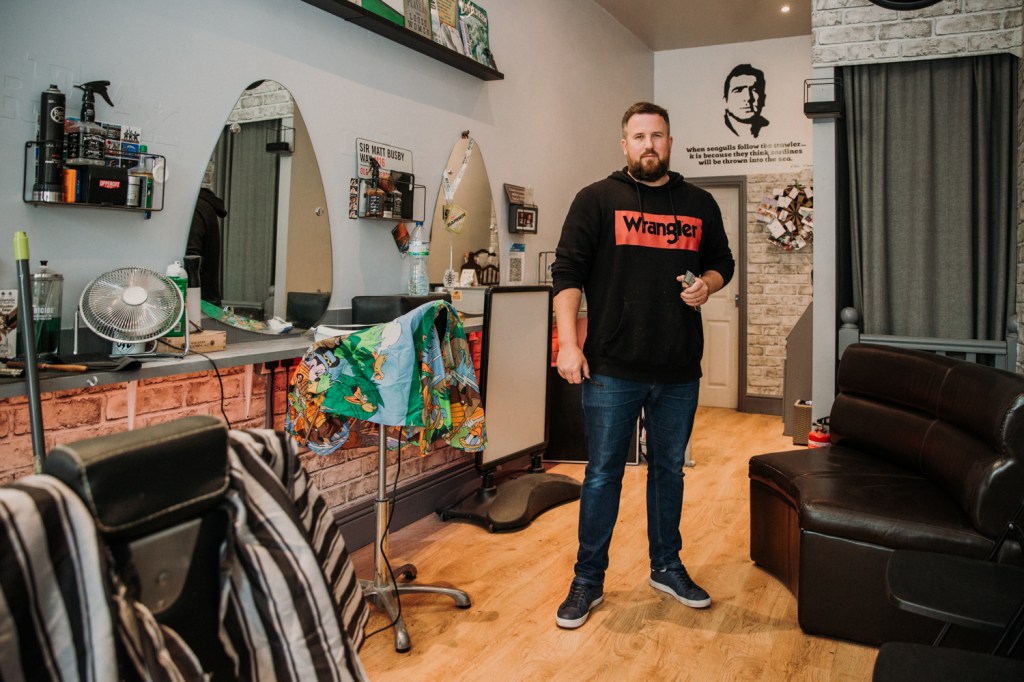
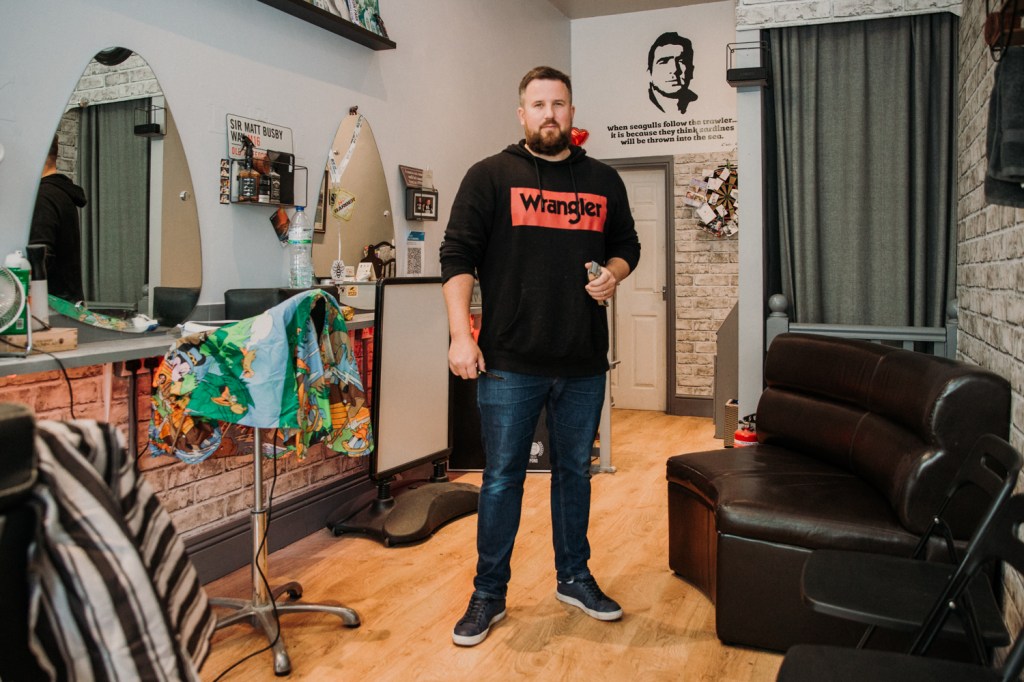
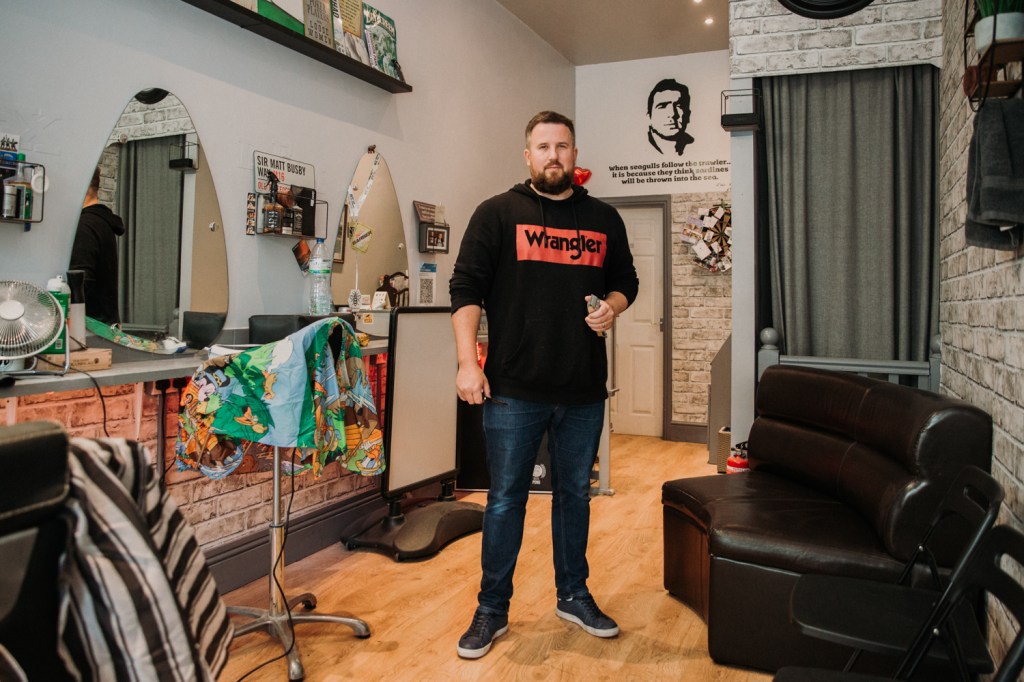
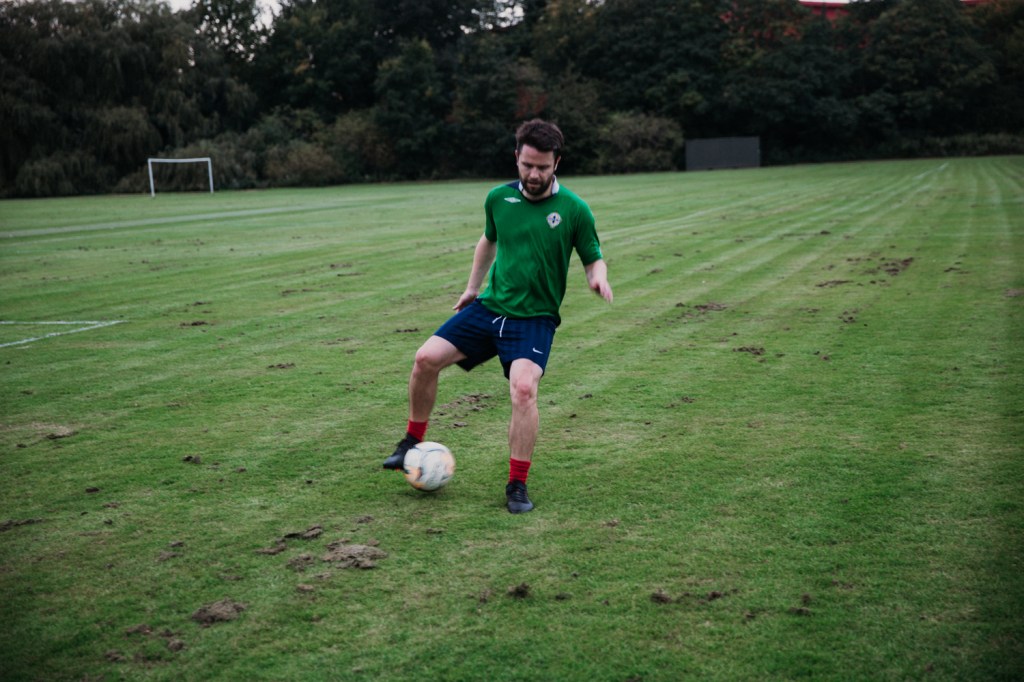
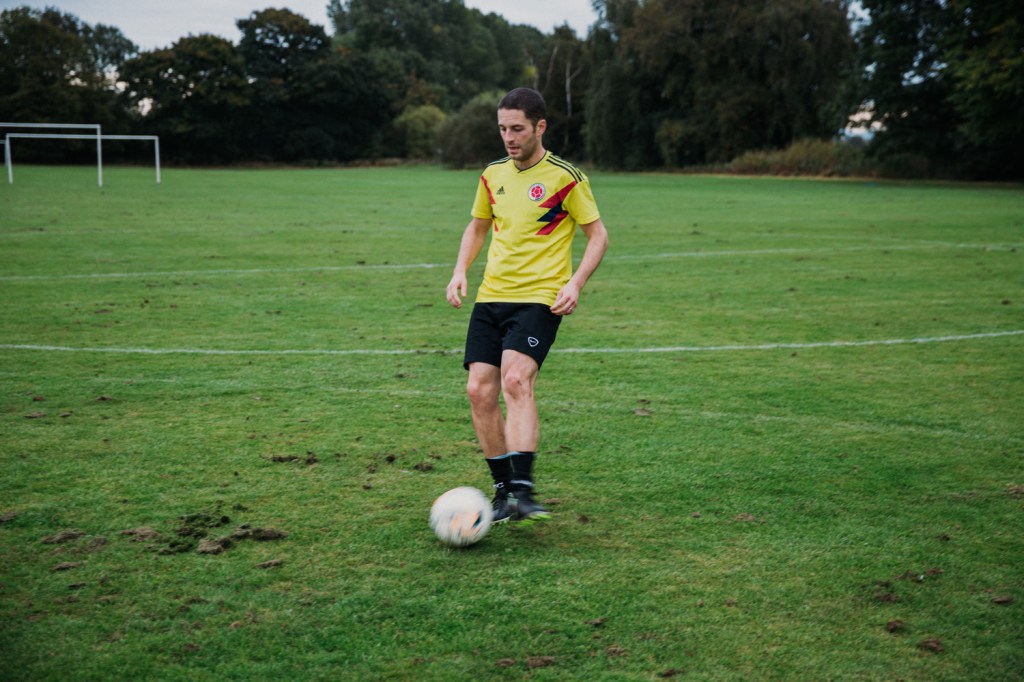
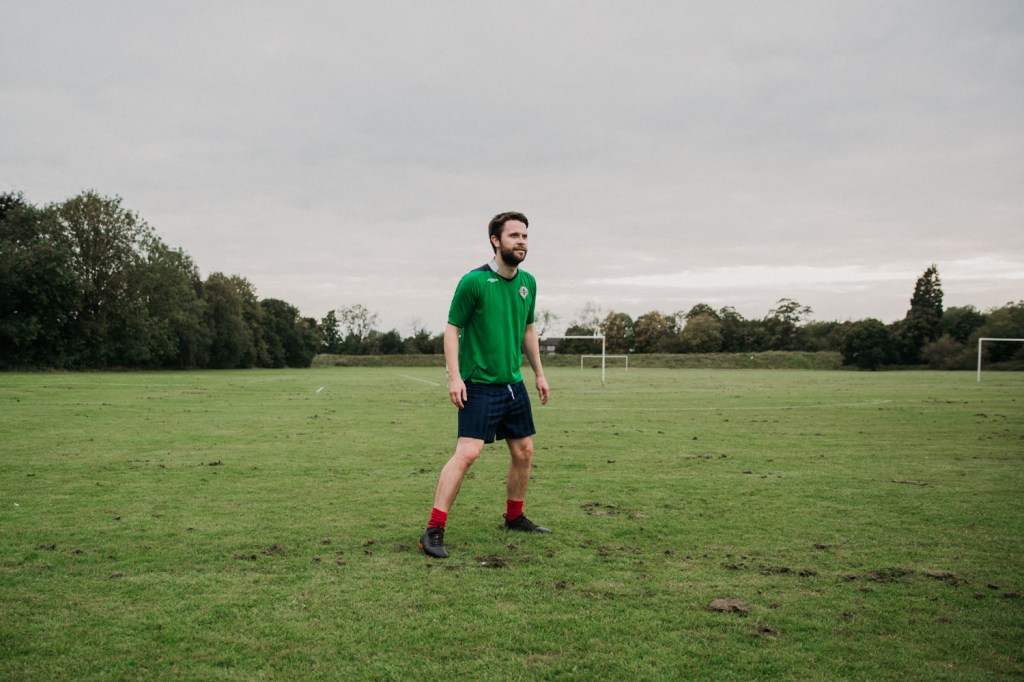
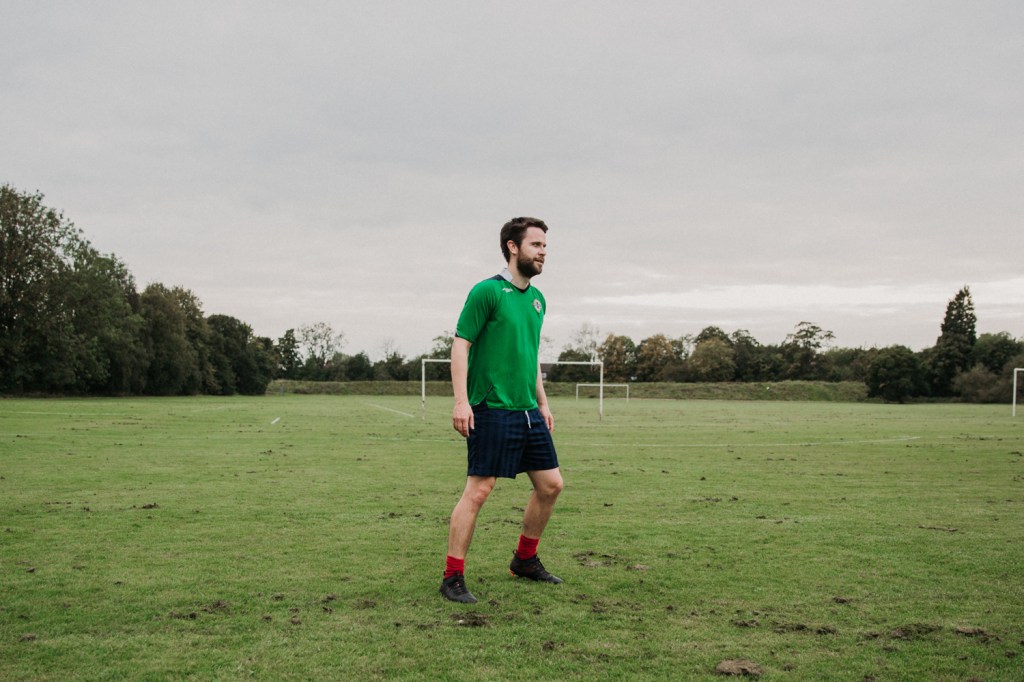
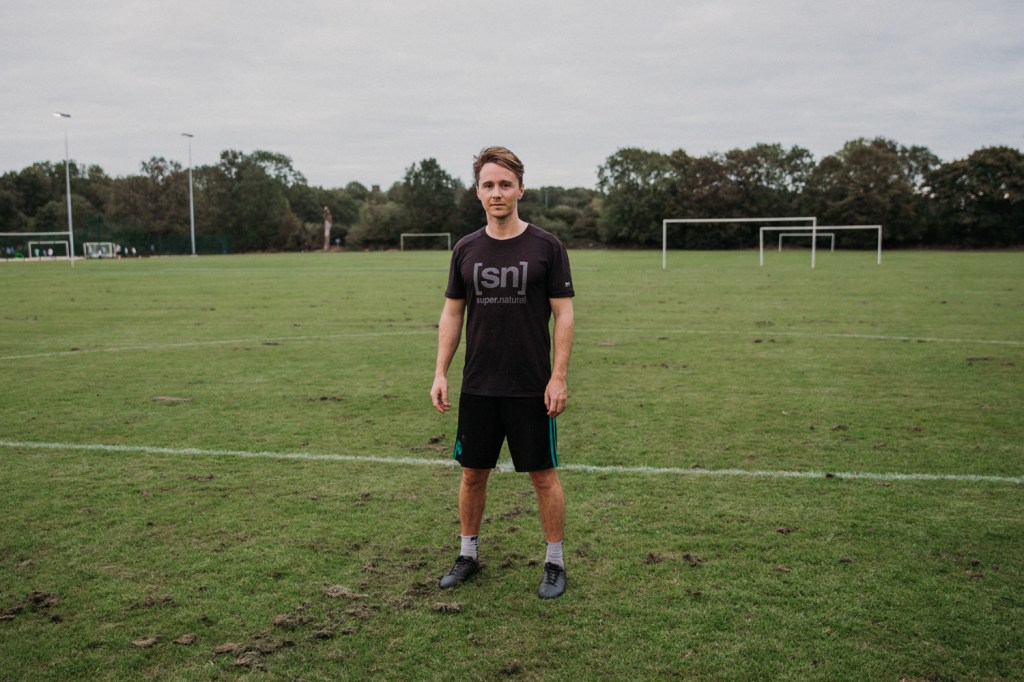
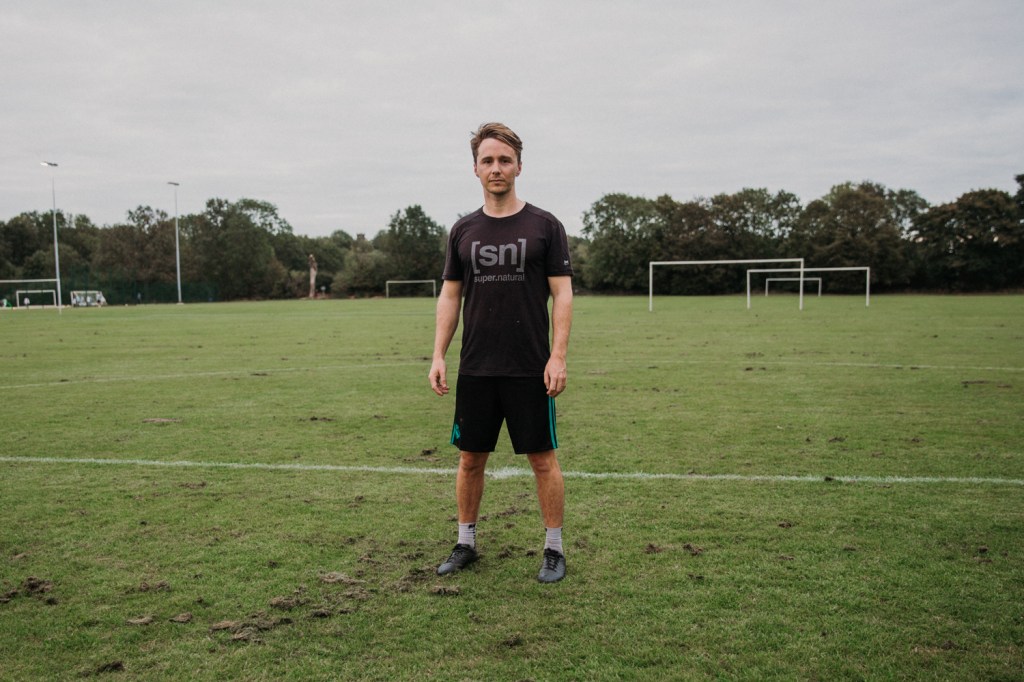
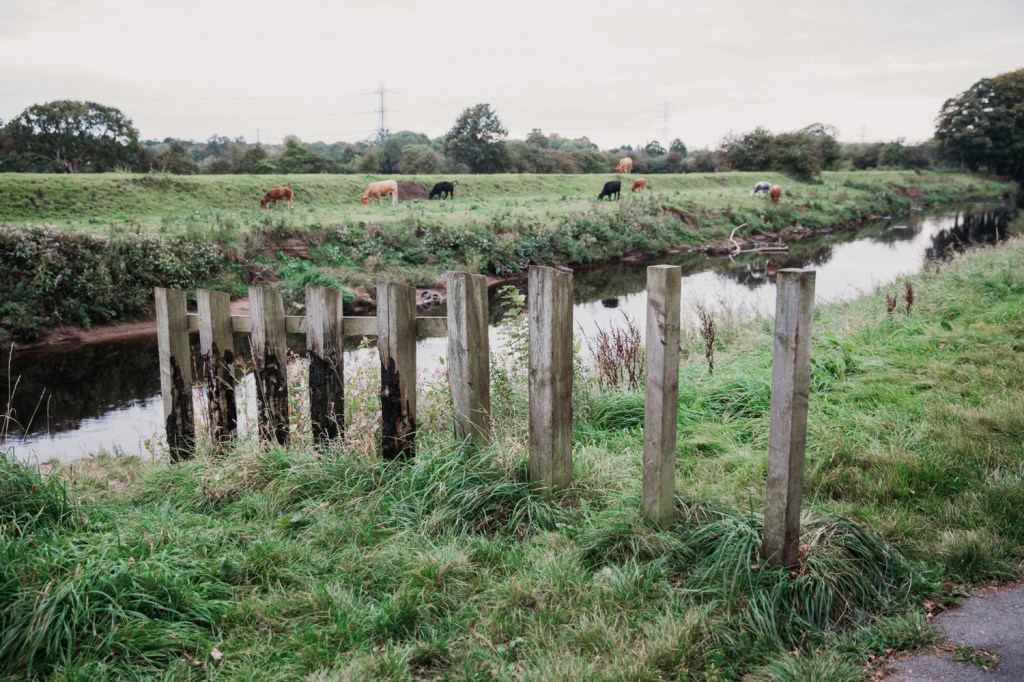
My approach to this shoot was to make a portrait which suggested something about the lives my teammates have now. Whilst speaking to them about their experiences of the past in recorded interviews.
When considering supporting images to fit within a sequence of this shoot, I was interested when Mike suggested that when he left Manchester United after 13 years of his life he felt alone. Not to be confused with being lonely but alone in his experiences of life. Throughout his childhood he was the envy of all of his peers within the community. However this isolated him as he was unable to have a normal childhood as a result he feels that he largely missed out on the vernacular experiences of youth hood.
Transferred from United to Wrexham for 100k, he struggled to settle in his new home deciding one day to get on a train home and not kick a football for three years.
To say the week had been difficult is an understatement. Having tested positive for COVID at the beginning of the week I was unable to take any photographs to further my project. Having to self isolate, pull the children out of school and organise remote teaching for my A level students.
The early stages of my self isolation I was lucky to be contacted by Colin McPherson who kindly sent me a recording of a previous webinar he took part in by Document Scotland. Aside from the king gesture, the webinar was very useful in furthering the philosophical approach to my project. Uncomfortable with the label of being a ‘groundhopper’ McPherson (2020) speaks of his approach to photographing football, stating his intention is to ‘recreate his own memories’ of playing the game. A comment which aligns well as a summary for my project as opposed to groundhopping.
In engaging with this approach I feel a certain type of coming of age regarding the ownership of my work. Shooting as a result of my own thoughts and experiences and decisions. Making work that isn’t the result of something I feel I should photograph. Working with the trust of personal impulse and making work that I feel connected to.
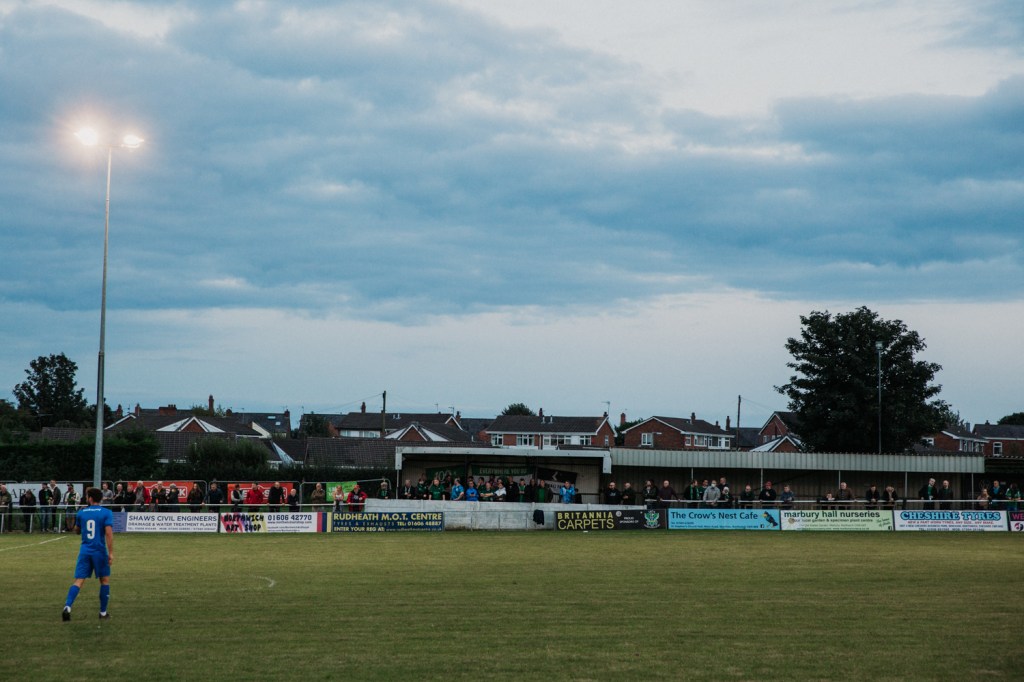
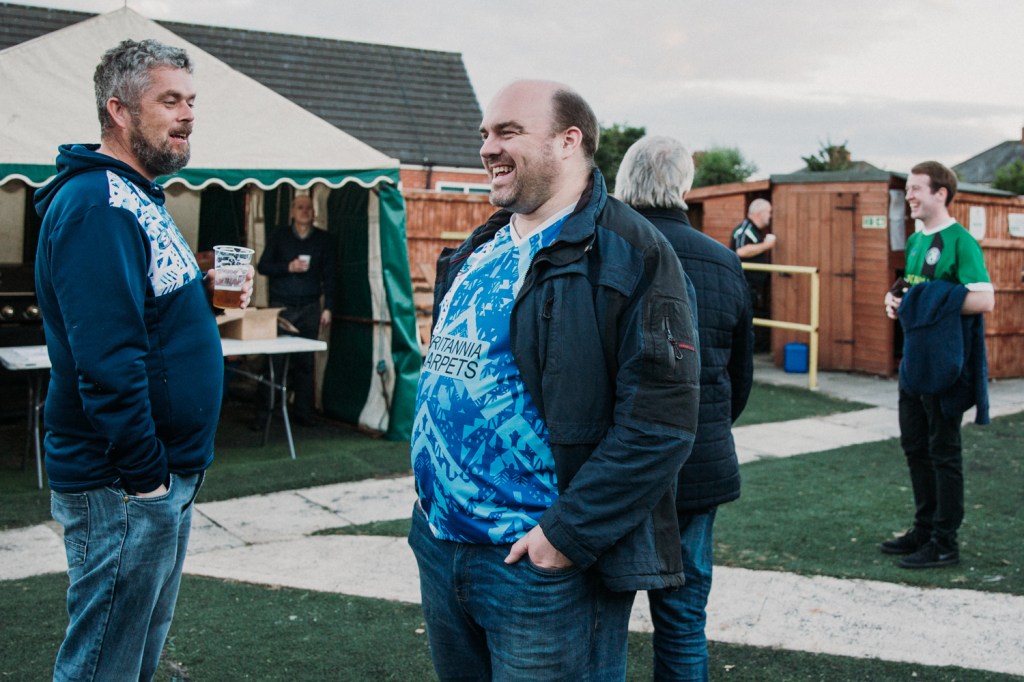
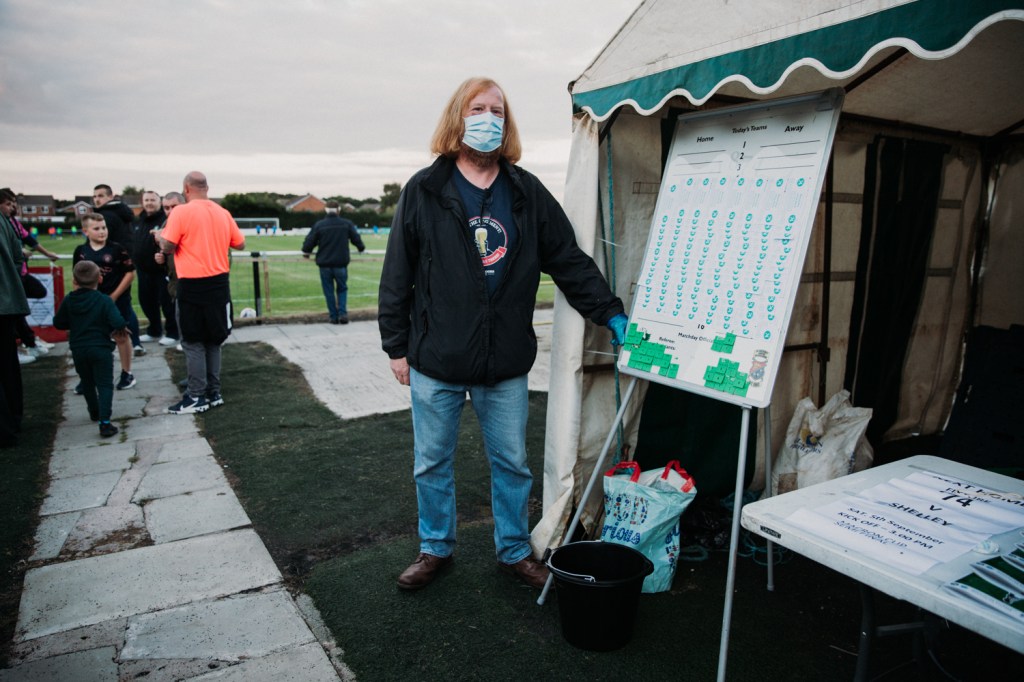
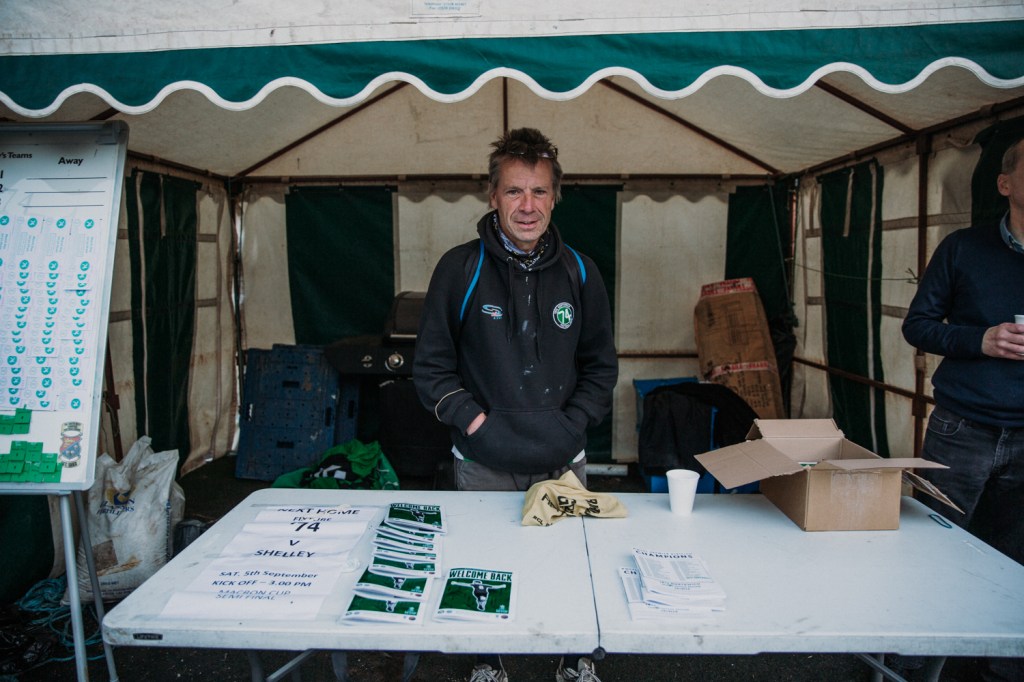
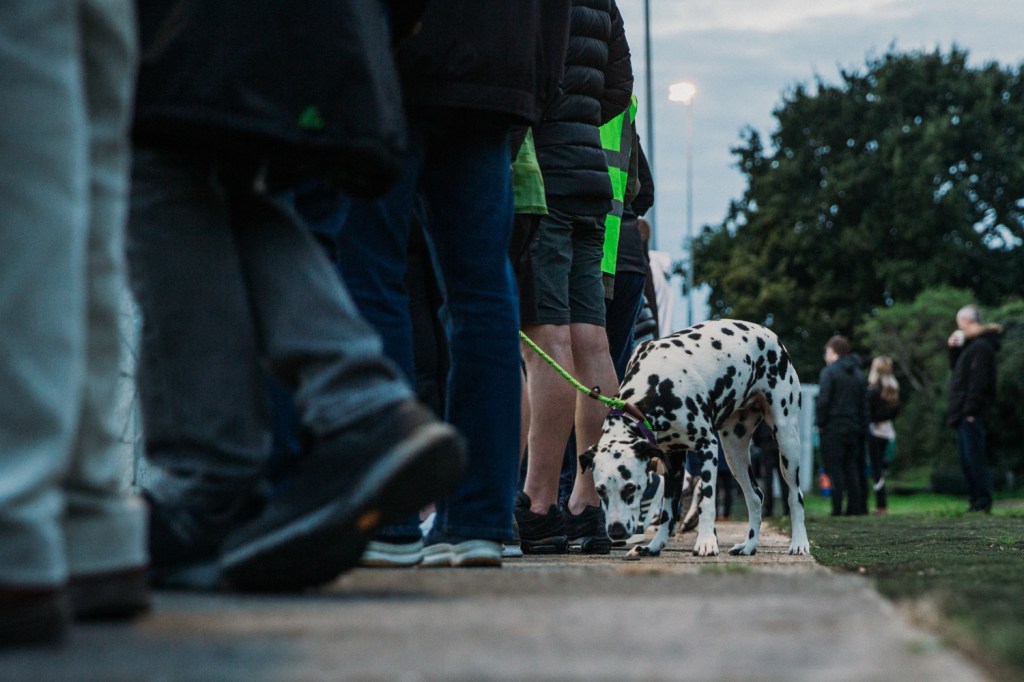
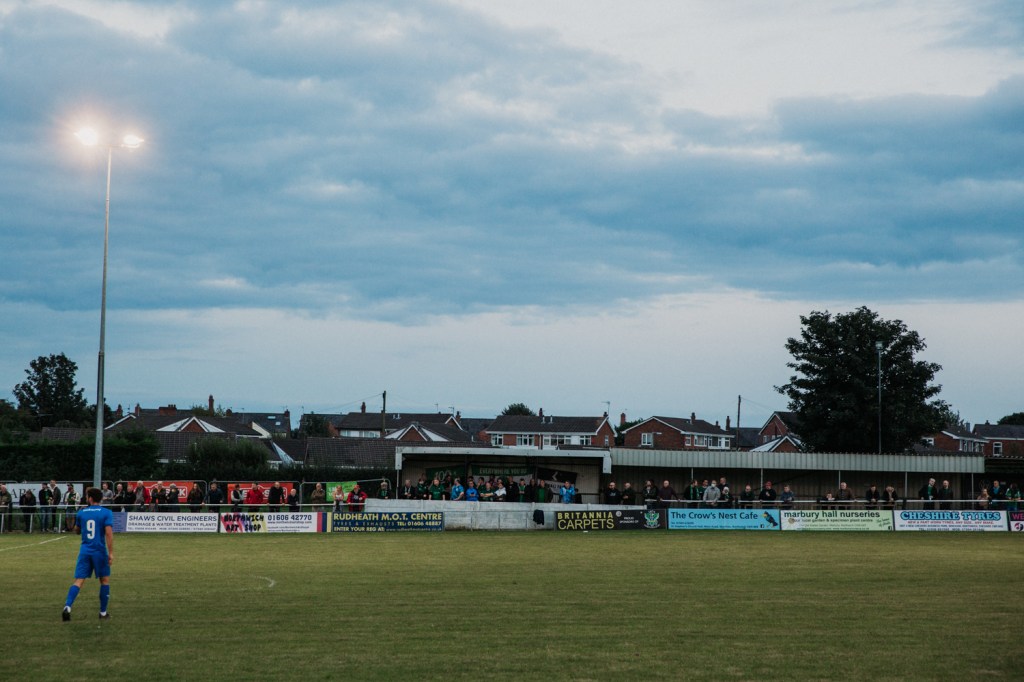
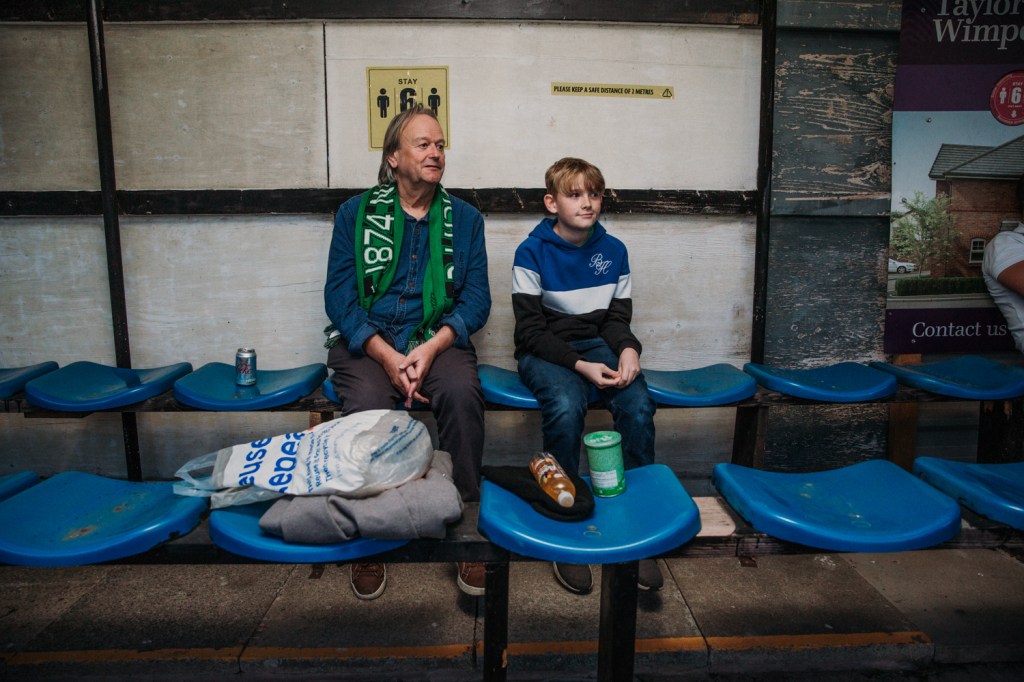
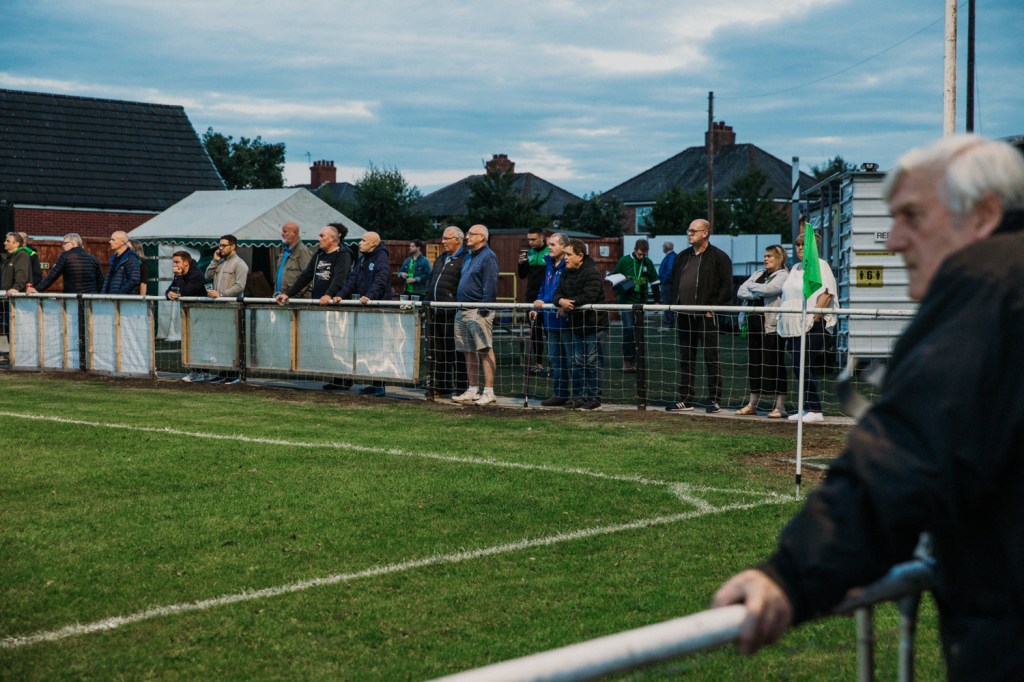
In addition to cracking on with the reading I contacted several football clubs who didn’t respond with regarding photographing at their club. This was frustrating however I persevered and eventually arranged to shoot at Cheadle Town FC FOR the weekend. The lack of interest in my work is perhaps not so surprising due to one club having their maximum attendance reduced as a result of photographs being published on social media, the contents illustrating breaches in social distancing.
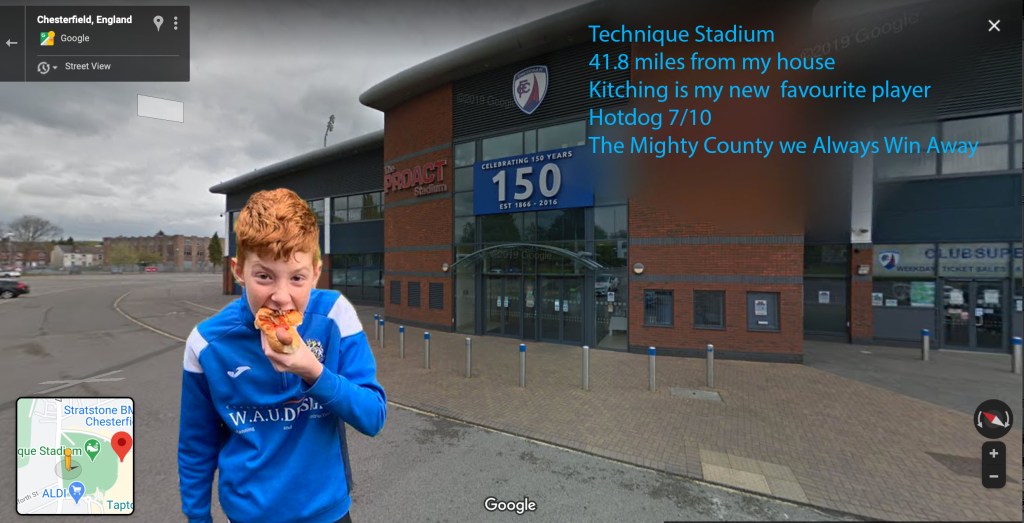
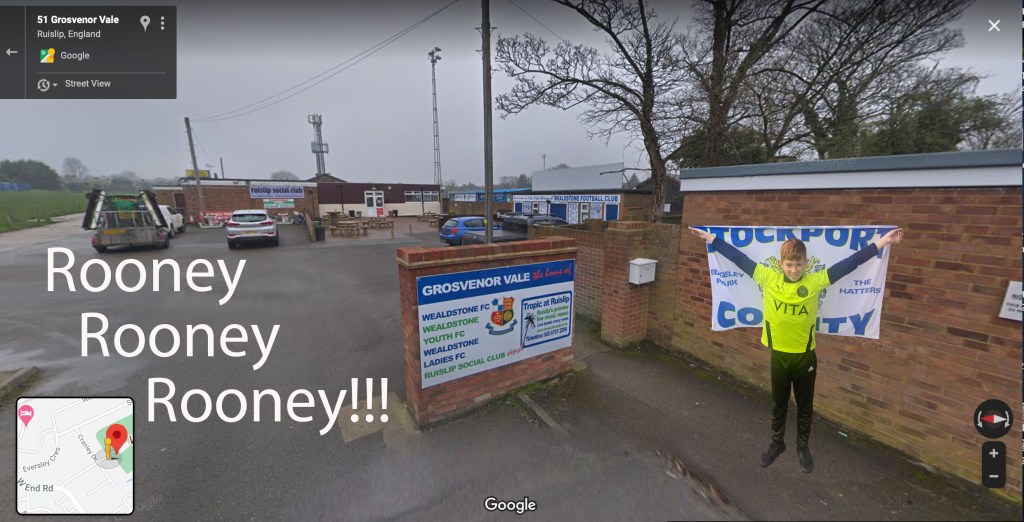
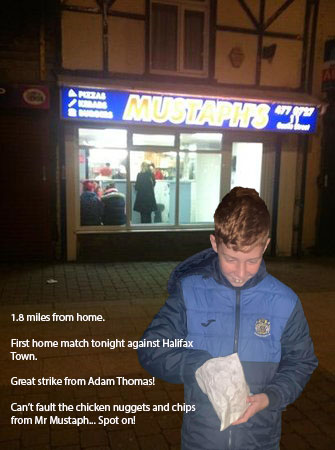
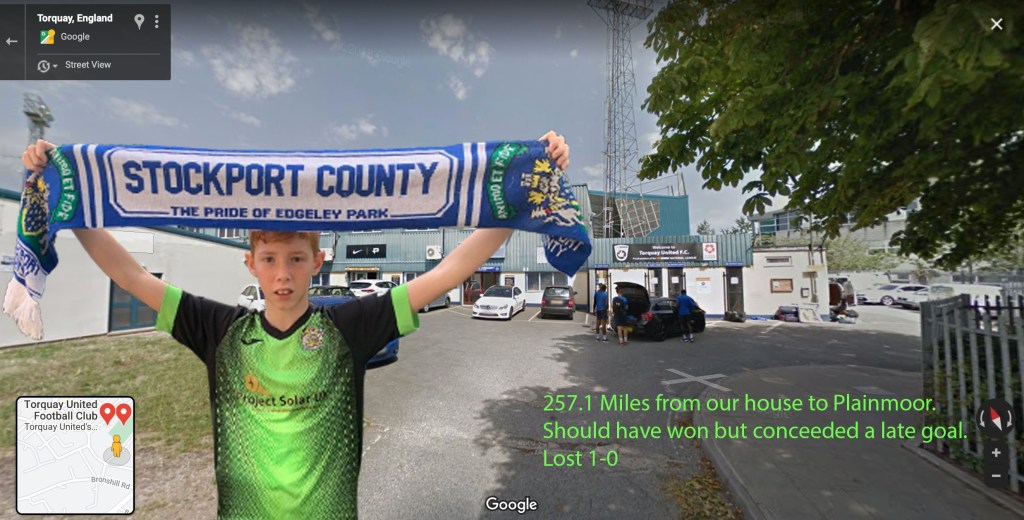
In order to make the best of the self isolation period, I decided to take photographs of my step son and photoshop him into scenes from google maps of the football stadiums that Stockport County would have been playing at. This has been met with positive feedback on social media and if anything is raising my profile on a local level.
The images were met with humour at the weekly webinar which was the intention. However, now I have started I will continue to produce these on a weekly basis and when I have completed the season I will make a decision what I will do with them. The advice my tutor gave was to continue without being too concerned with making them look realistic as the strength is in the idea. My experience of making them is that, in trying to encompass my step son within the environment makes the images look banal. Making him do things such as eating a hot-dog brings more fun to the mini project.
I would like to enter the book and exhibition market in addition to working on editorial commissions. I keep entering competitions on the ‘Life Framer’ website and some type of recognition would be really helpful in establishing myself. I see myself engaging with personal projects and producing monograph style books. This has been the format I enjoy the most and the self indulgence really appeals to me. Up here in Manchester and the North West, there is a really active community of photographers who appear to be journalists or ex journalists, and I feel that networking is really important in this sense and I will continue to involve myself with events and opportunities as they arise.
Plan B
In a commercial sense my wedding photography business is on pause, with lots of rescheduling for next year which on paper at least, looks extremely busy. Also working as a media and photography teacher in the FE sector, I would like to make the jump into HE, possibly in a part time role whilst still shooting weddings as it is quite lucrative. In this case I will still engage with personal projects and try to get as much exposure as possible.
At this stage I feel that plan B is the more likely as i’m currently without a break-though piece of work as it were. I’m obviously hoping that will change and fingers crossed it does.
In recent months I have had some good opportunities which included shooting stills for a BBC show called ‘I’ve Been There’ (Its on BBC Iplayer) in addition to getting the opportunity to shoot a band called the Blossoms in the weeks before lock down. This was an exhilarating experience and a learning curve as I found myself at the front of the stage amongst 5 other photographers.
I felt that victoria who has assumed the role of learer did a good job in explaining the idea, and it was me with enthusiasm by Anna who suggested looking at the work of Z Nelson and Michelle Sank.
This was useful and quite exciting as I would welcome the opportunity to make work of this nature.
Initially my thoughts are directed towards the approach of Felicty McCabe who uses portraits and mutiple frames in order to convey a message. Going forward I will consider garments and possible models and locations to use.
Over the course of the MA I have been following a small group of local photographers who challenge themes similar to my own project of non league football. I have previously written about Colin McPherson and been following his personal work in addition to his work for ‘When Saturday Comes’ magazine and I was pleasantly surprised when he sent me a link to a recent webinar he took part in alongside Jeremy Sutton-Hibbert and Kenny Farquharson.
The webinar, published by the Document Scotland website, entitled Football, Bloody Hell! Took the form of an informal discussion about their respective projects in addition to highlighting what is important to them when engaging with this type of work. For me it was insightful and interesting and on a personal note it was nice to hear a Scotish accent once again as my Dad was originally from Glasgow. I note this because my own project is emotional in its nature and hearing the participants speak provided a sense of ‘home’ that I had not felt since my Dad’s passing in 2015.
Listening to Kenny Farquharson for the first time was an excellent opportunity and upon further research into his career and concerns, I was quite taken aback when I read about his experiences as a child. As my research continued, I noticed that he was a fellow of the Orwell Literary Prize which further drew my attention as my BA final project over a decade ago was to make a documentary retracing Orwell’s experiences of Wigan in the book ‘The Road to Wigan Pier’. In making the film I worked closely with the Orwell Prize and found them very helpful to the point where we attended the prize giving ceremony and interviewed a range of important contributors.
Learning about Farquharson’s affinity with Orwell in addition to the warm Scottish accents, I felt that I was in the right place and less anxious about the concerns of my own project somehow.
Reflecting on how the webinar was informative regarding my own approach, McPherson offered a critical insight when he asserts that his work in this area is motivated by his desire to ‘recreate his own memories’ going on to use the phrase ‘reservoir of memories’. I felt that this was poignant to my approach as I am in some way trying to reconnect with my experiences through photographing football.
Recently I had begun to think about the term ‘groundhopping’ and felt that this was the process I was engaging with, however as I continue to scratch the surface of my concerts and cultivate my thoughts I understand that I was, and still uncomfortable with this label. The idea of groundhopping aligns with a broader theme of community which I don’t feel my work is primarily about.
Reflecting on my memories as a player I forgot the amount of times I had to walk into the dressing room of a new team where I didn’t know anyone while fully expecting to take somebody’s shirt from the starting lineup. It’s fair to say that I had my fair share of frosty experiences.
Read and Simmons (2017, P222) make useful remarks about understanding my own project‘The work may start from a few words, a feeling or question and be a process of discovery, a working towards something which feels right, true or authentic.’ My experience of this project is summariesd well in this instance, I feel that from the outset I had the idea of reflecting the landscape of non commercialised football and felt that I had relevant experience of this subject although initially unsure about the story I wanted to tell. When McPherson makes reference to a ‘reservoir of memories’. I realise that my personal motivations are to tell my own story. It may not be a unique story, but it is a story that I have ownership of. The implications of this serve to provide confidence in my own voice which may have disjuncture and photographs that appear unconnected, but taking photographs by listening to my own instinct is the way to go. Reconnecting with my memories on my own terms in the way that I know how.
When the topic of discussion moved towards the equipment used to make such work, the participants discussed the selection of cameras. This was useful as I often pontificate which camera to use. Without going into detail of the technicalities, the assertion was made that a smaller camera helps position the photographer as a ‘fan with a camera’ as opposed to using a larger camera which may position the photographer as a journalist. Farquharson, when making his project about Glasgow Rangers commented about the fans and their unfavorable attitude towards journalists being a challenge that he faced. Having attended Old Firm matches in the past, I couldn’t help but think that I would feel a little nervous as a journalist amongst Rangers fans in small Scottish football grounds with less regulation. However the outcome of the discussion yielded an important consideration going forward which will be the selection of camera I use for shooting. To date I tend to prefer my Cannon 5D, especially in Winter or evening matches as I am able to use a speedlight where necessary. On occasion I have used my Fuji XT20 which is a small but powerful rangefinder camera. The Fuji will essentially enable me to look like a fan with a camera as opposed to the Cannon which may allude to my differing intentions of the fans.
As the webinar progressed the conversation turned to the type of photographs that editors look for. This was really useful and a subject that I have little knowledge of at present. Relevant advice by McPherson being the idea of encompassing ‘air’ in the shot, ‘look for the whole story in one photograph and to make work that illustrates the football match as an event and not just a game. With Farquharson adding his approach of bright, tight and upright when referencing his portrait/documentary work.
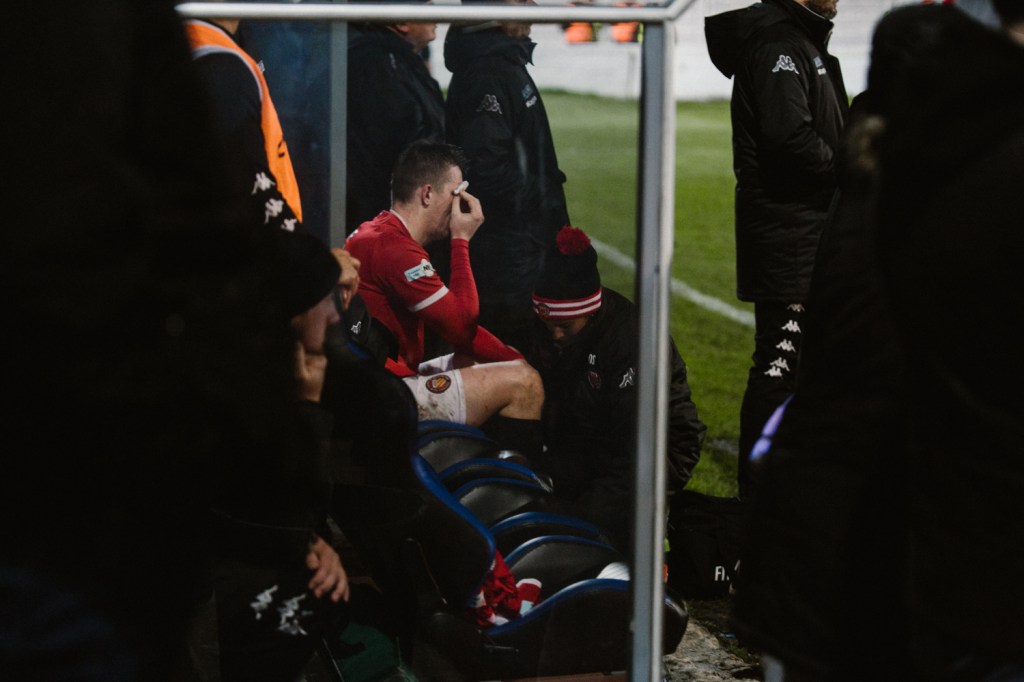
At the end of the webinar I found that I had pages and pages of notes and guidance, much of which I had already been doing to some extent however I cannot stress enough how useful it was to listen to the advice provided. The golden rule in a personal sense was McPherson when he states that his intention is ‘to look for the photographs that other photographers don’t look for’. I feel that this is similar to the approach that I have taken from the outset of the MA, without being fully able to explain why. I feel that I have now established that my project is about reconnecting with my own experiences as a player. Only now taking the time to photograph the vernacular elements of the game that I used to stare at when the ball had been kicked out of the stadium or someone was injured. Sometimes while the game was taking place.
Any feedback is greatly received: enquiries@drewfindlayphotography.com
Read and Simmons (2017) Photographers and Research, The Role of Research in Contemporary Photographic Practice. Taylor and Francis, New York.
Another week has now flown by and it started with that now familiar feeling of not really knowing where i’m going and hoping for some guidance in the webinar.
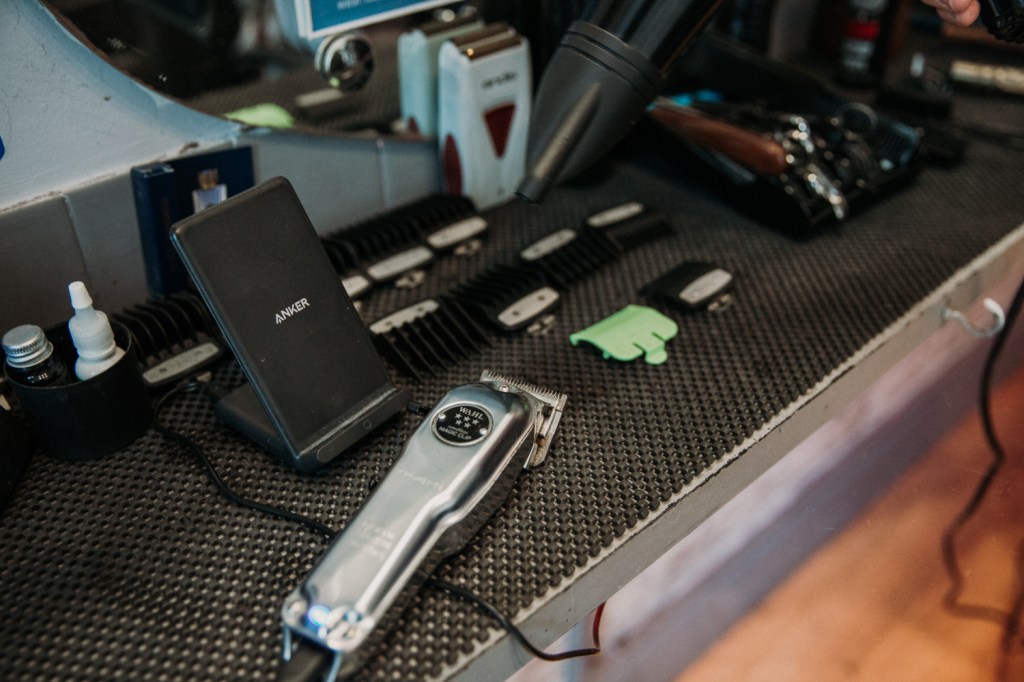
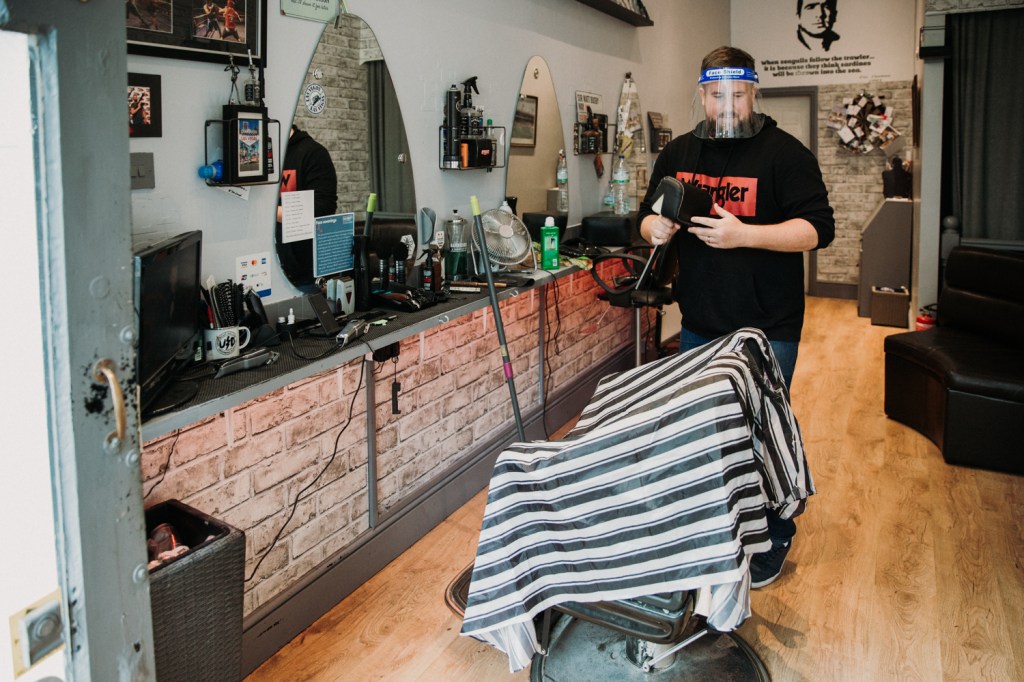
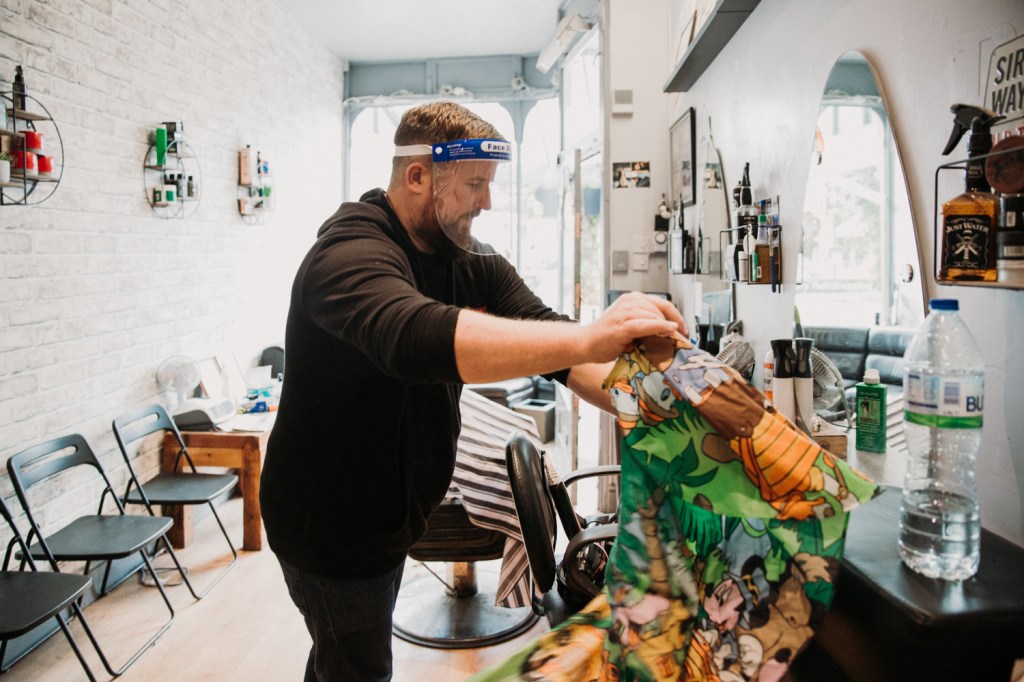
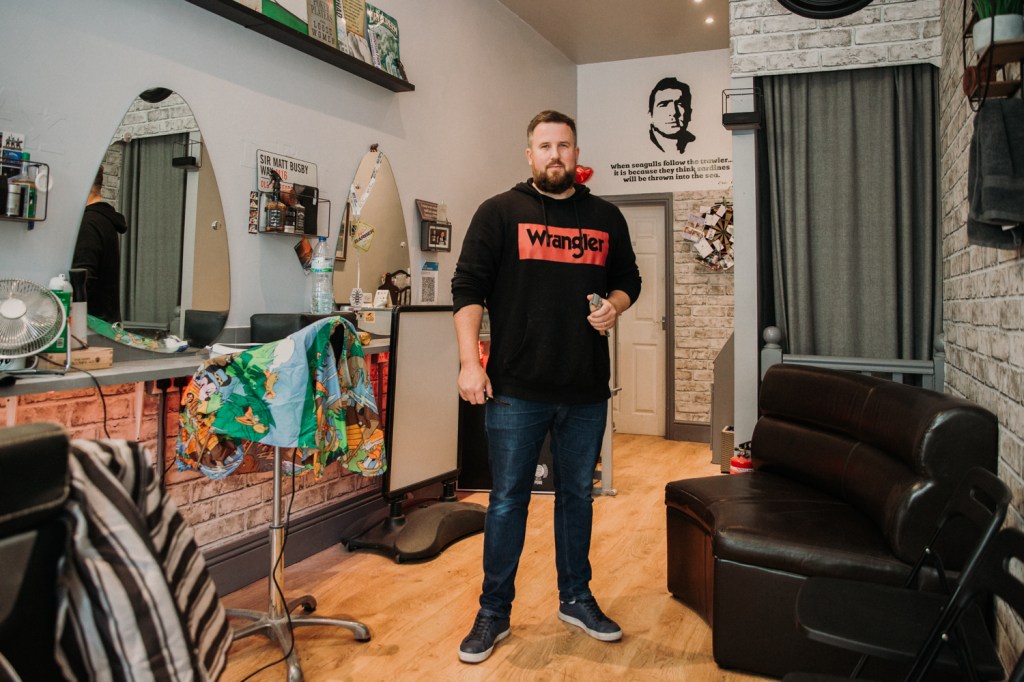
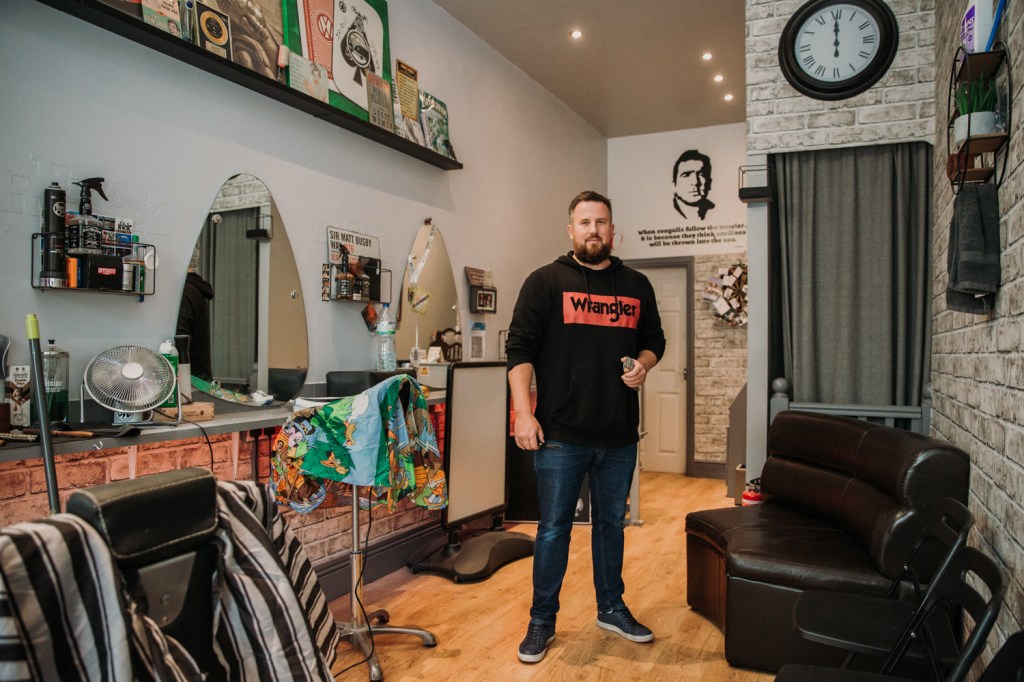
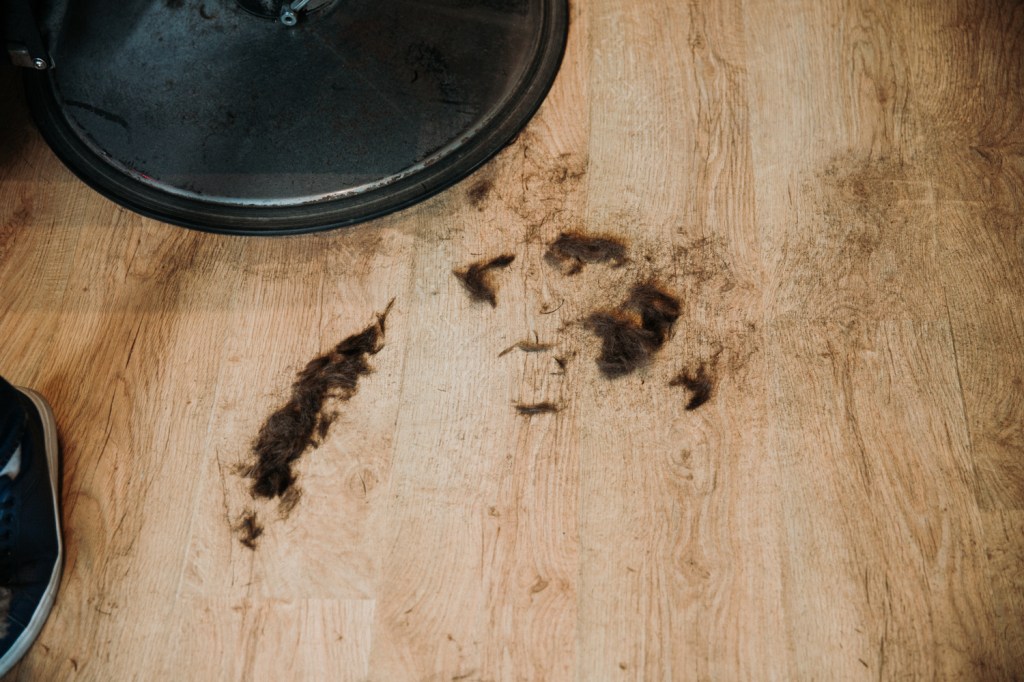
The week started by taking my camera to the local barbers with the idea to get a haircut, eat some biscuits and make a portrait which was clean, considered and in the style I was hoping for.
I also took the opportunity to look at some of the work I made at the early stages of the MA in order to see if I had any work that represents interest. Most of which was relevant but the overriding emotion was disappointment that my previous work is riddled with indescrepencies, most notably the framing of the people I photograph. On so many occasions I see basic errors especially with portraits specifically the bottom areas of the frame. Often cropping feet at strange angles or not thinking about this area when deciding to fire the shutter. Therefore, my considerations of this are currently at the forefront of my mind when taking portraits now.
Other considerations include avoiding distractions around the area of the head and finally the vantage point as I often pontificate whether I should position myself at a lower angle. In some cases I believe I should but in other cases I feel the vantage point is well chosen. As I would like to pursue this field of work I will use this module to continue development within this area. To conclude such considerations I feel that my work is improving in this area and this improvement is reinvigorating to make future shoots feel like an exciting prospect.
Felicity McCabe
Watching the lecture with Felicity McCabe was insightful and listening to the confident way she speaks about the work was something that I feel that I needed to hear as I am aware that feedback from tutors is extremely relevant but at the same time is largely worthless if the individual is lacking in their own autonomy. An issue that I feel that I am guilty of. As a result of this my approach will shift towards creating that I believe in, and making it in such a way that when the opportunity to receive feedback arrives, it will be a case of advice and guidance on a minor level as opposed to looking for some type of emotional support. Essentially, if I don’t believe in my own work then nobody else will, especially an established professional.
A a result of watching the lecture, I conducted further research into her project ‘Dryland’ and I was intrigued by the way she places two images side by side. In doing this I felt the photographs entered into a symbiotic relationship, creating metaphor and a broadening of a perspective looking both inwards and outwards with the high key lighting demonstrating a confidence in her work by opening up the detail of the whole frame. The overarching personal message being to let go of my insecurities and trust the research I have done.
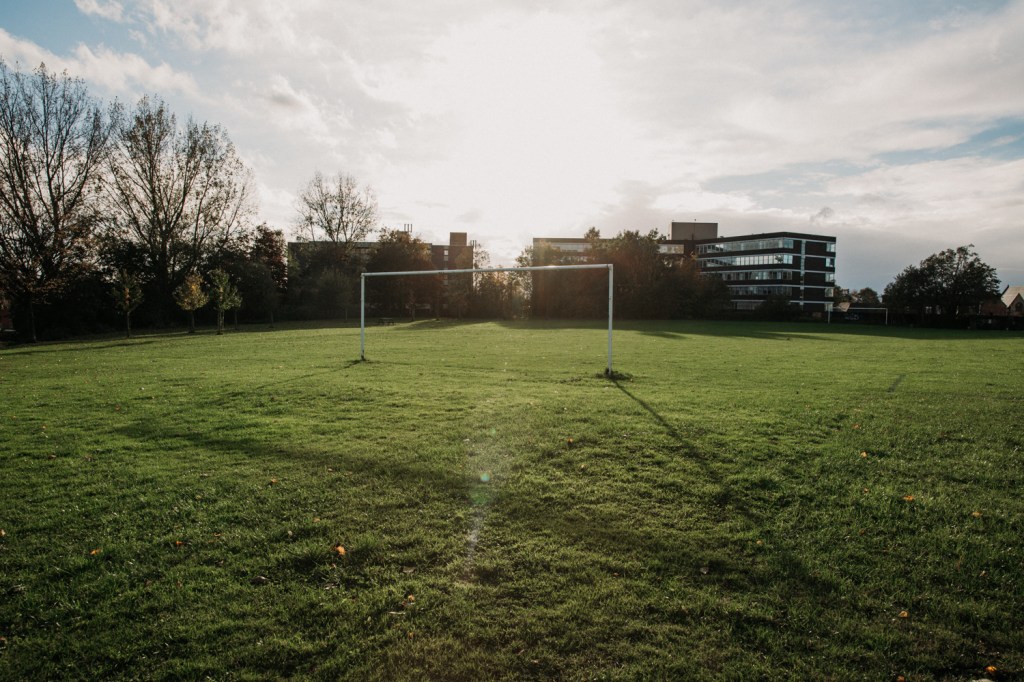
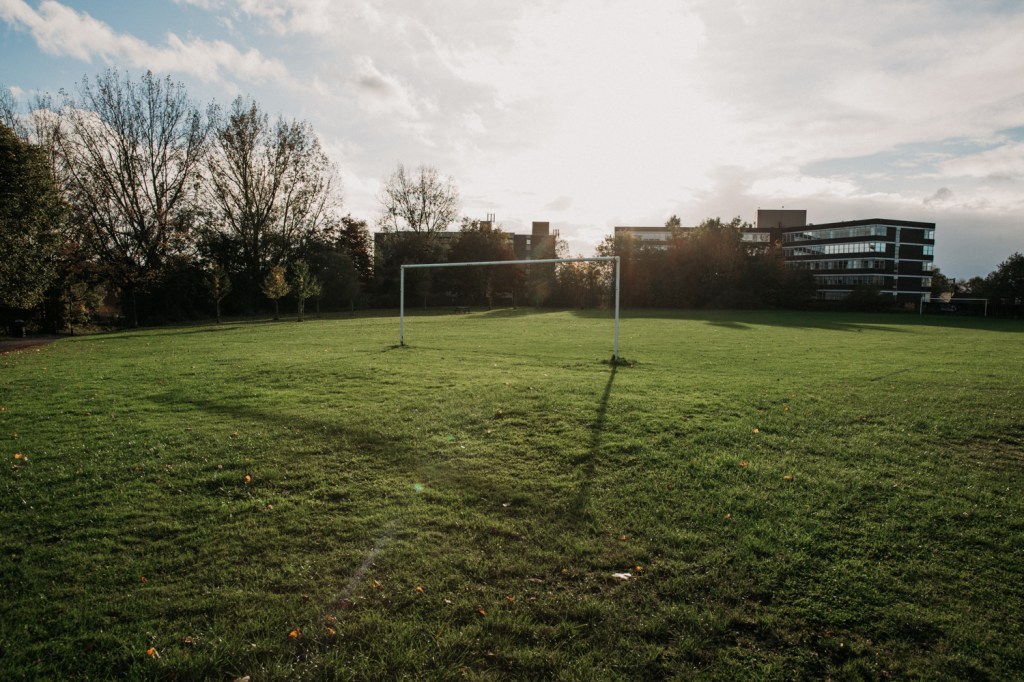
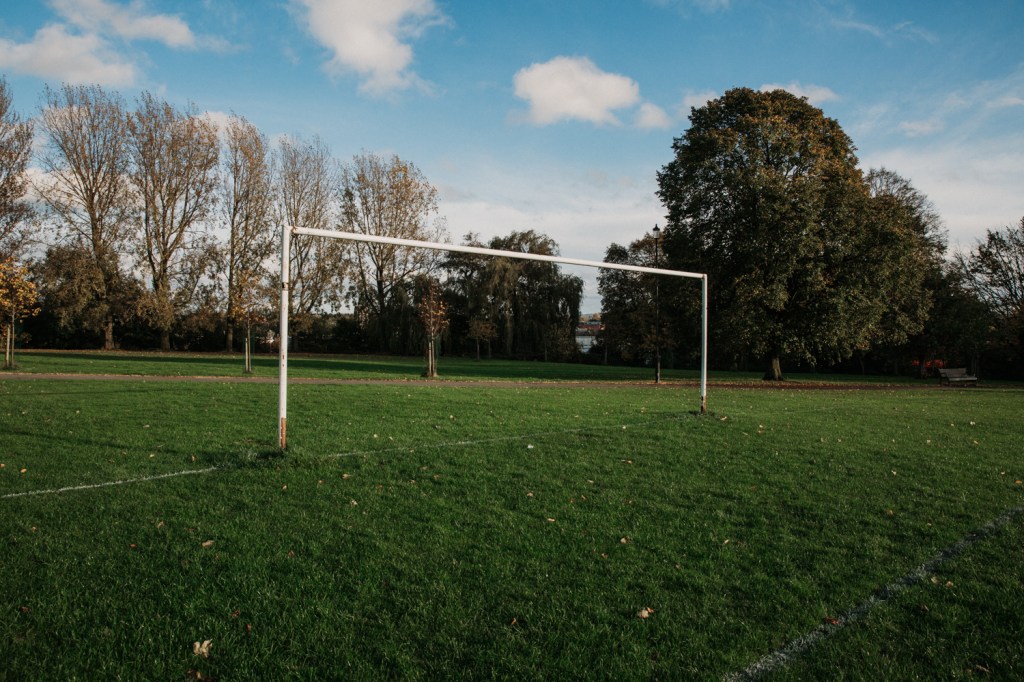
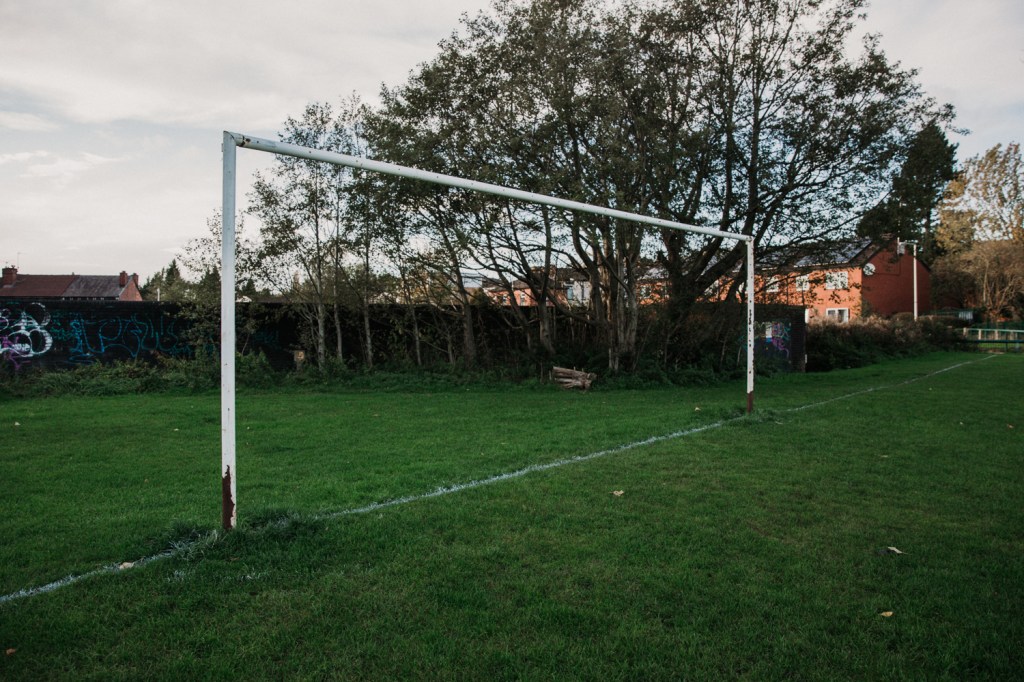
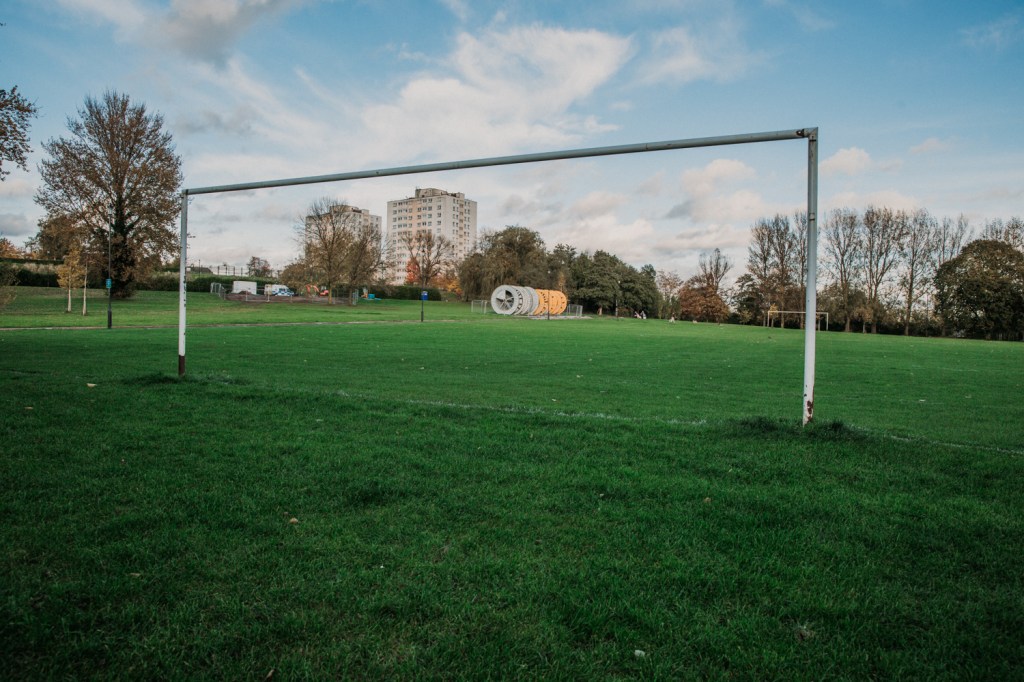
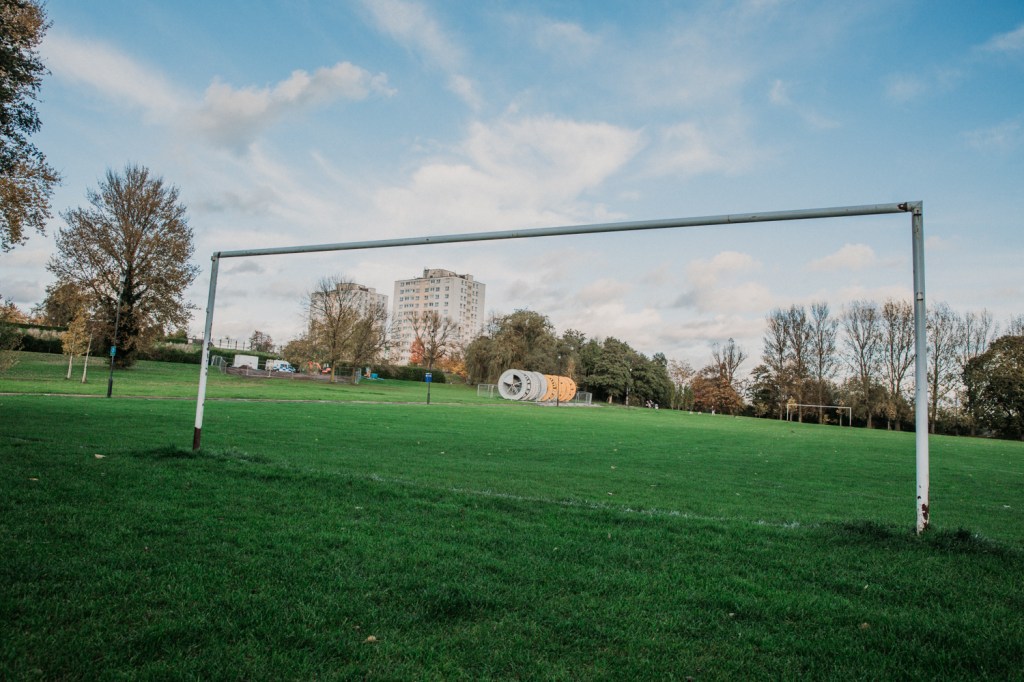
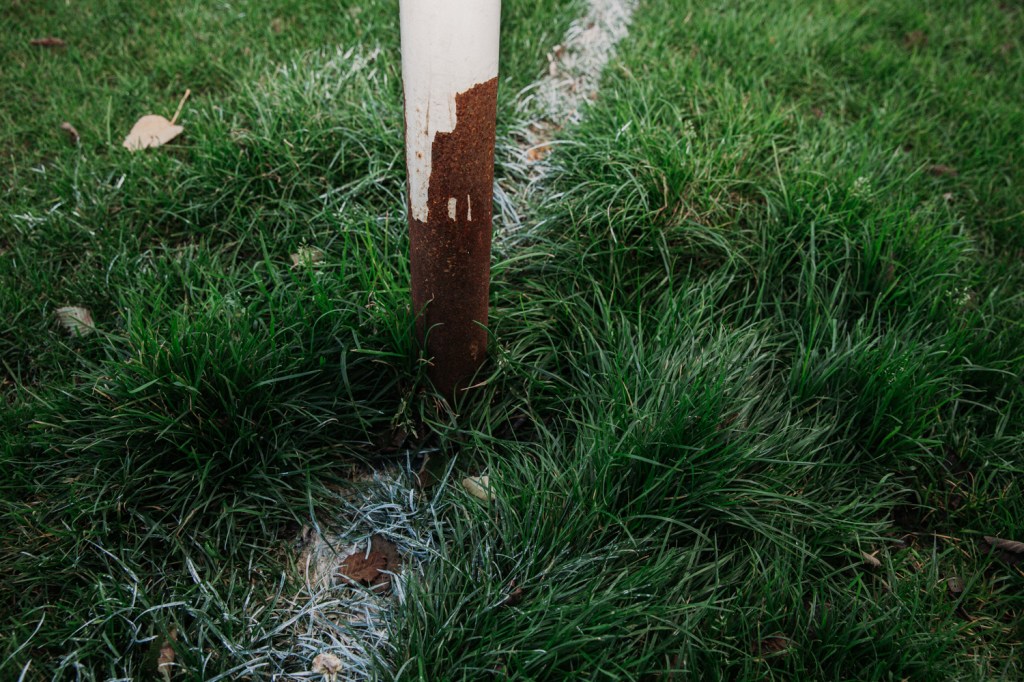
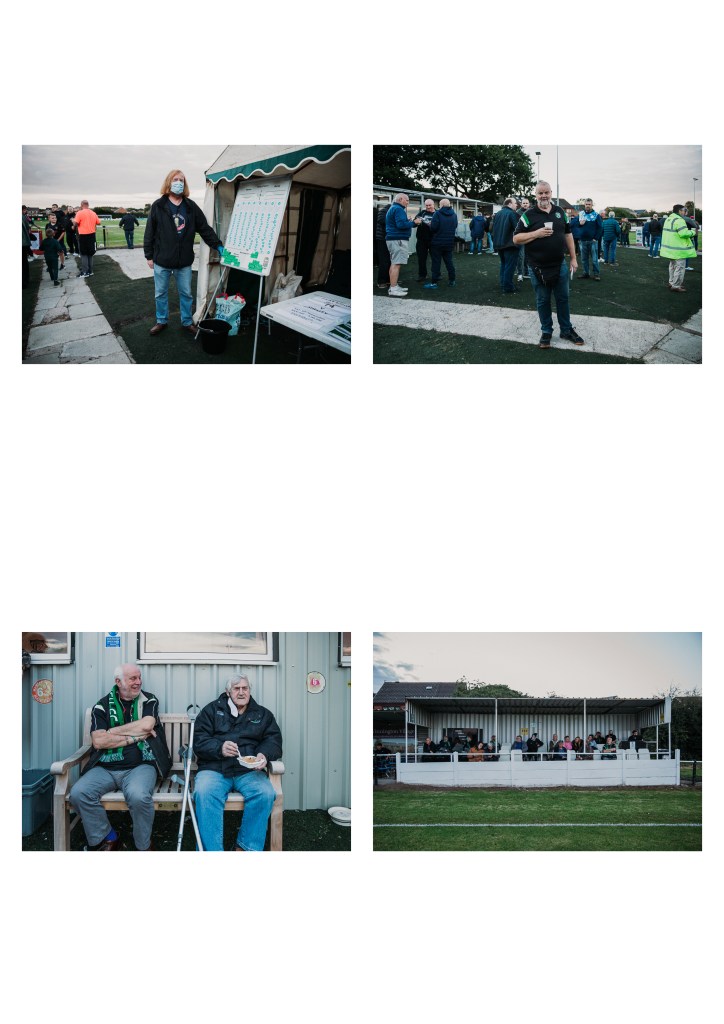
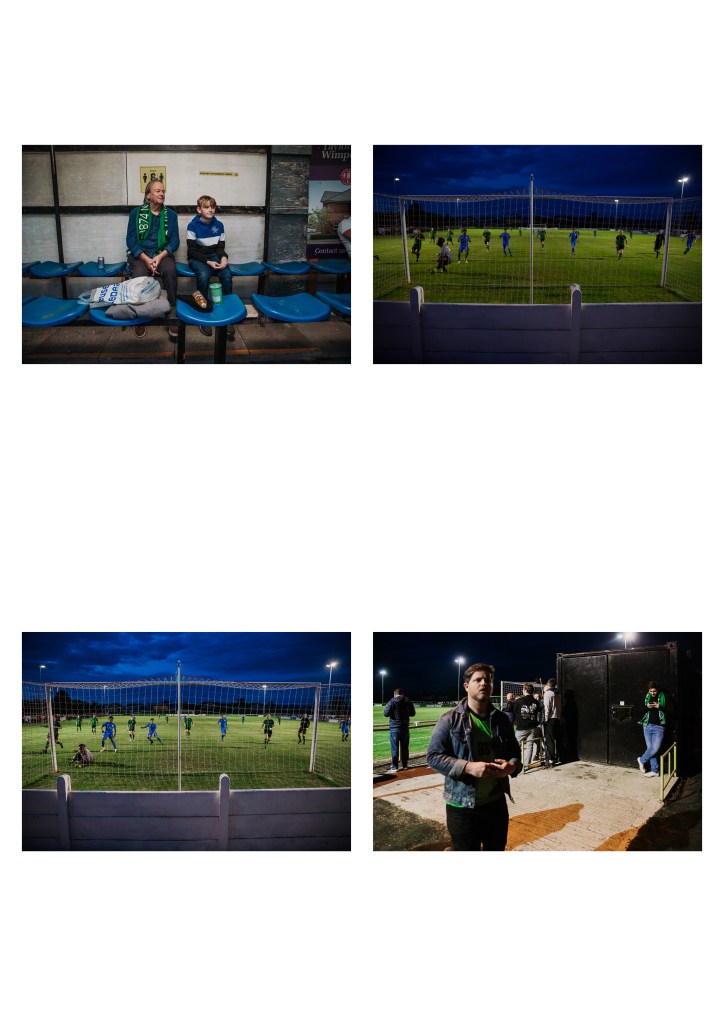
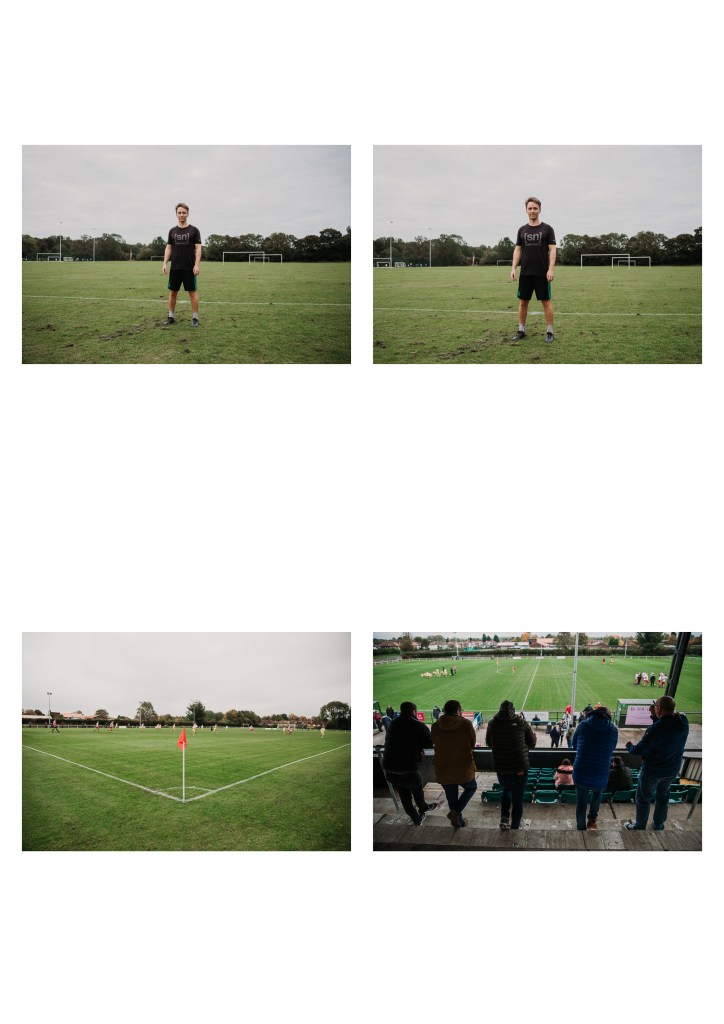
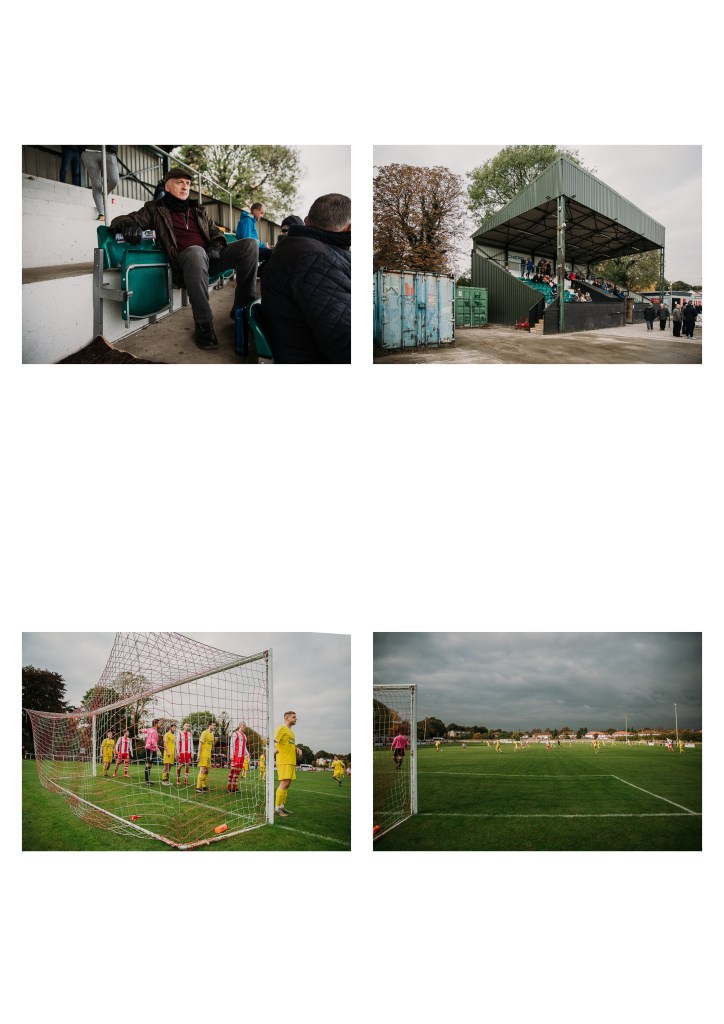
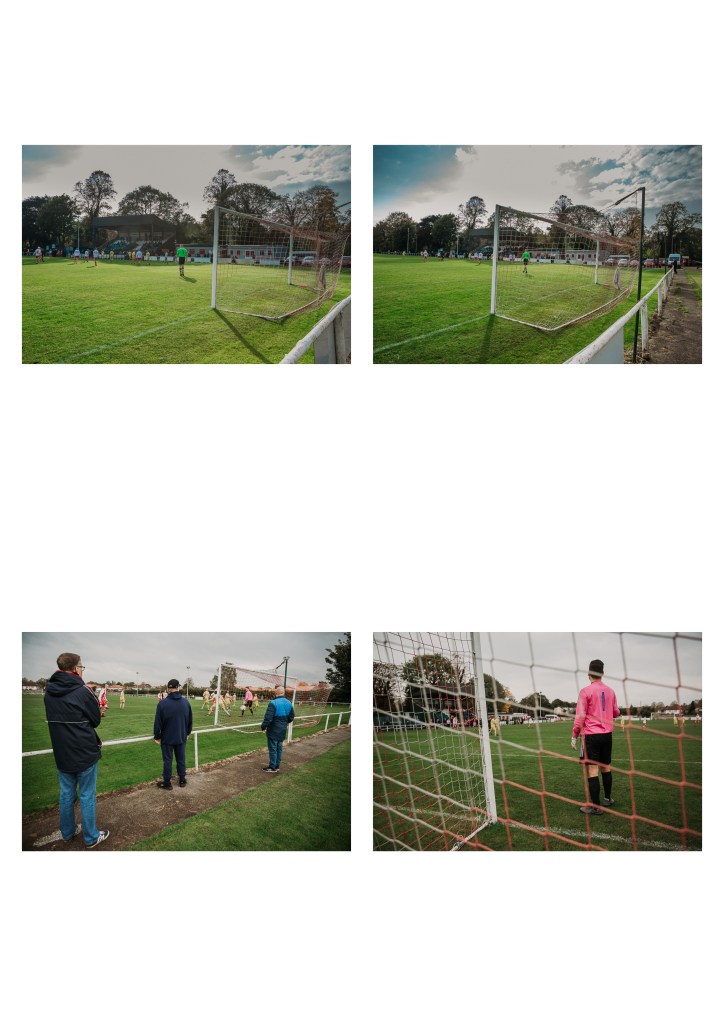
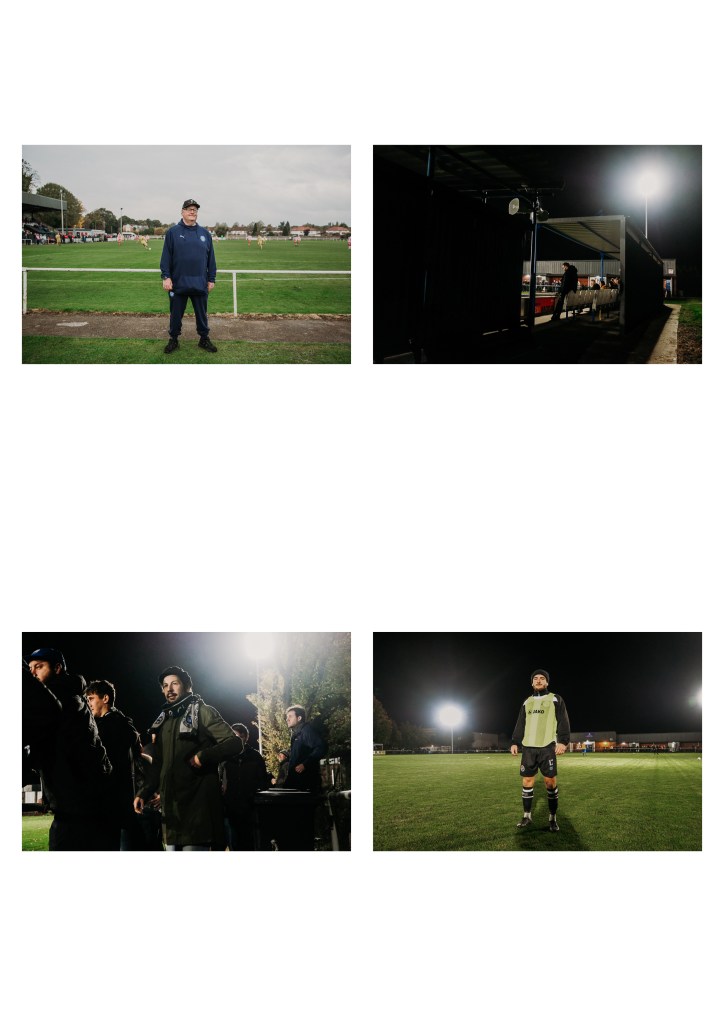
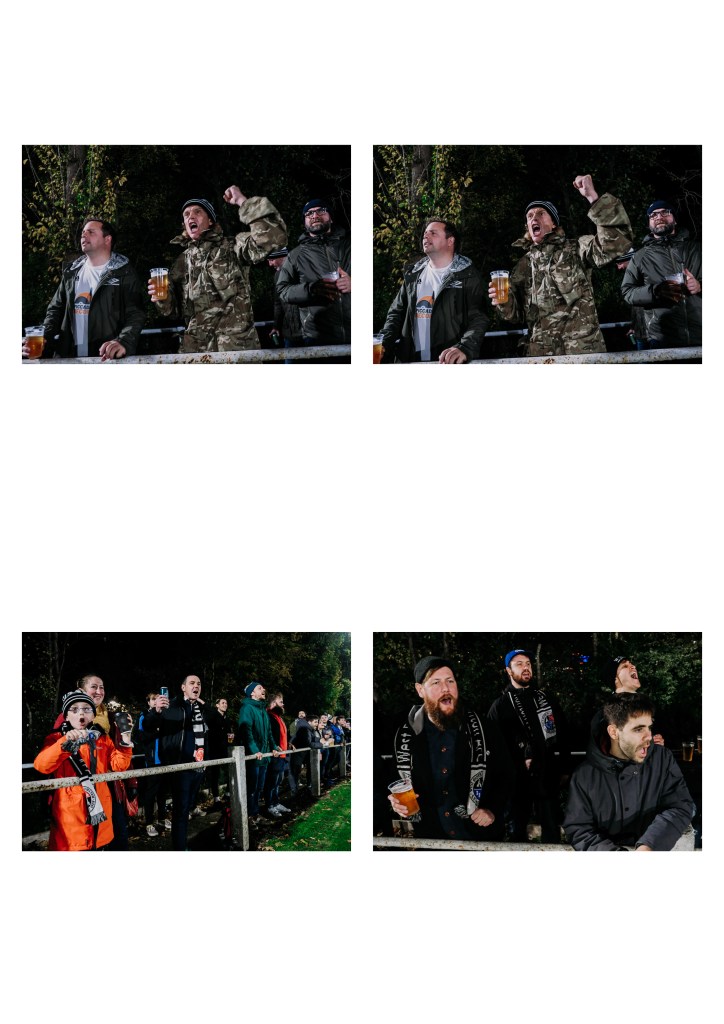
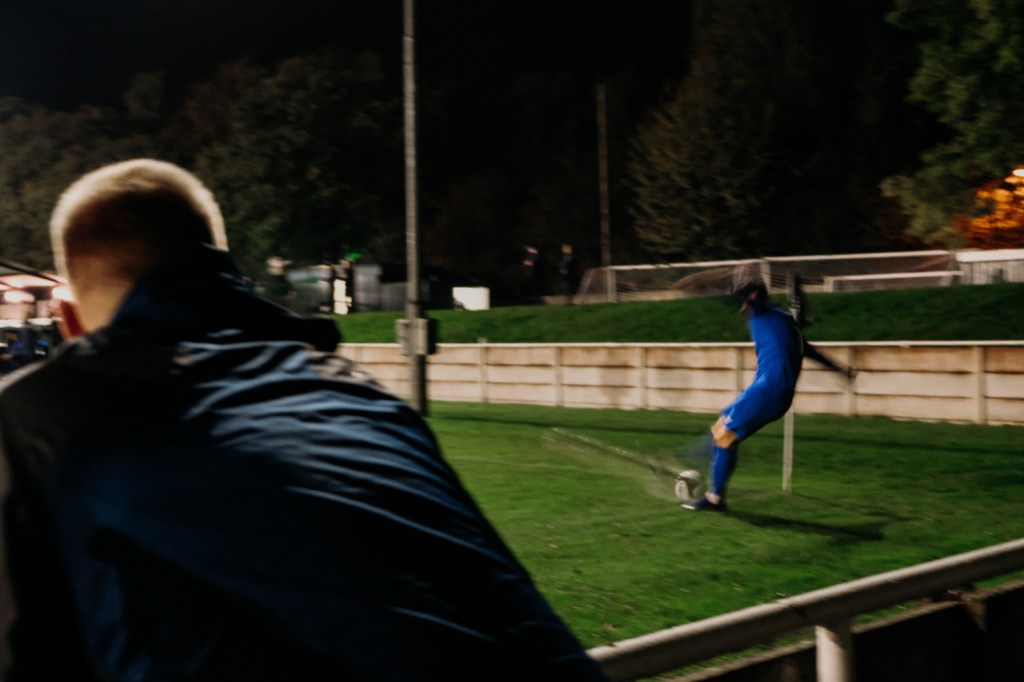
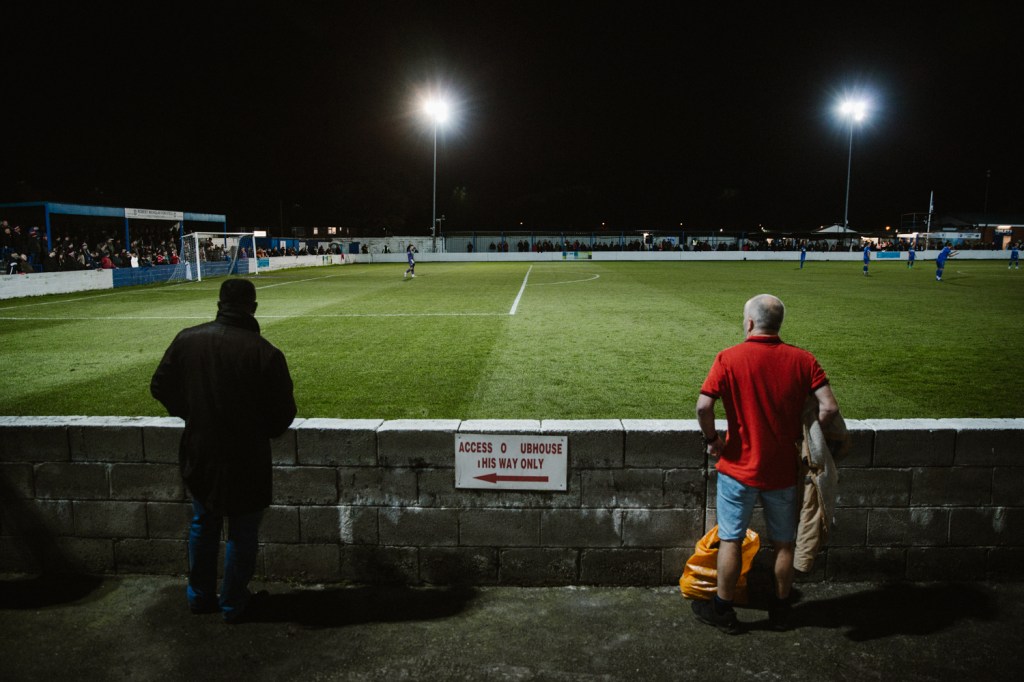
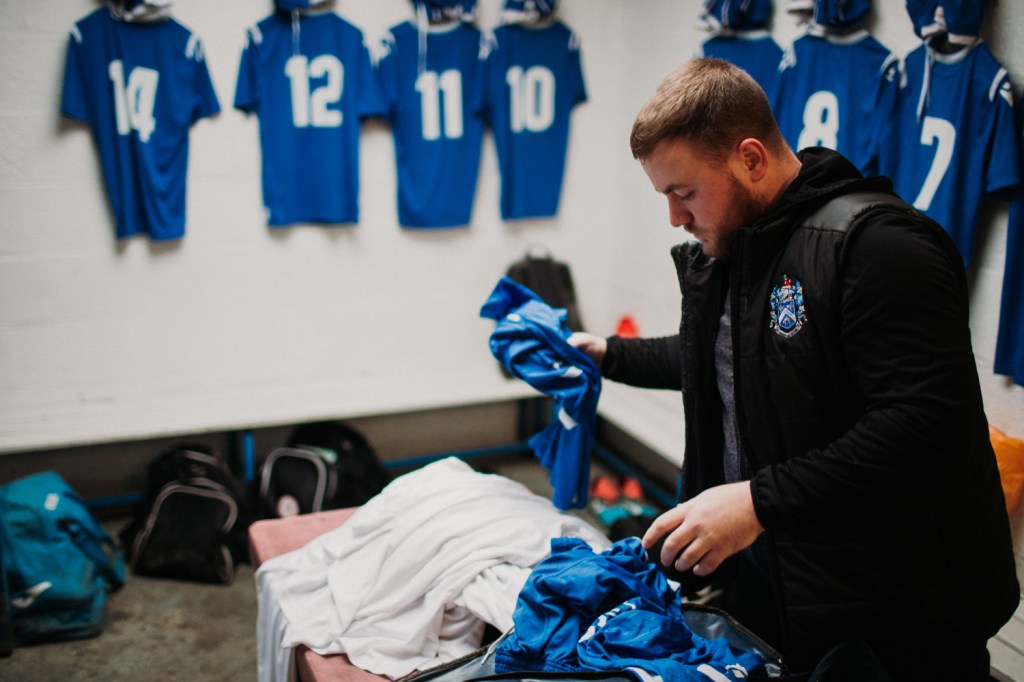
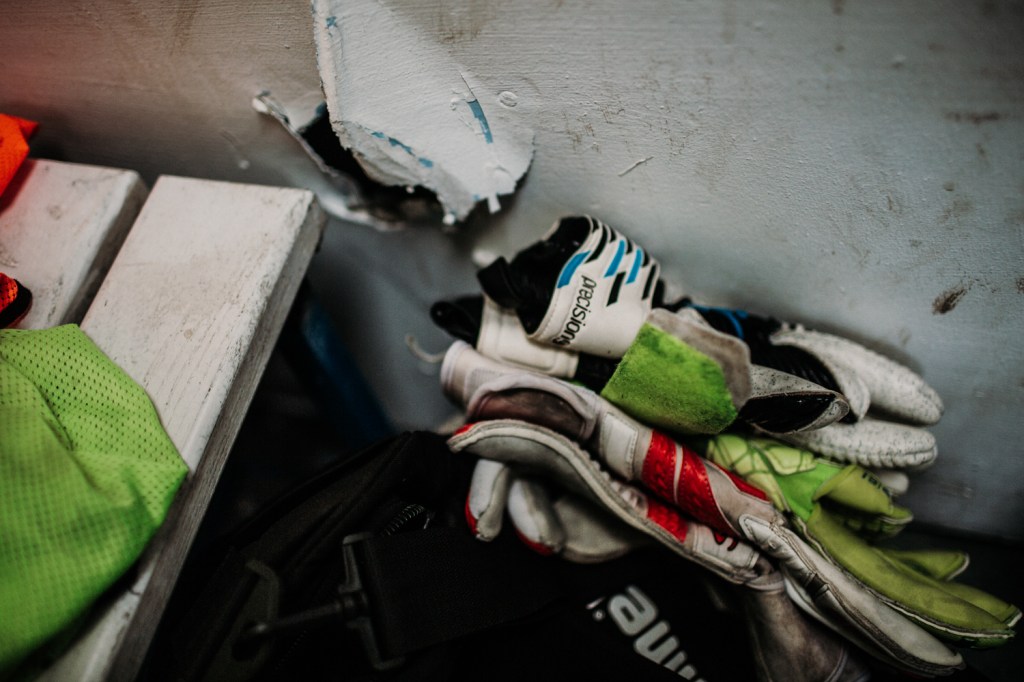
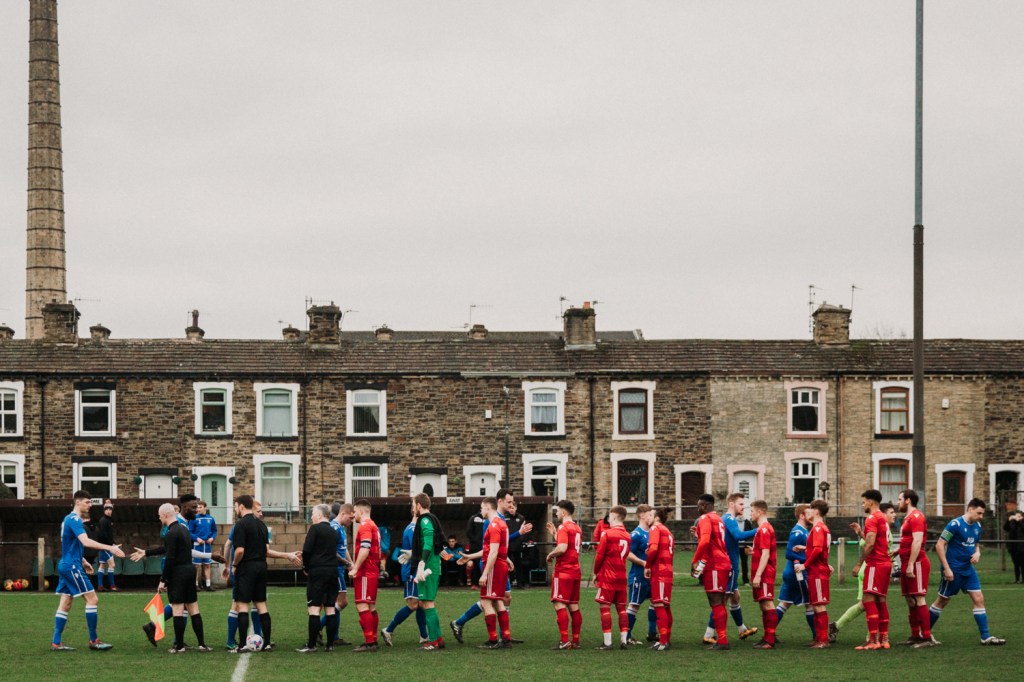
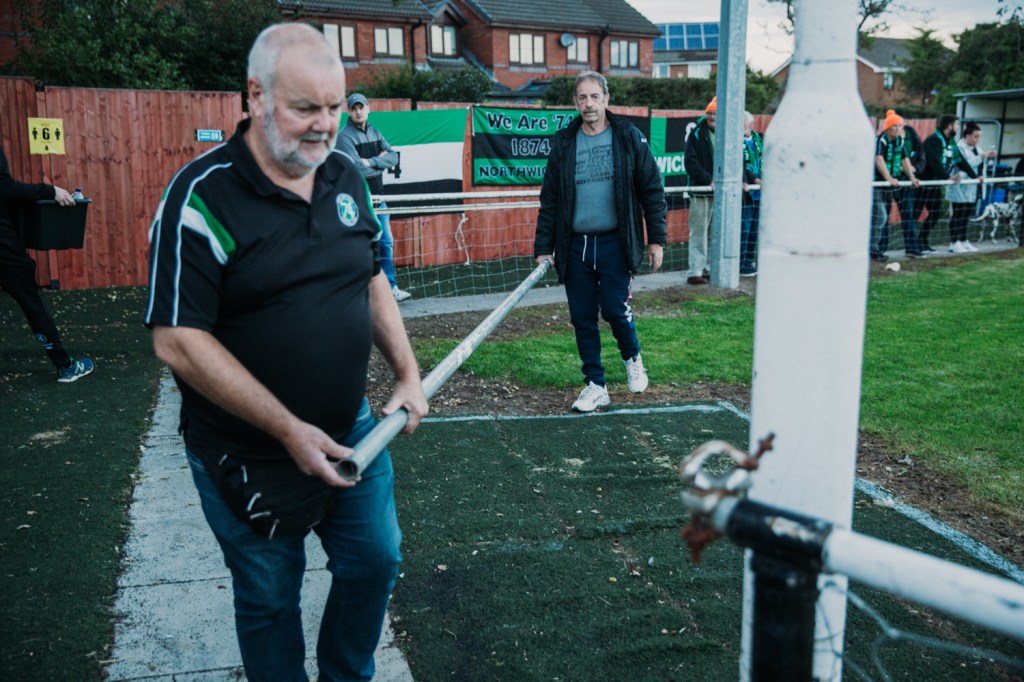
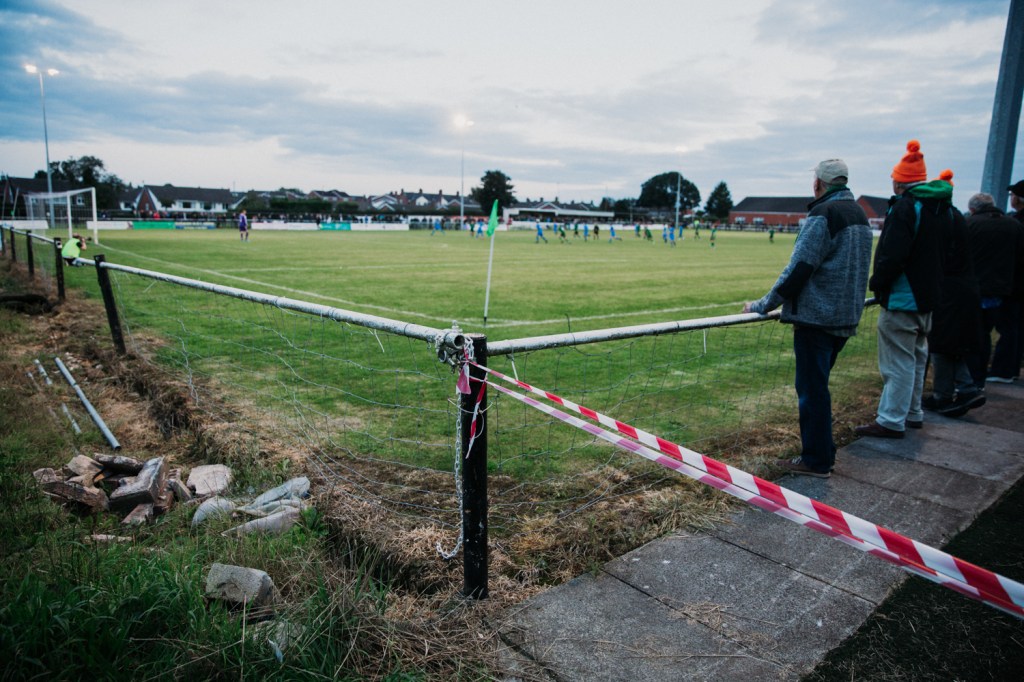
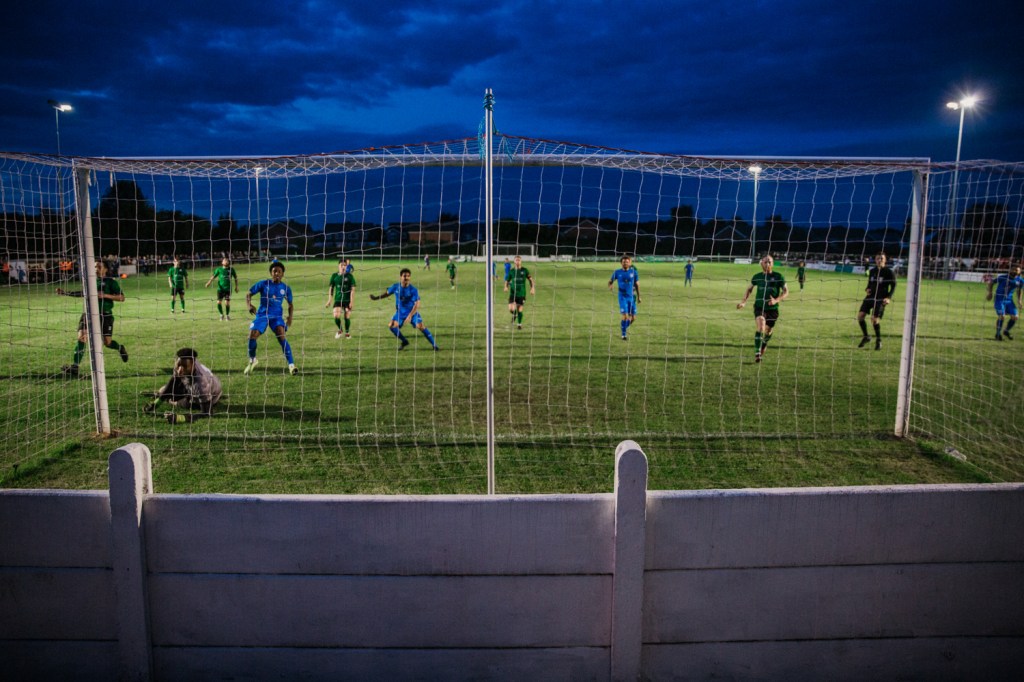
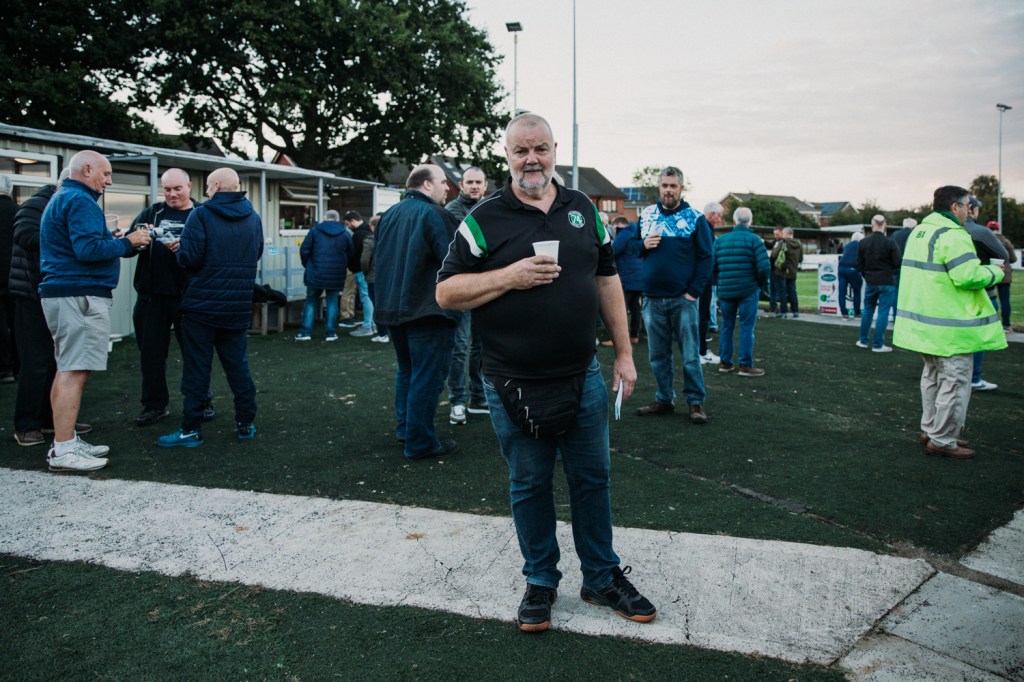
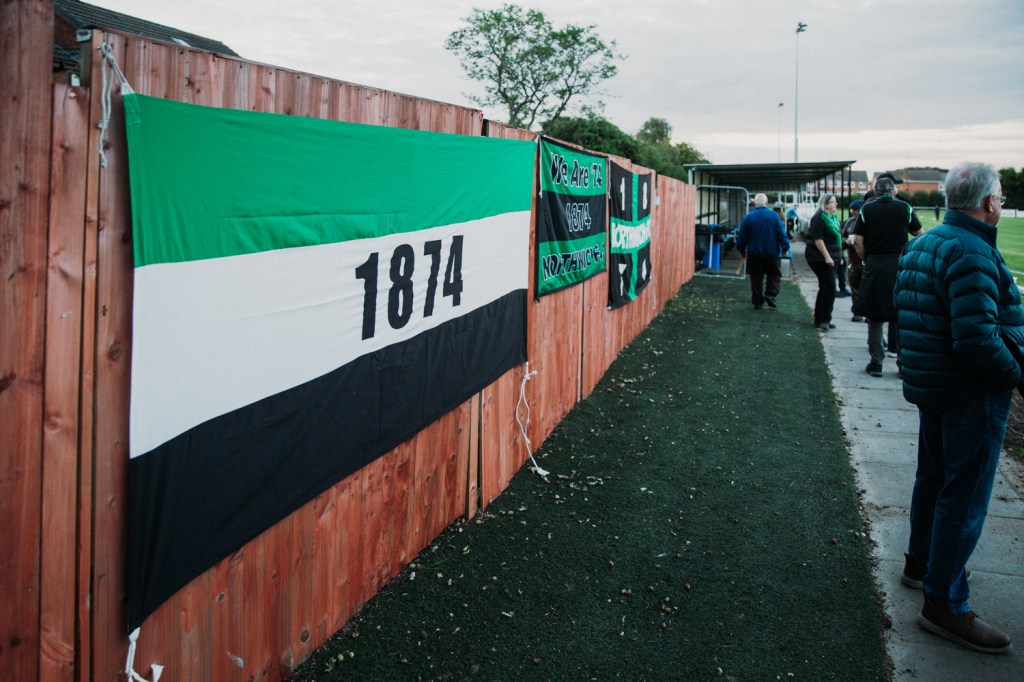
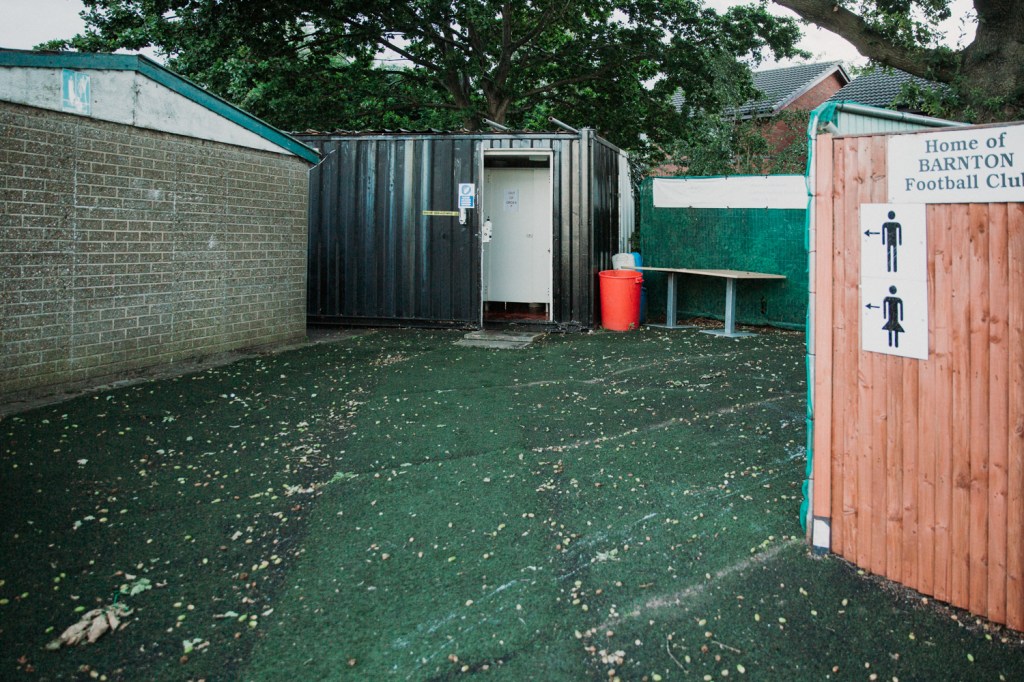
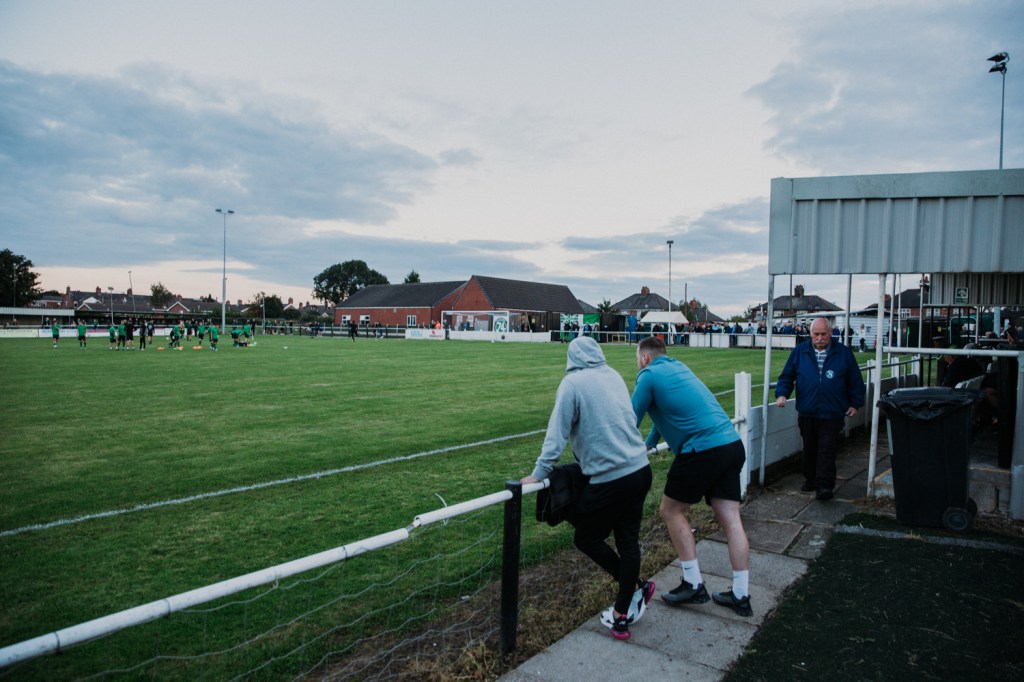
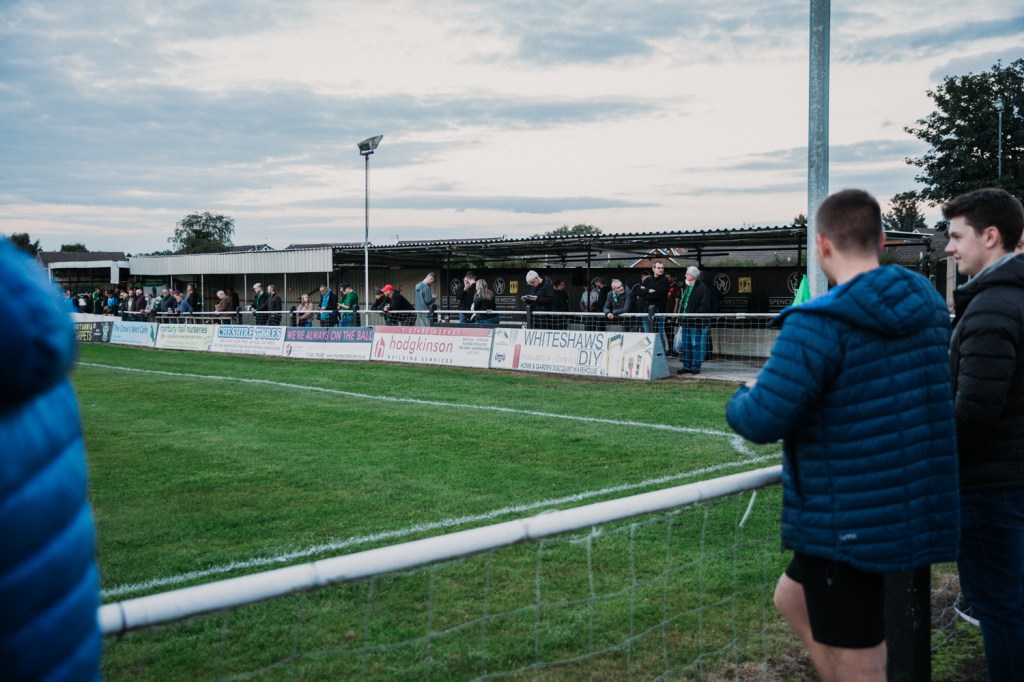
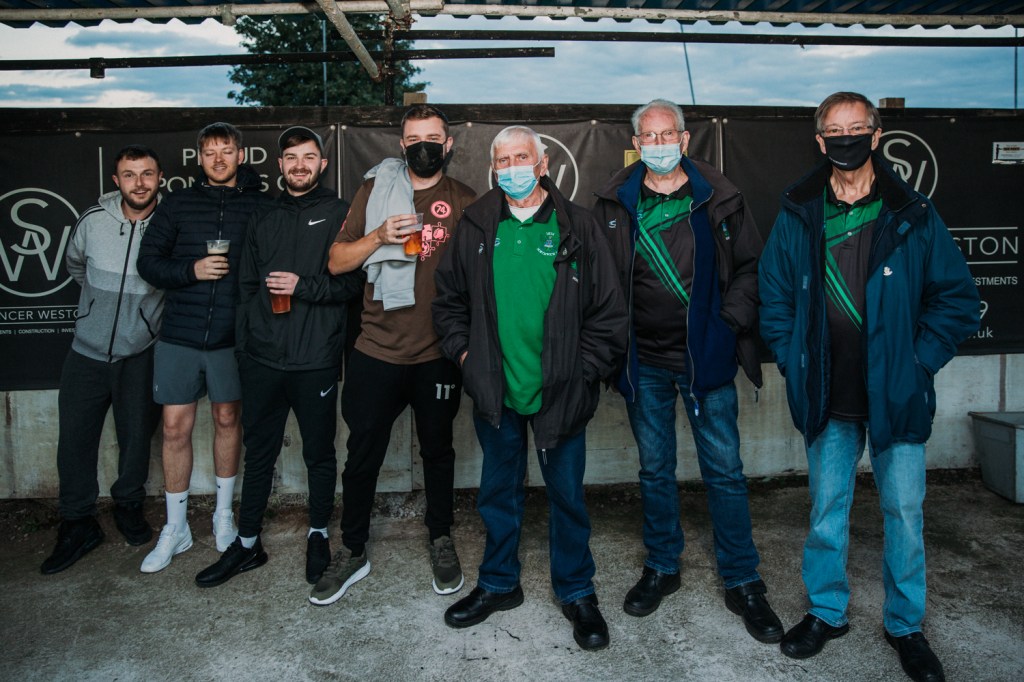
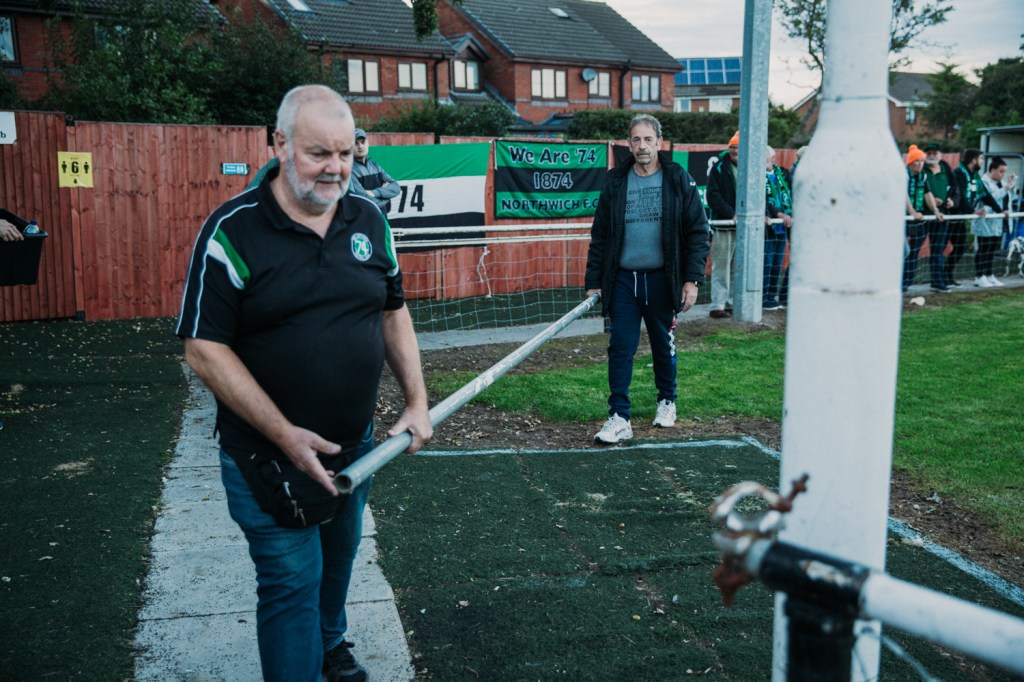
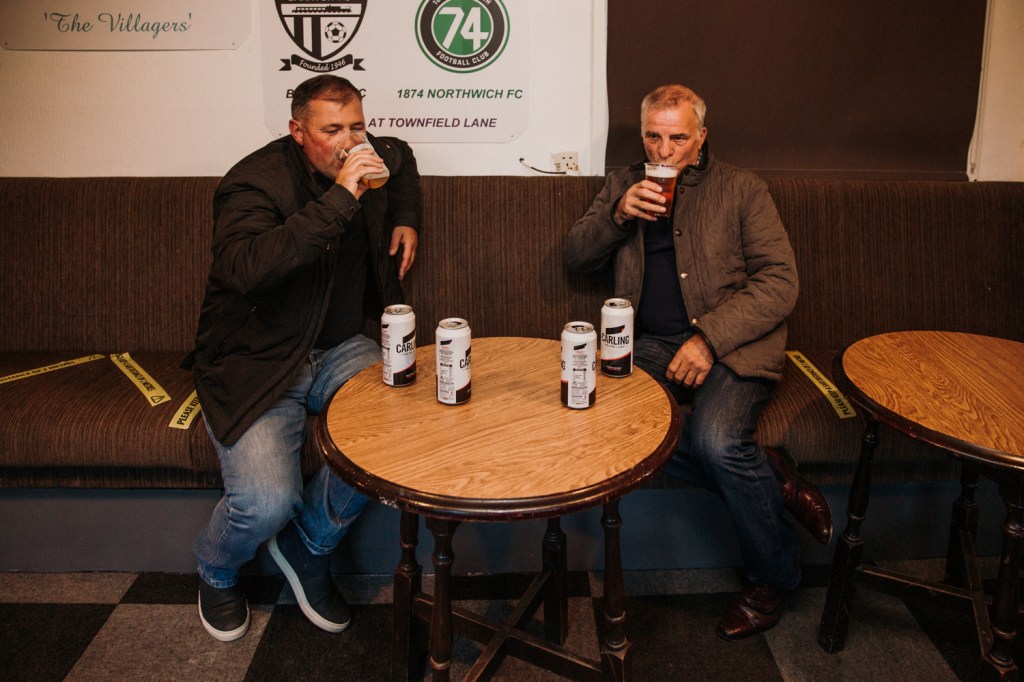
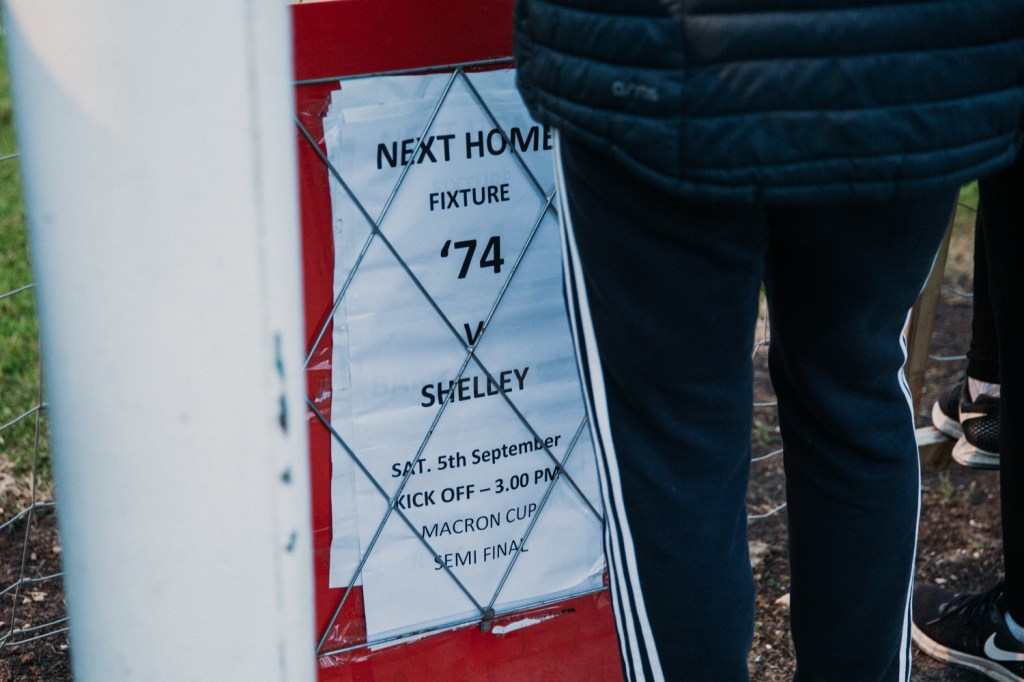
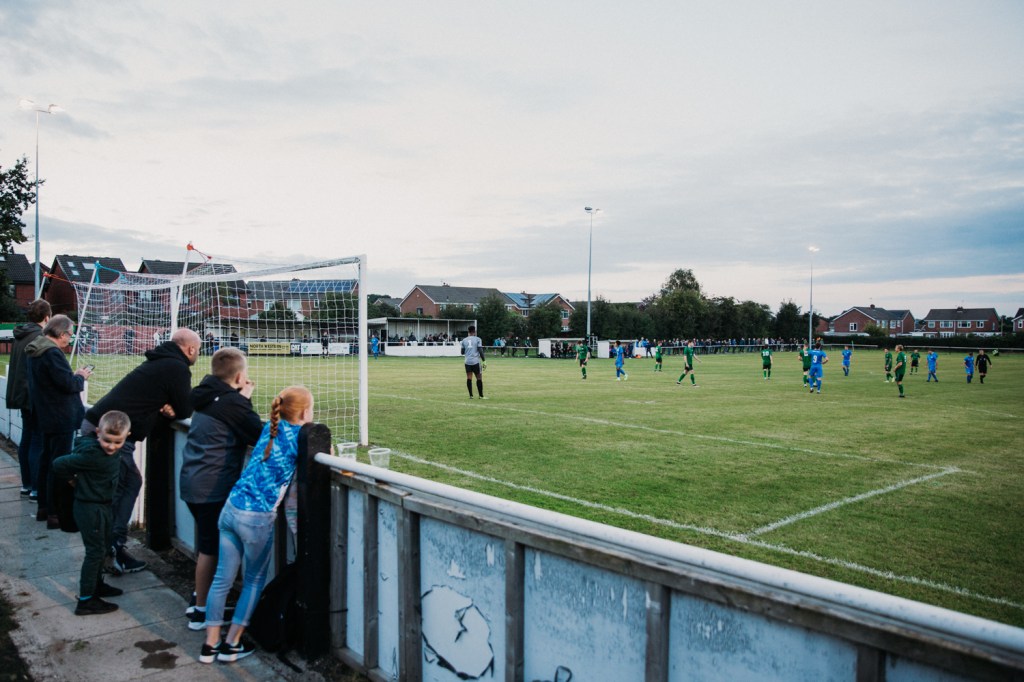
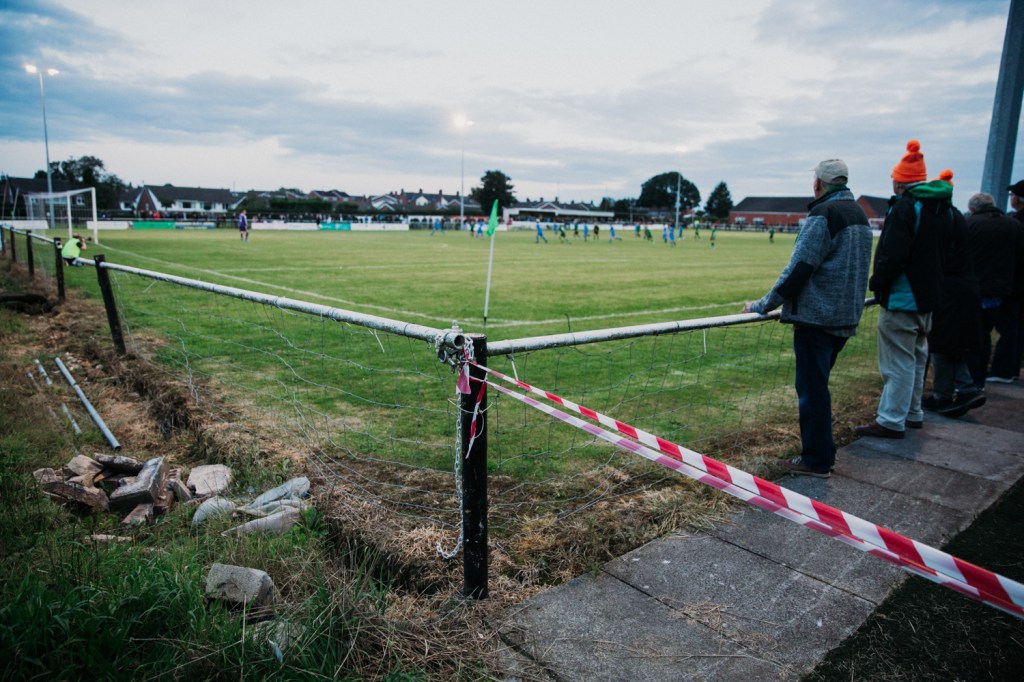
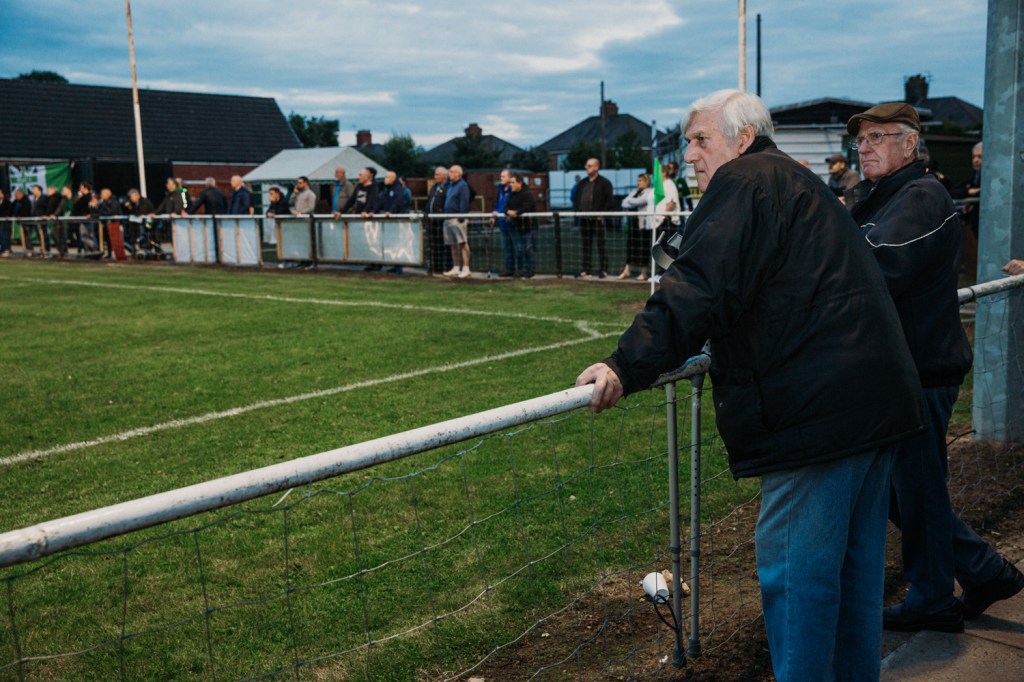
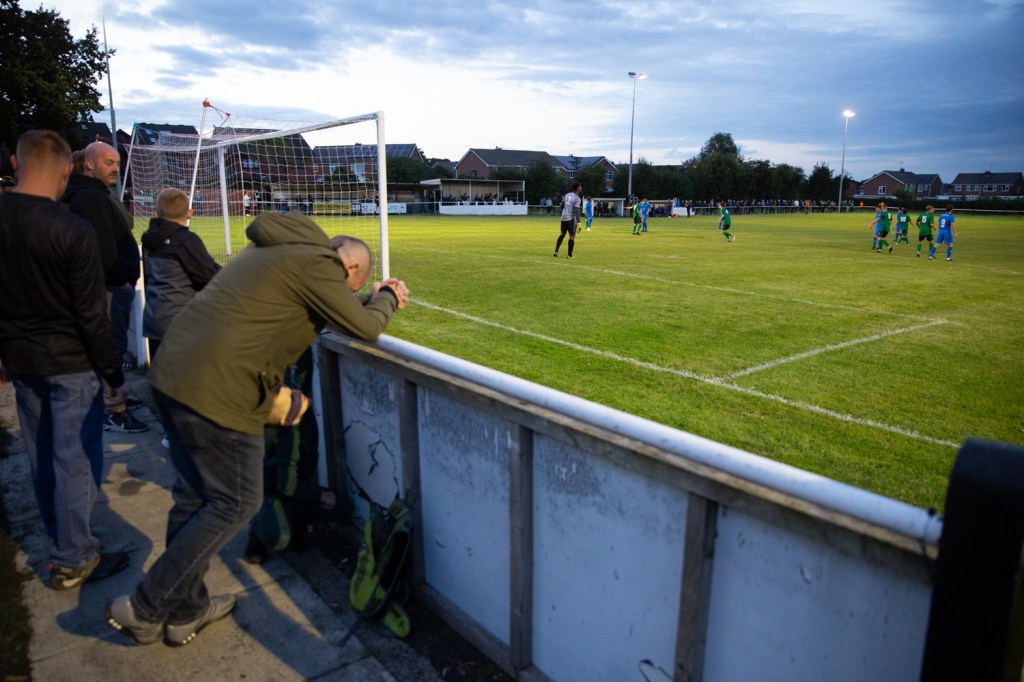
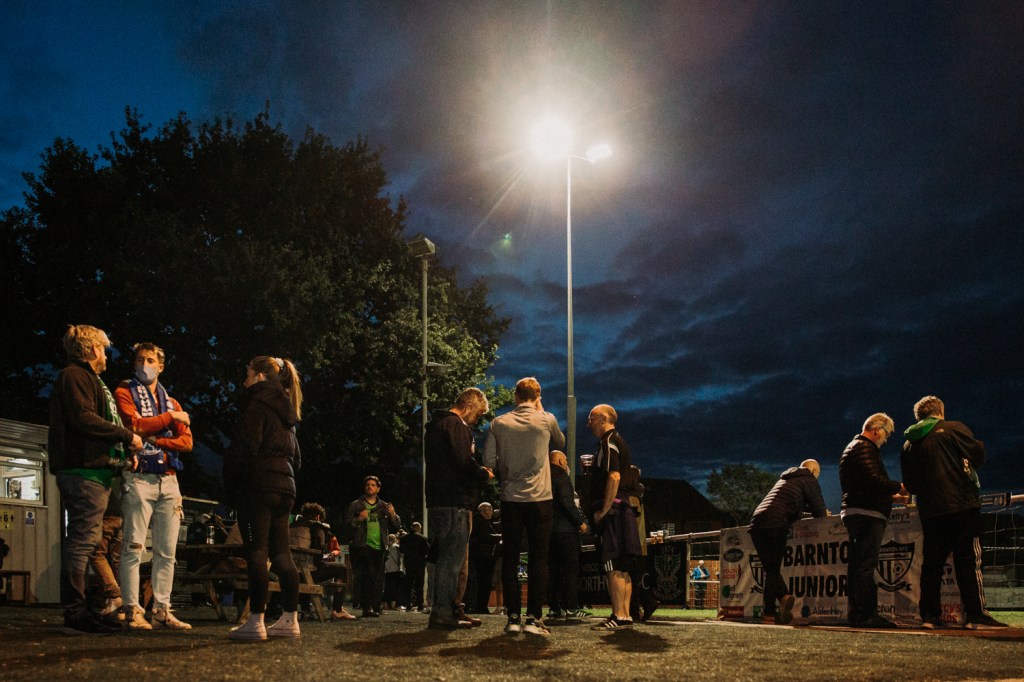
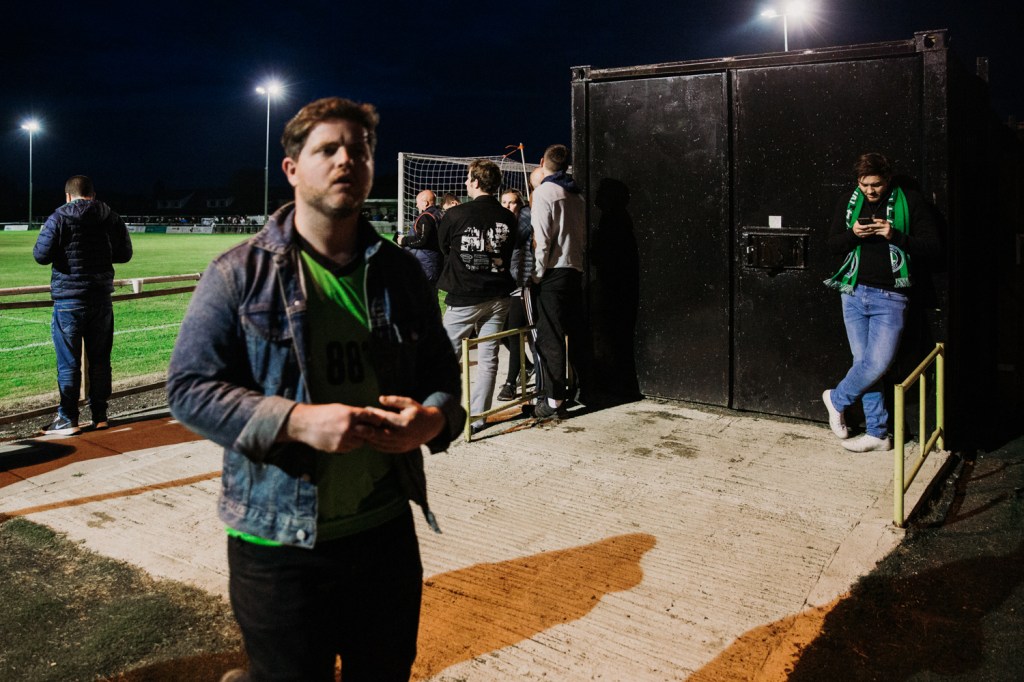
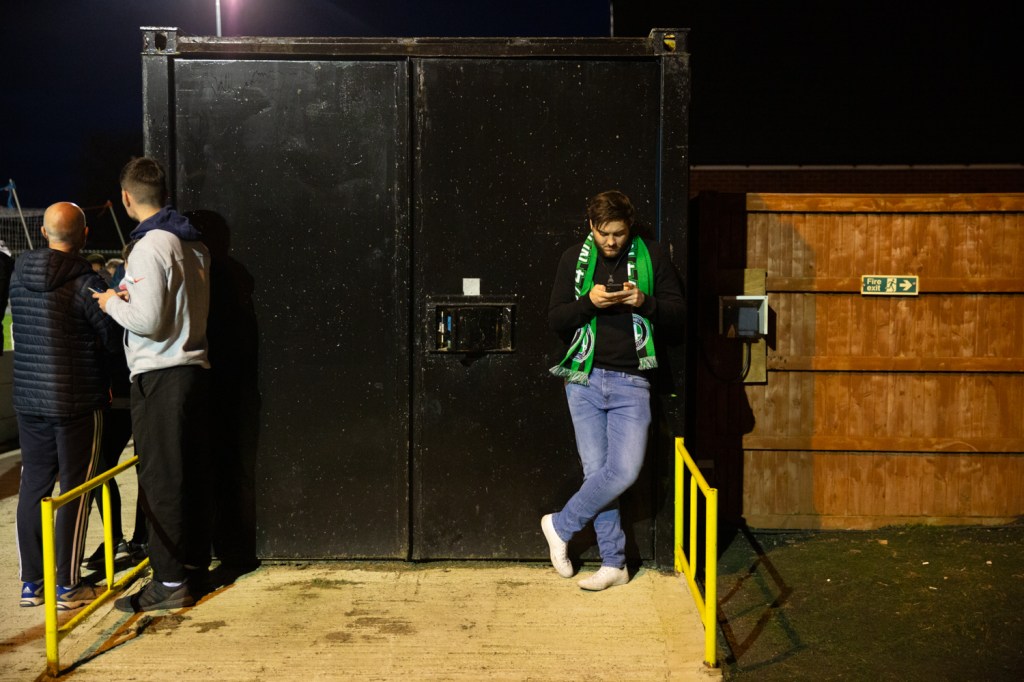
In order to address issues I am currently reflecting on my initial motivations and the starting point of my non league football project. Having played non league football for many years throughout my teens and 20s, I have already visited many of the places I photograph. This leads to the consideration of why I make the decision to revisit these places? In many instances I have thought about this question and tried to provide some overly clever and academic response, photography as activism, exploring a type of grief for the passing of my father, both of which may substance to an extent although probably not the core of my concerns. Read (2017) cites O’keeffe ‘As a curator I am looking for what is at the core of the work. Powered by authentic concerns of the photographer.’ Throughout my playing experience one of the most exciting elements was travelling to different locations, simply being in different environments, walking through the gates and into a different changing rooms, kit bag over my shoulder and wearing my club tracksuit. Warming up before the game, as a goalkeeper I used to like looking at the style of nets, intrigued by the dilapidated advertising boards that probably haven’t been changed in years.
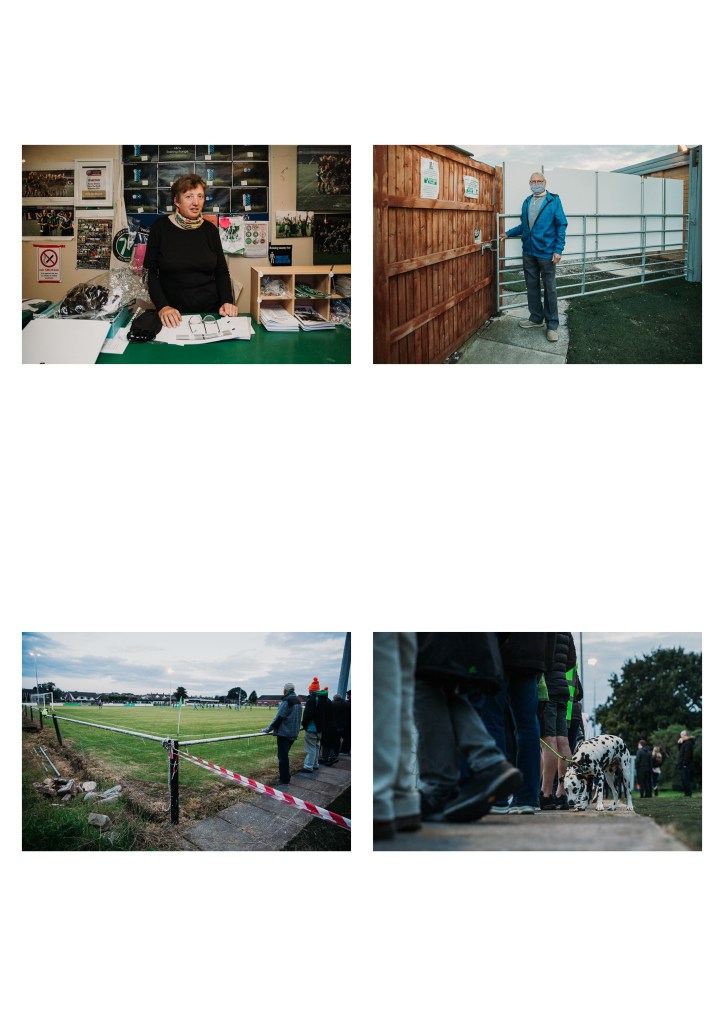
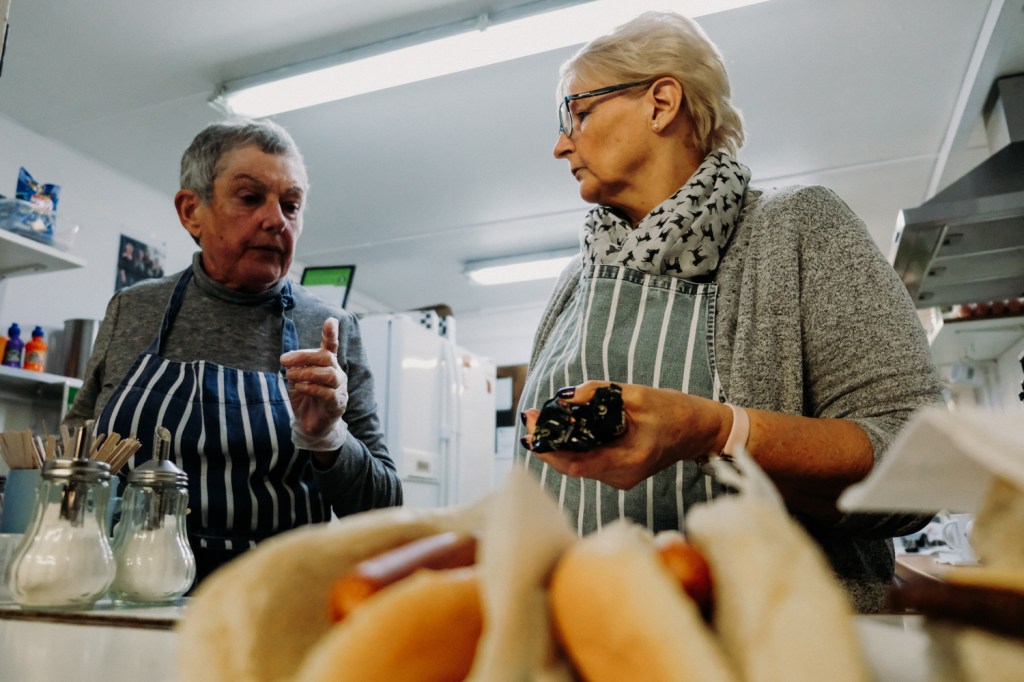
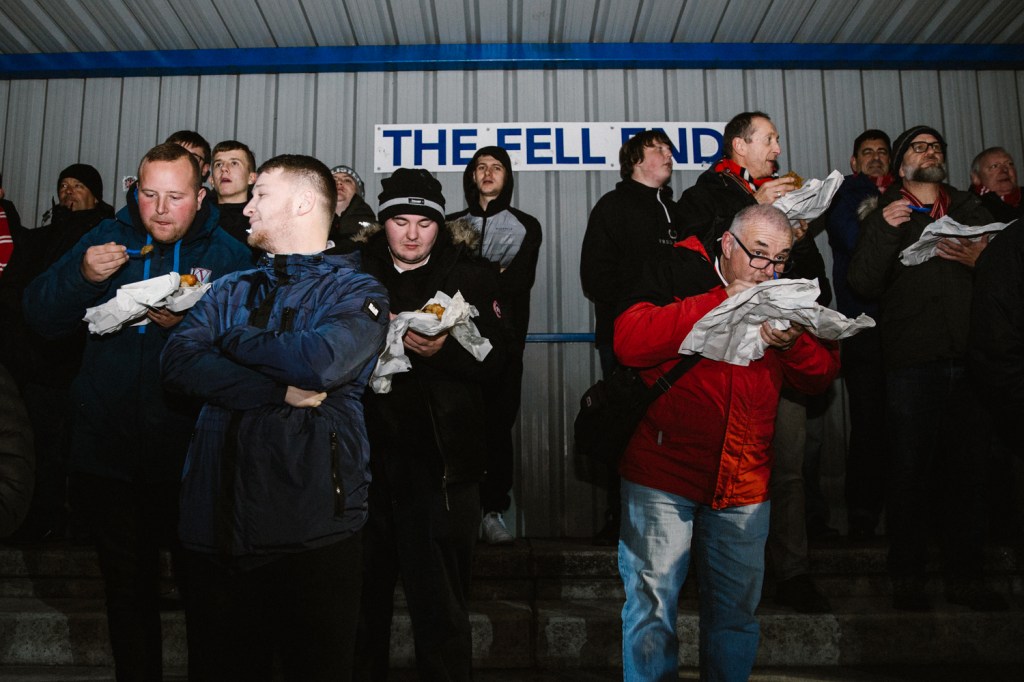
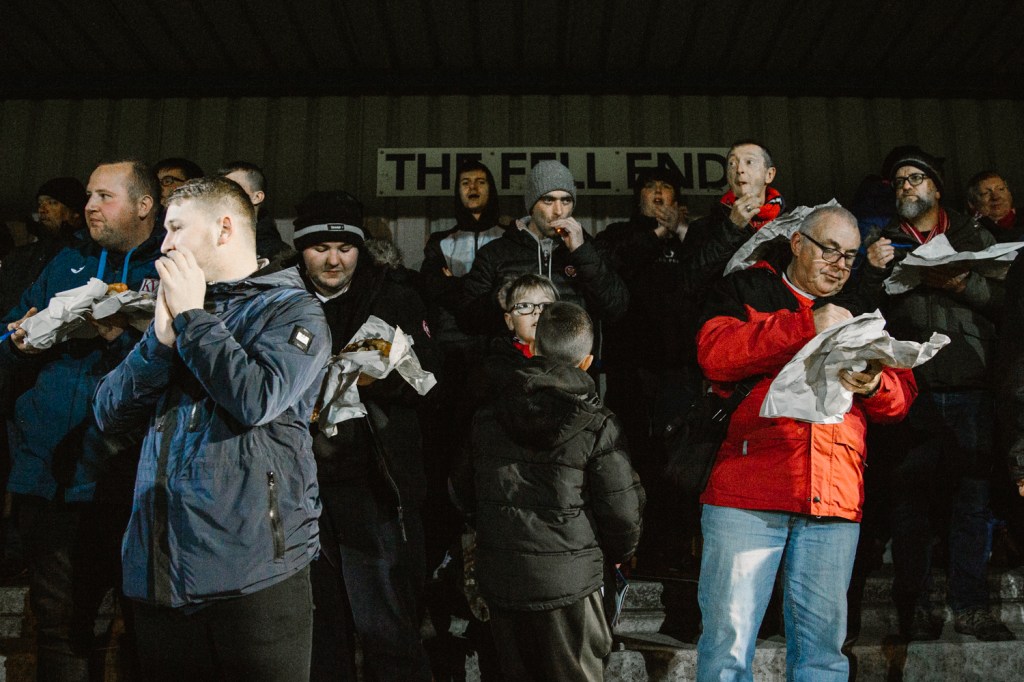
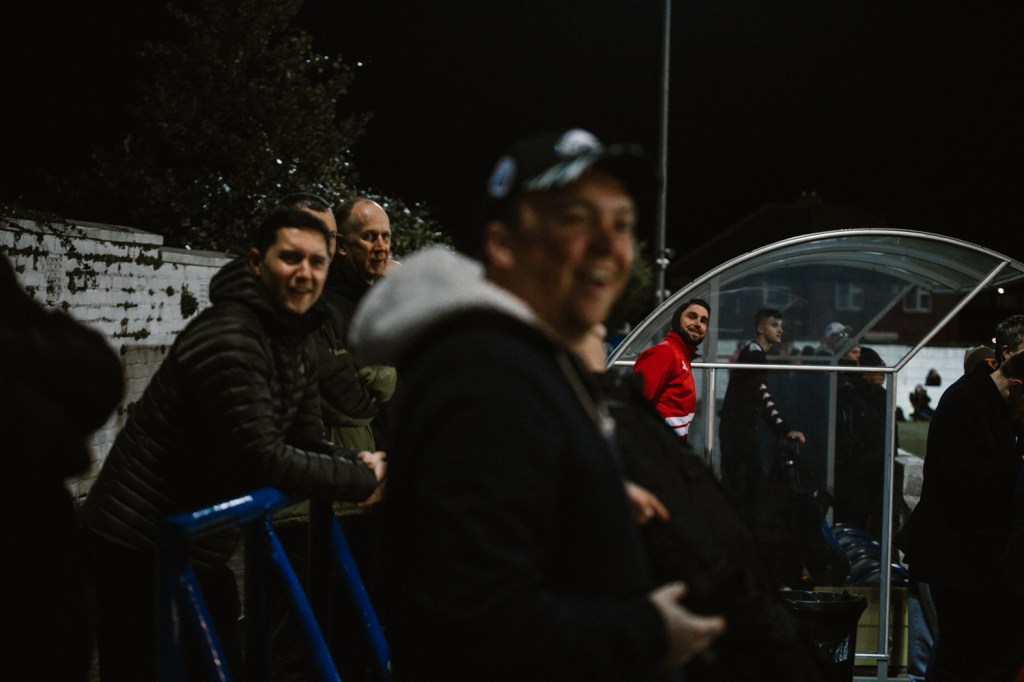
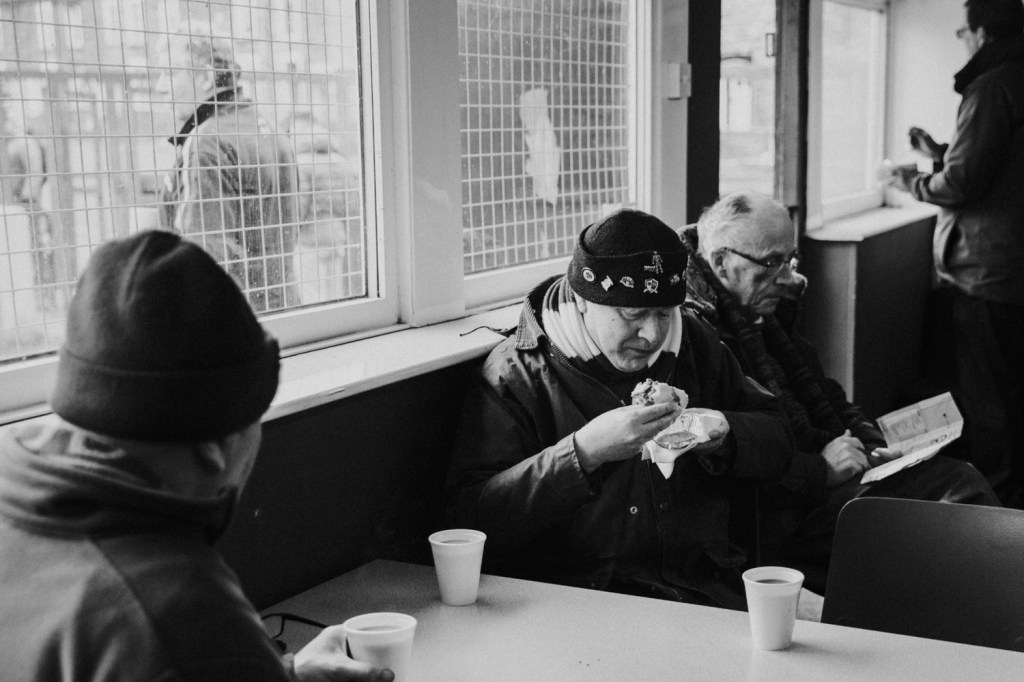
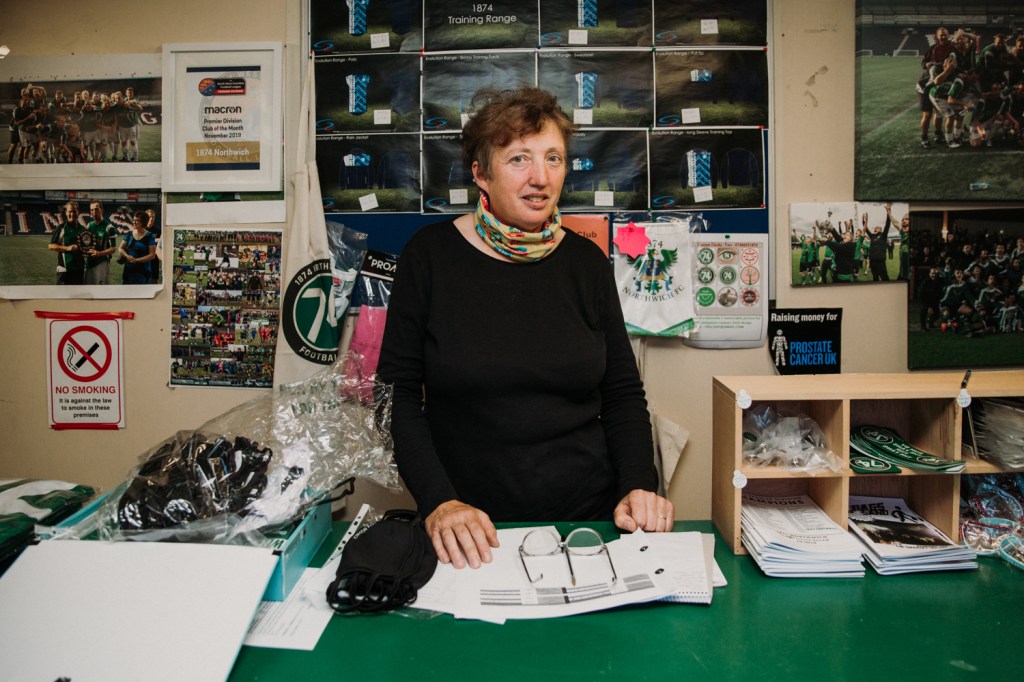
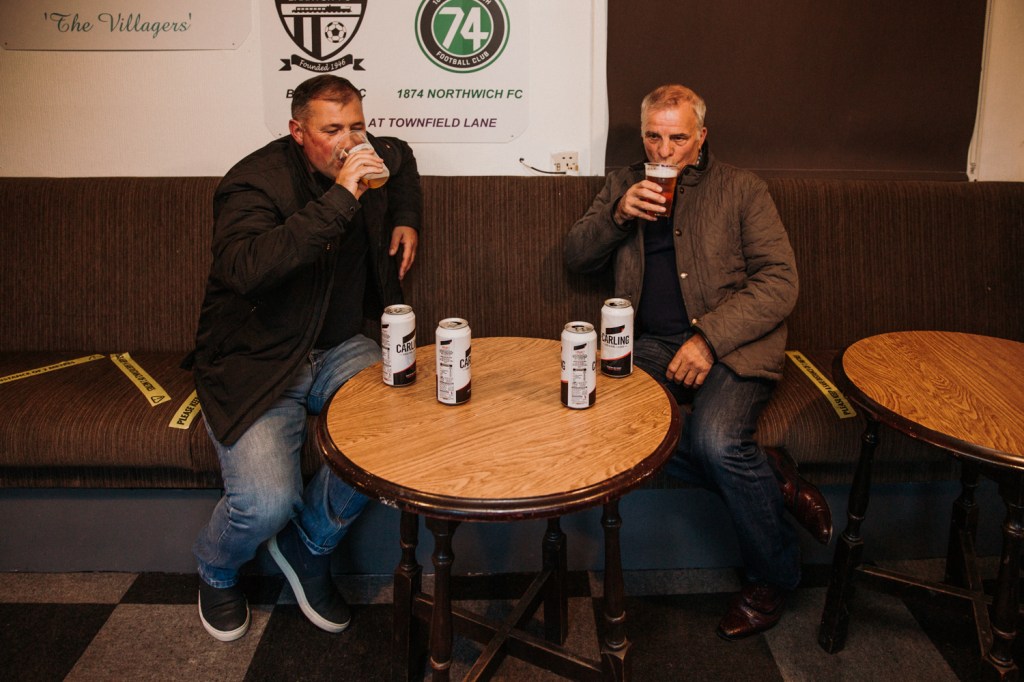
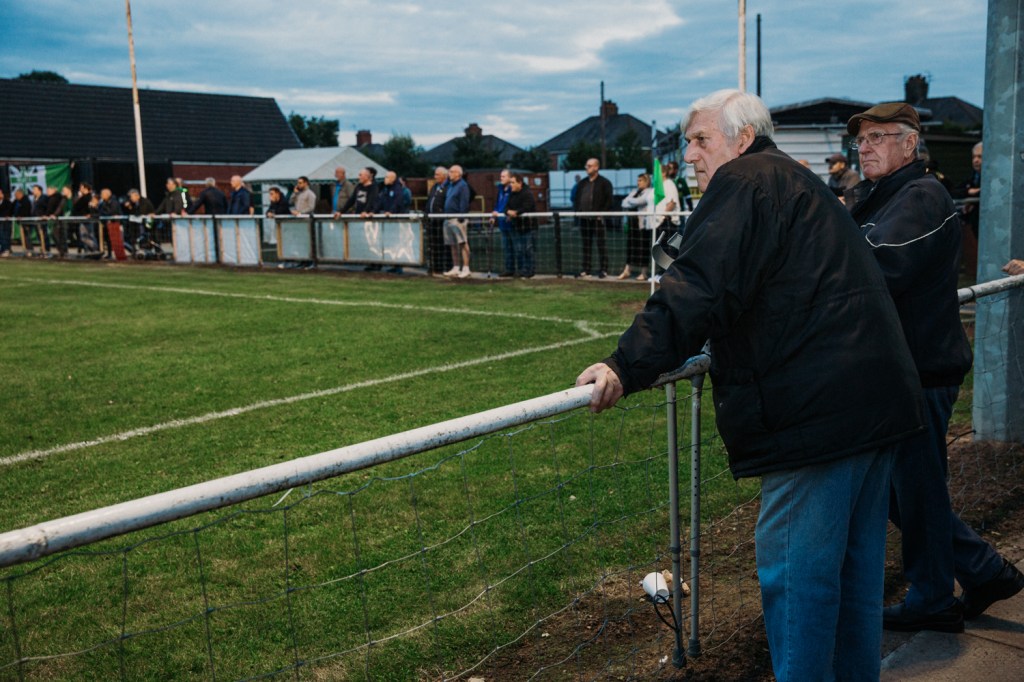
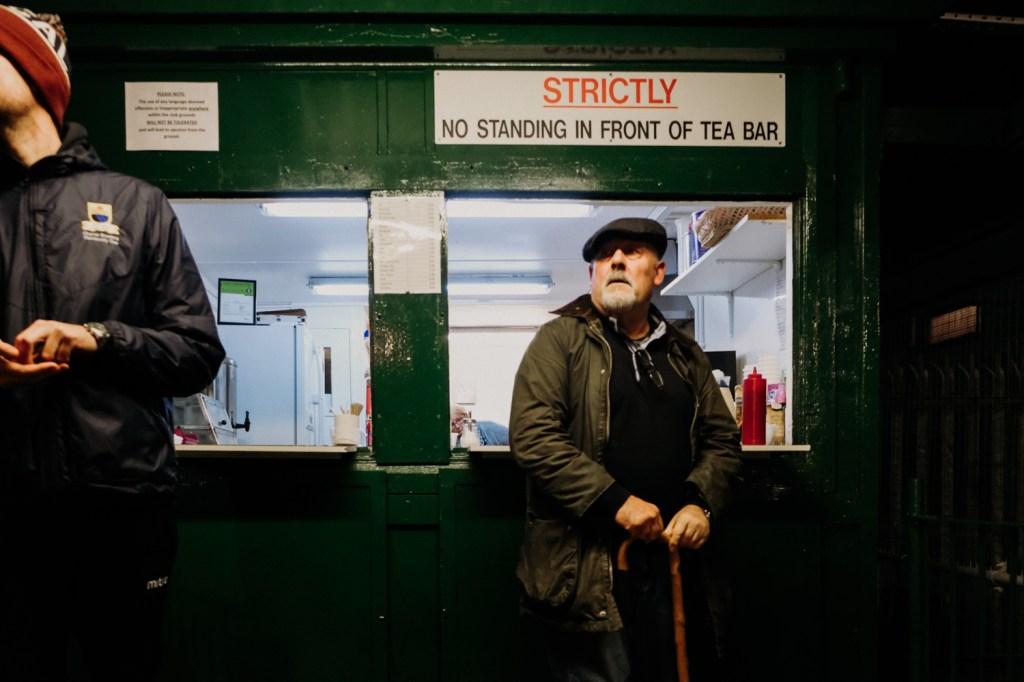
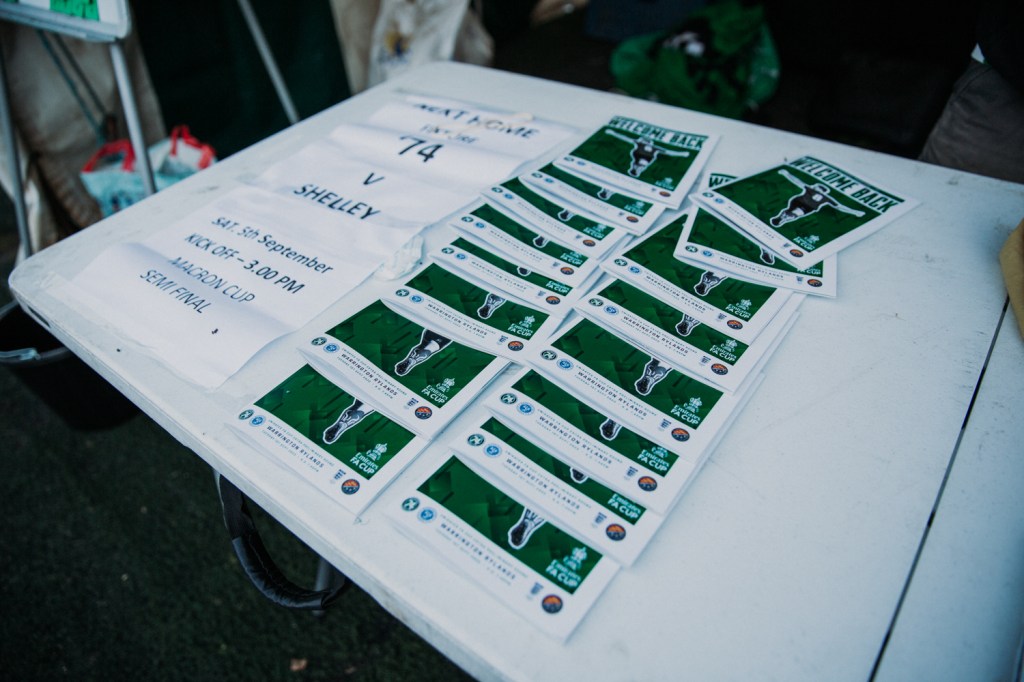
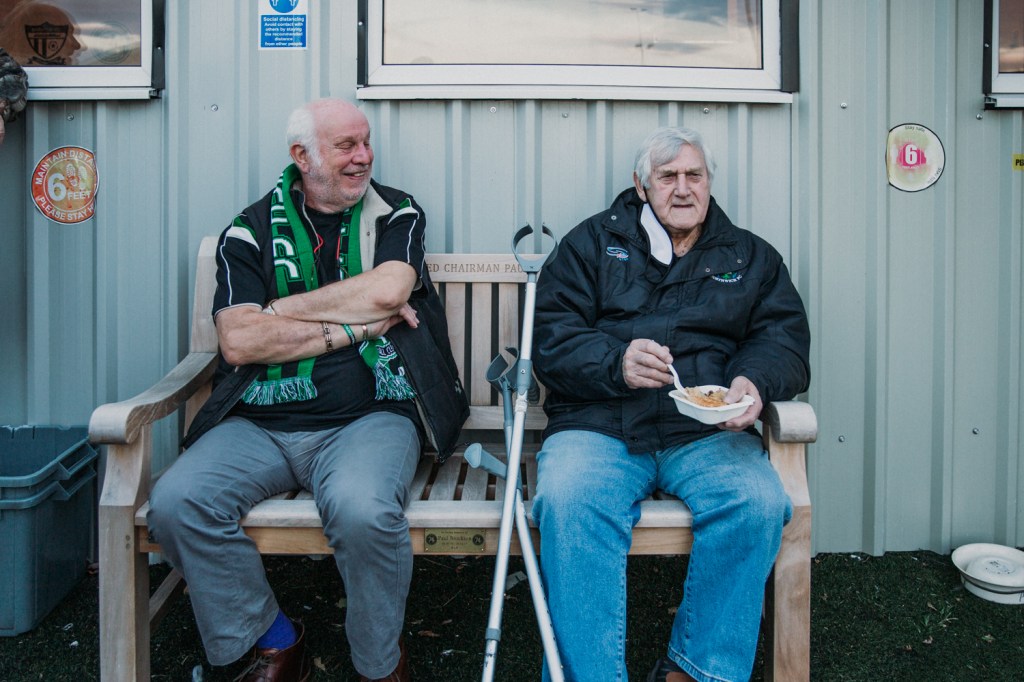
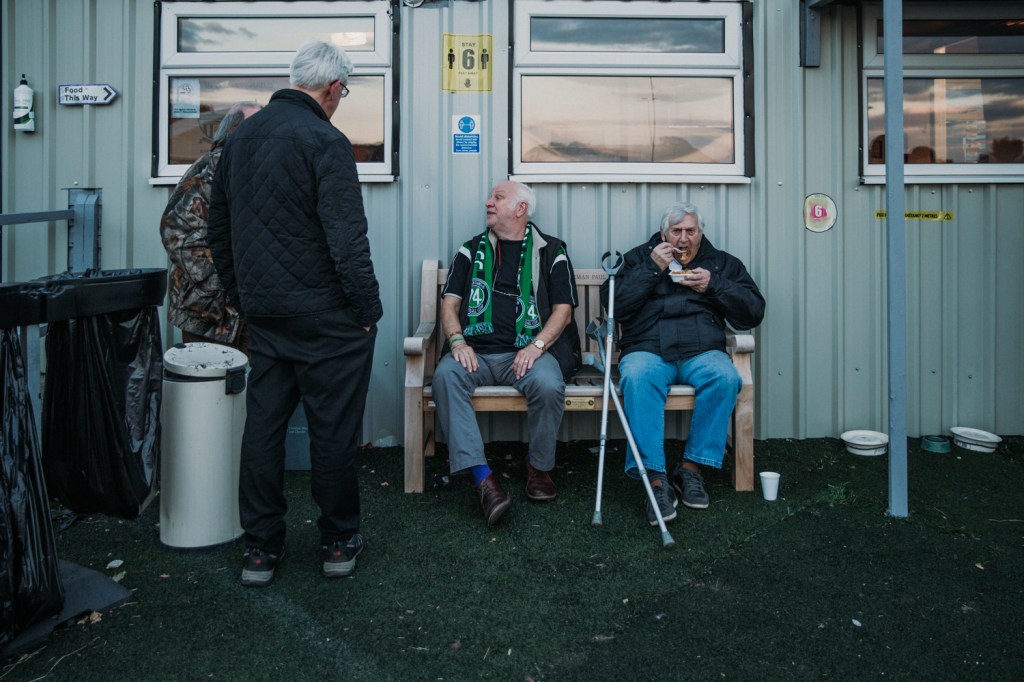
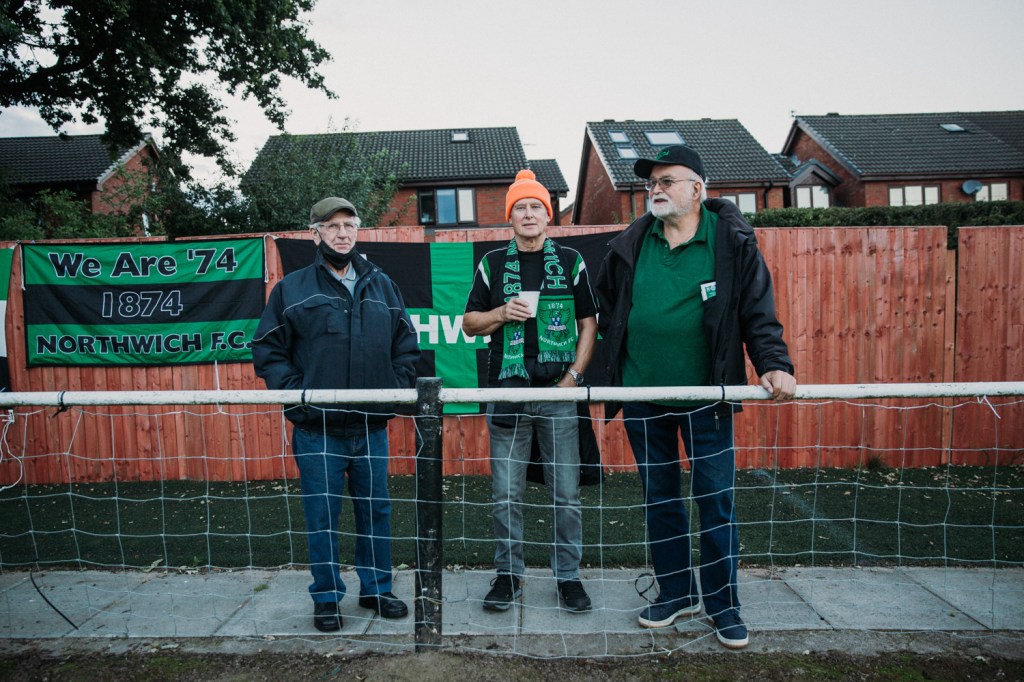
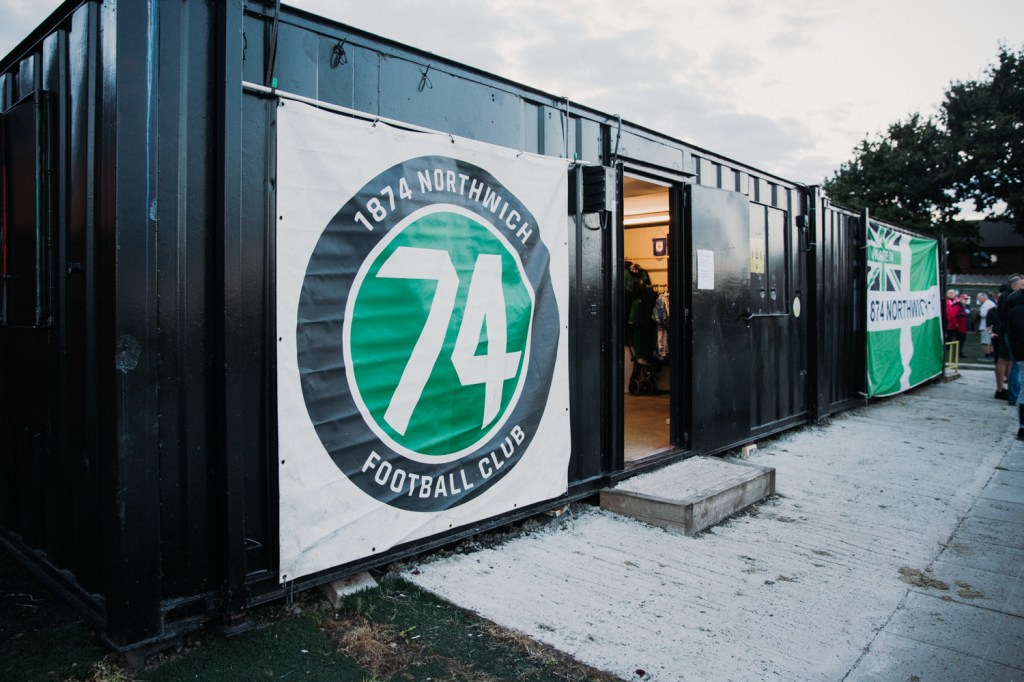
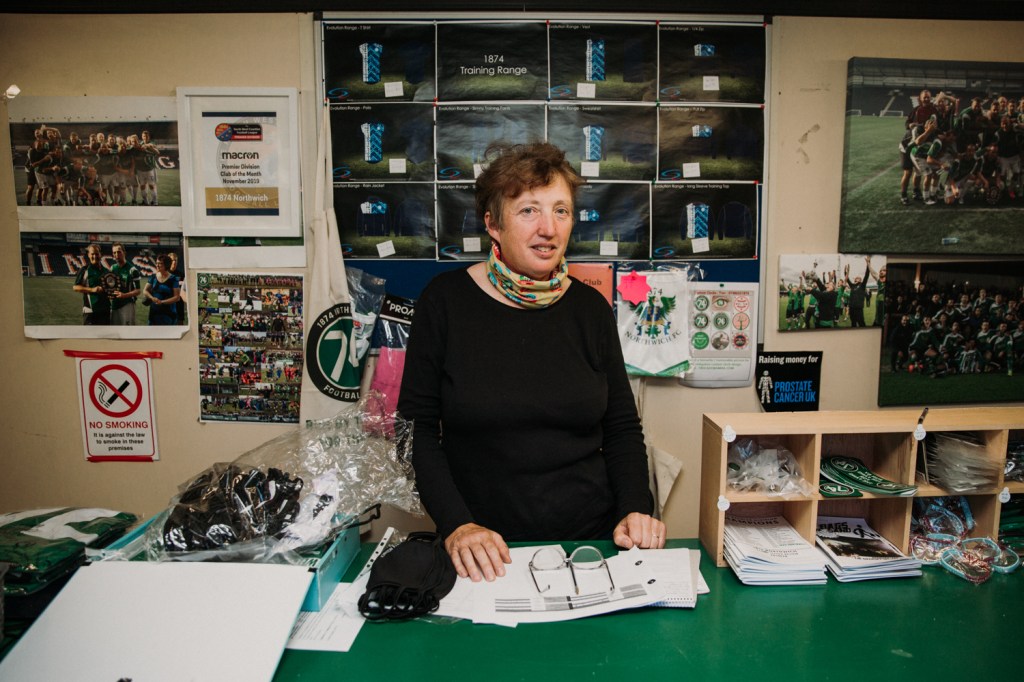
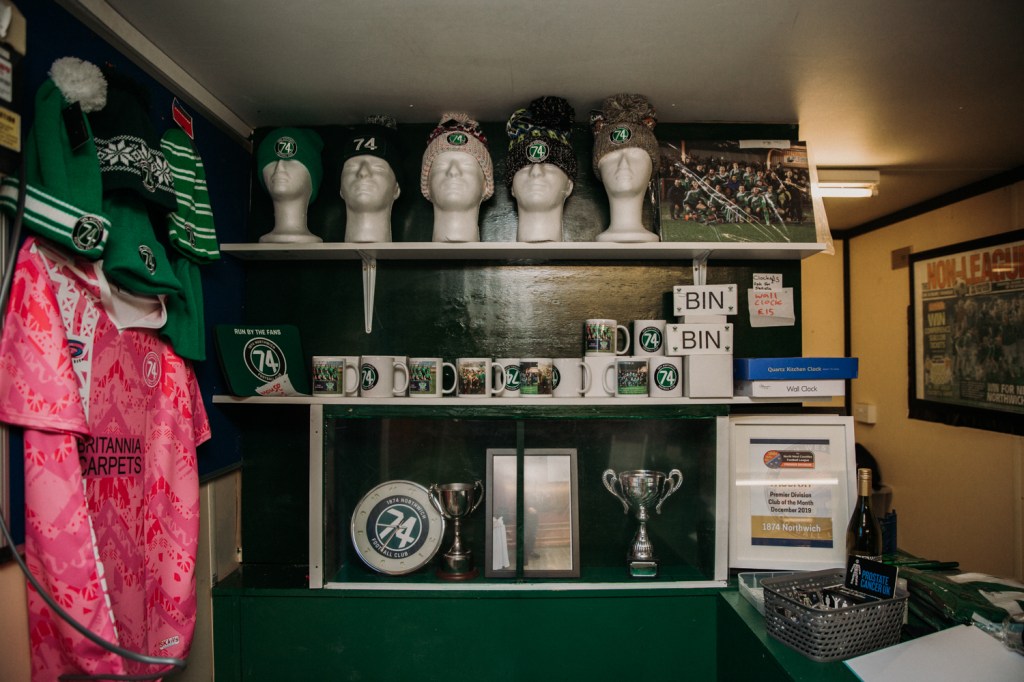
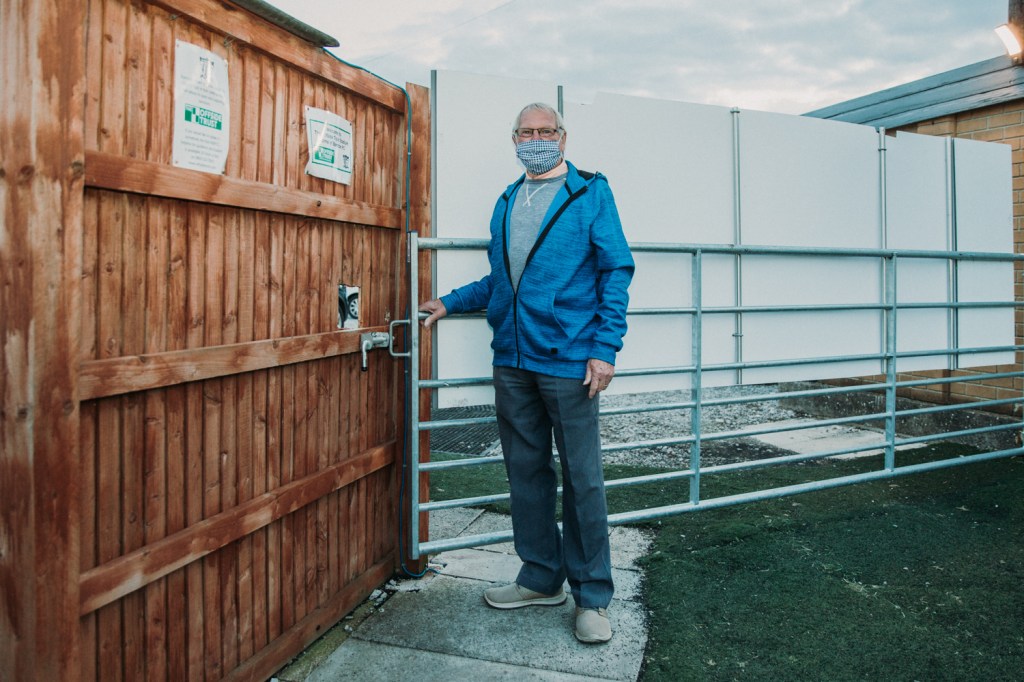
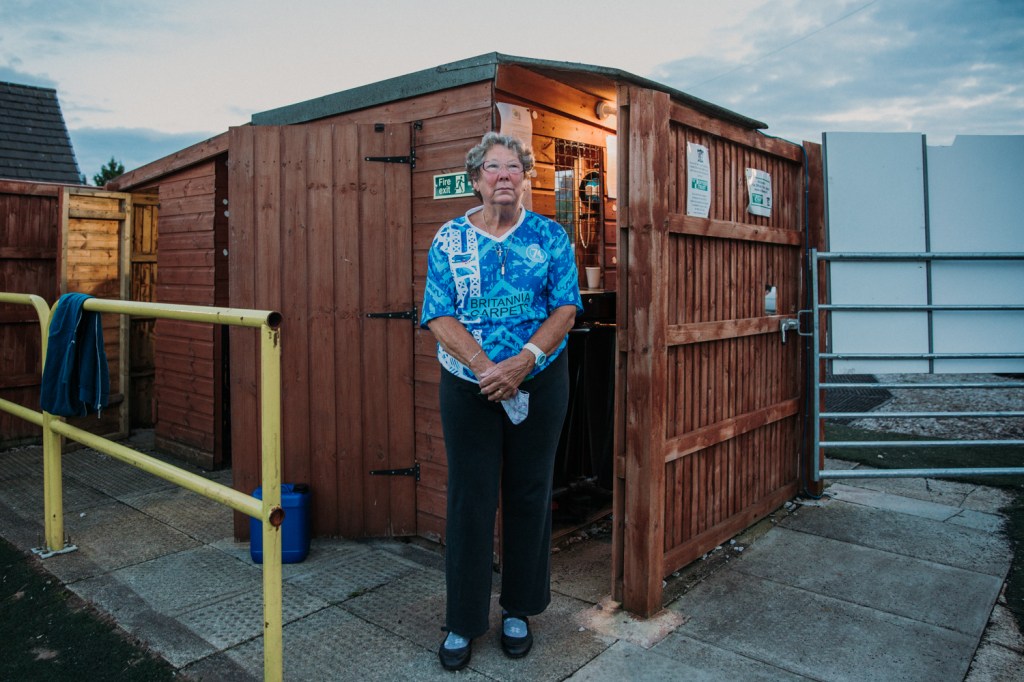
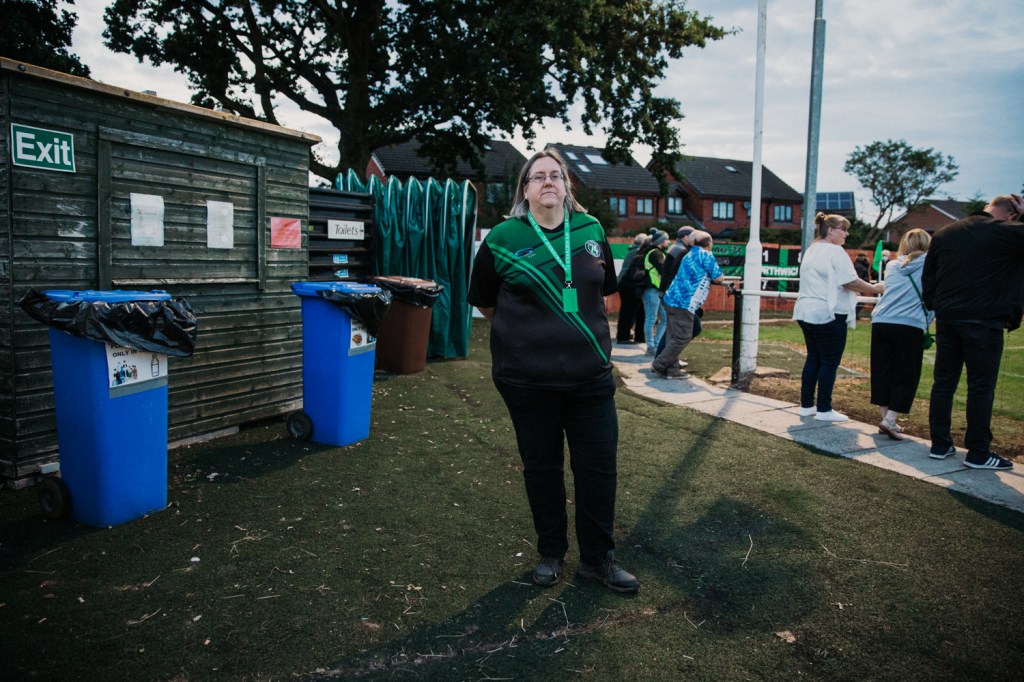
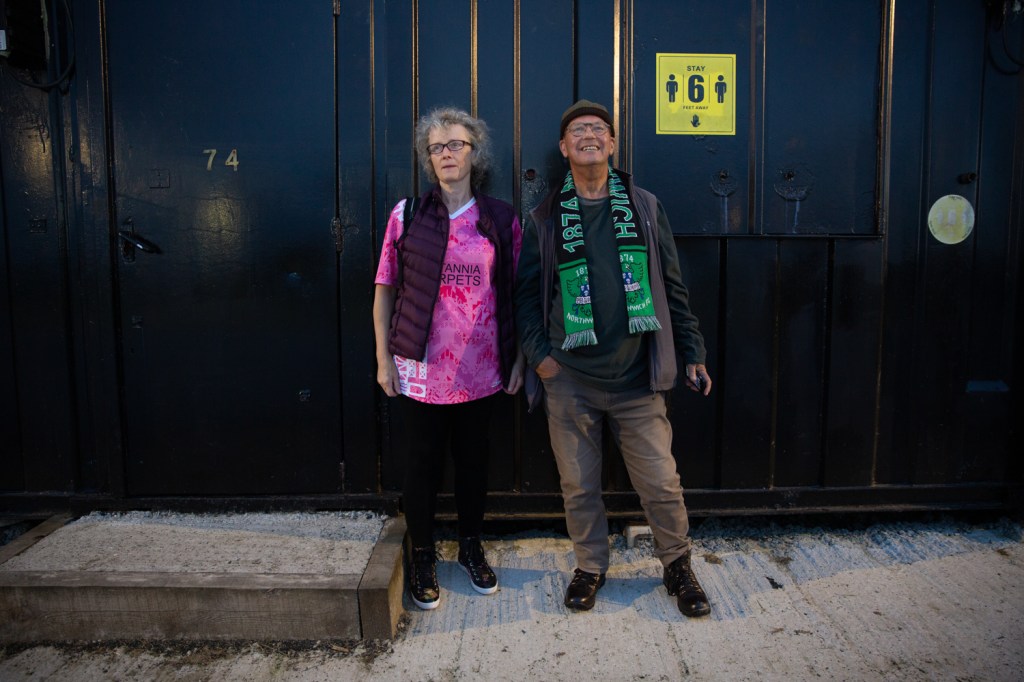
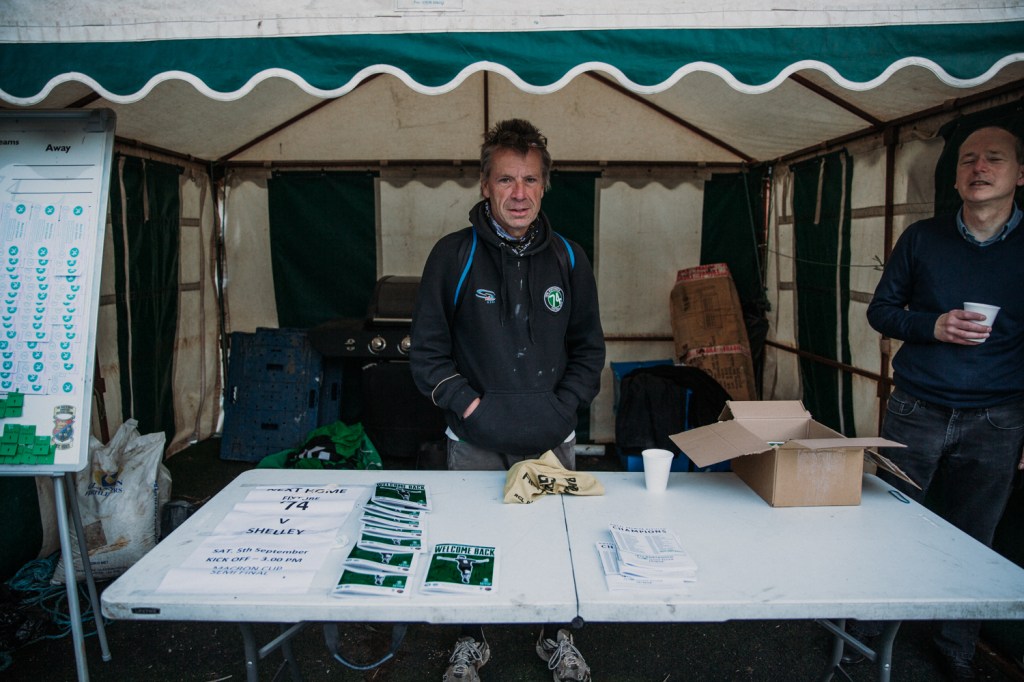
When playing a home match I enjoyed speaking to the volunteers such as ground keepers and the kit man, the bar staff and the ladies who made the tea and coffee. Having light hearted conversations and listening to their stories of past glory. Some of the happiest moments of my life were spent in these places. Being part of a community, being young and free and full of excitement about the future. Romero in Christenberry (2013: p9) writes about his work ‘Christonberry constructs an account of the South of the United States from within that South’. A comment that resonates personally as I feel that by visiting these places and photographing them, I feel that I am visually representing my own feelings about these places by making portraits and directing my attention towards the strange objects and places I used to enjoy engaging with visually and in conversation. Scott, G (2015, P94) comments ‘The emotional project is often multilayered and although it may begin on a micro personal level it can both grow and embrace a multitude of elements, people and environments.’ such comments may hold relevance however in a personal sense I disagree that my project was born out of a micro element, rather a sea of micro elements which I was unable to decipher in my own thoughts. And to get to this stage and a type of simplified idea, I have been through a process of elimination, challenging my project in a plethora of different routes. Reaffirming the multilayered nature as highlighted by Scott.
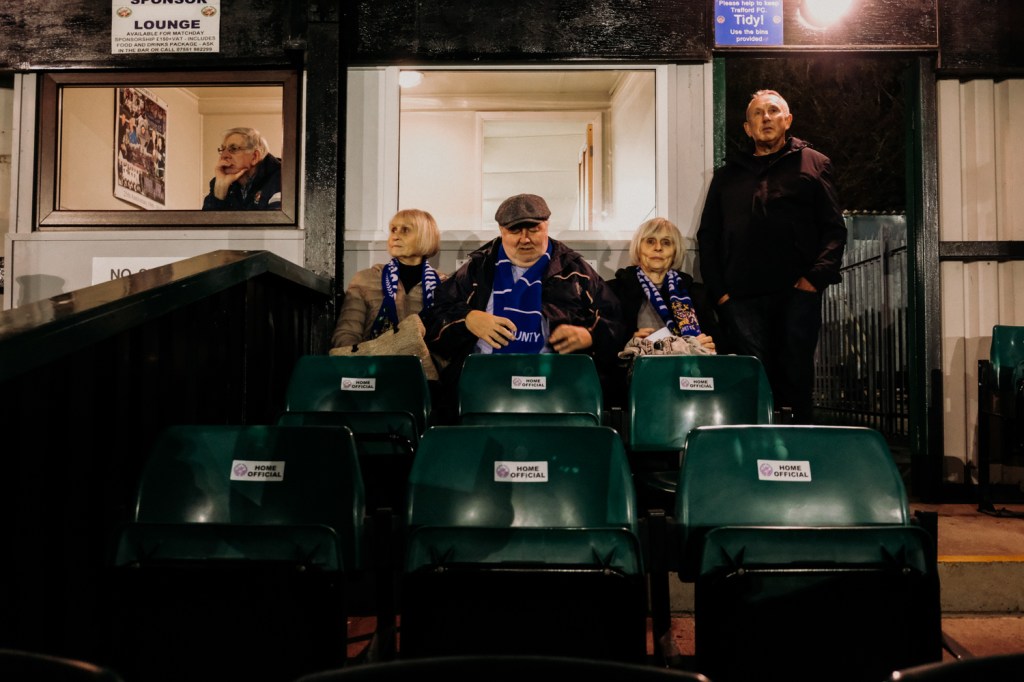
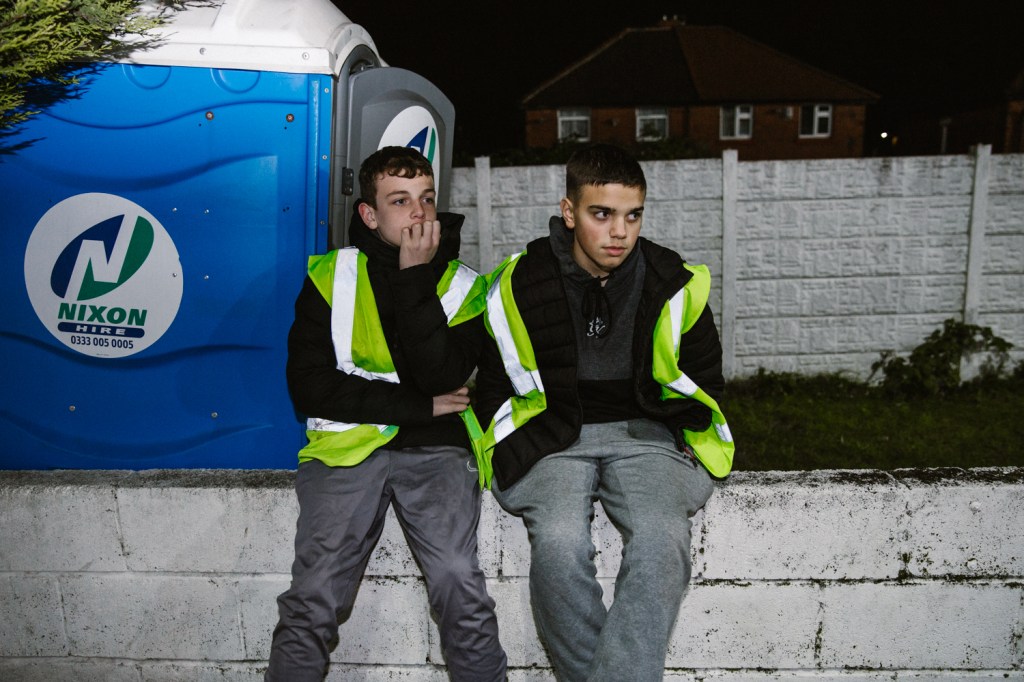
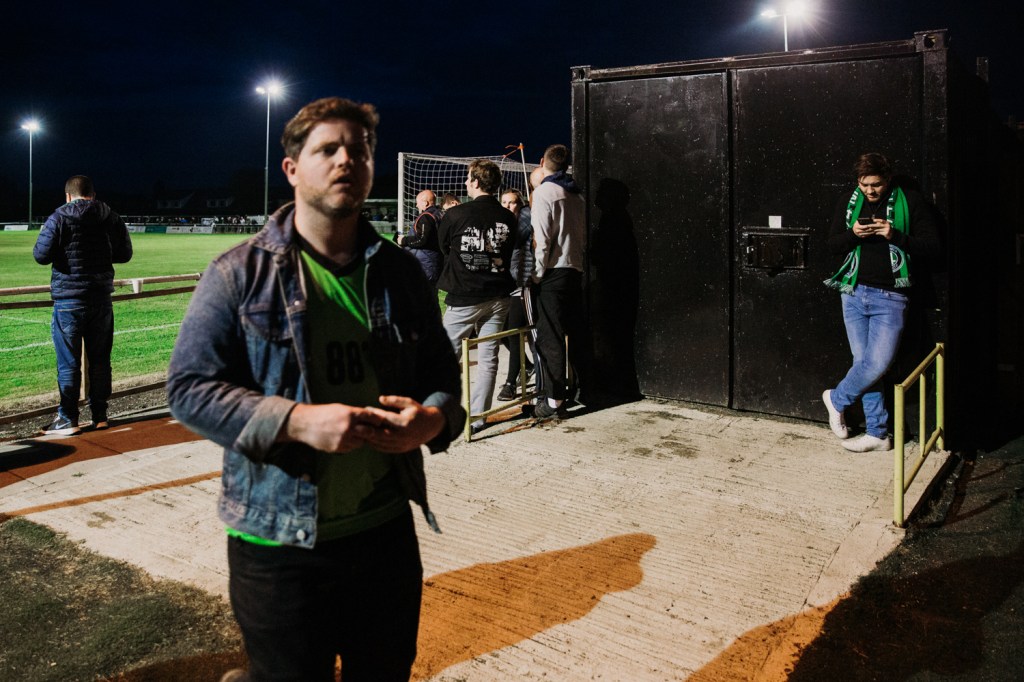
When thinking about whether or not my project is one of an emotional nature I feel that there is definitely an emotional element however I also argue that my project has features of an intellectual project because of the desire to seek and explore the places. In many cases I have no idea what I will find or who I will meet, the places where I once played have long since changed and many of the people I know have long since moved on or are no longer around. Therefore I am both an insider similar to Christonberry in the deep South of the USA whilst being an outsider, not knowing many of the people who frequent the spaces I now visit. Recording them them in portraits is a small celebration of an active space.
Christenberry, W (2013) William Christenberry. New York, Foundation Mapfre.



















 Drew Findlay